Electric Press Brake: What It Is, How It Works & How to Choose the Right One
- Conocimientos, Noticias
- 90+ reading now
Durmapress specializes in designing, manufacturing, and selling various metal processing equipment, including bending machines, shears, punches, and laser cutting machines. The company was founded in 2014, with years of experience and technology accumulation. DurmaPress has become one of the well-known brands in China's metal processing machinery industry.
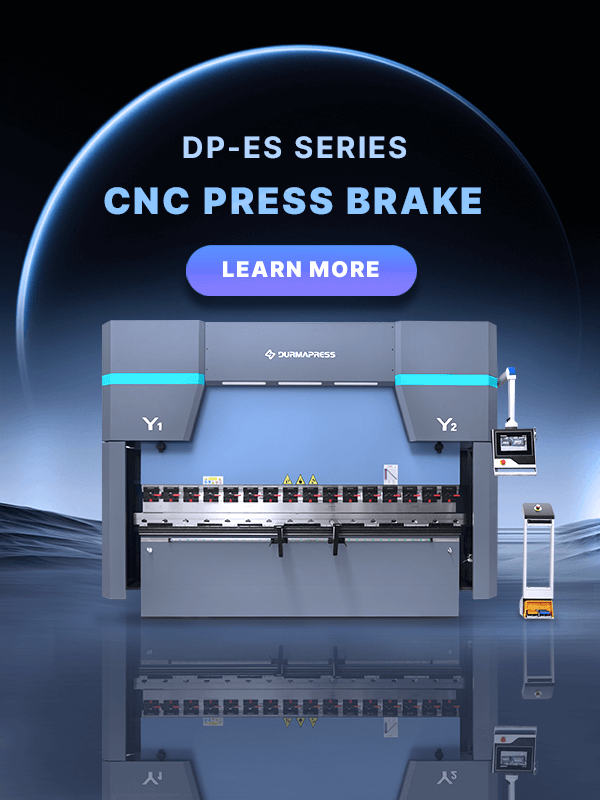
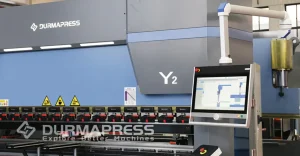
The electric press brake is changing how metal fabricators think about bending. Cleaner, quieter, and significantly more energy-efficient than hydraulic systems, full-electric press brakes are becoming the preferred choice for shops that prioritize precision and low operating costs. This guide covers everything you need to know — from how the technology works to which machine fits your production.
An electric press brake is a sheet metal bending machine driven entirely by servo motors and ball screw mechanisms — no hydraulic oil required. It converts electrical energy directly into precise mechanical motion, giving operators full programmable control over every aspect of ram movement.
Before selecting a press brake, it's important to understand how these three drive systems differ in practice.
| Full-Electric | Electro-Hydraulic | Hydraulic | |
|---|---|---|---|
| Drive System | Servo motor + ball screw | Electric motor + hydraulic pump | Hydraulic pump + cylinder |
| Hydraulic Oil | None | Required | Required |
| Repeat Accuracy | ±0.01mm | ±0.05mm | ±0.1mm |
| Energy Use | Lowest | Medium | Highest |
| Noise | 55-65 dB | 65-75 dB | 75-85 dB |
| Best For | High-precision, high-mix | General fabrication | Heavy plate, high tonnage |
The drive chain is straightforward: servo motor → ball screw → ram. Every millimeter of ram travel is commanded and corrected by the Sistema CNC in real time — no pressure valves, no oil temperature variables, no fluid compressibility. What you program is exactly what the machine delivers.
The servo motor generates torque that the ball screw converts into precise linear motion — driving the ram with virtually zero backlash. Durmapress uses imported C5-grade ball screws with a 0.005mm Y-axis movement resolution across its all-electric range, ensuring positioning accuracy that holds up across thousands of production cycles.
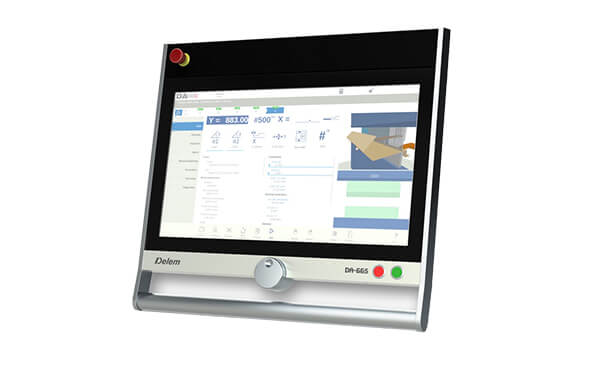
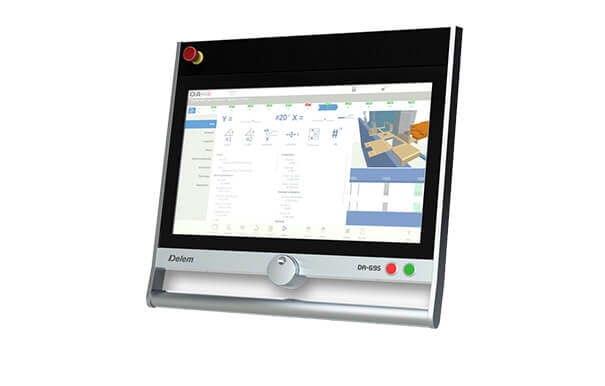
Durmapress all-electric press brakes are equipped with the Delem DA-66S or DA-69S controller — managing stroke depth, ram velocity, and dwell time simultaneously. The DA-69S adds 3D bending simulation and cloud connectivity, allowing operators to verify bend sequences before the first hit and monitor machine performance remotely.
Built around a heavy-duty ball screw electric cylinder structure, the DP-EP delivers high precision and durability for everyday sheet metal applications. Servo motor drive reduces energy consumption by over 50% compared to hydraulic models. An integrated pressure filter keeps noise low throughout the working cycle. Quick tooling change and alignment further reduce setup time between jobs.
Best for: kitchenware, electrical cabinets, new energy equipment, energy storage enclosures, hardware production.

The DP-EPX is Durmapress's flagship all-electric machine, engineered for manufacturers who demand the highest precision and flexibility. It delivers ±0.01mm repeat accuracy, runs 60% more energy-efficient than hydraulic equivalents, and operates at 55-65 dB — quiet enough for precision manufacturing environments. Maximum pole distance gives operators greater flexibility for deep bends and long workpieces. Standard equipment includes the Delem DA-66S or DA-69S controller with full multi-axis control across X, Y1, Y2, Z, and R axes.
Best for: stainless steel kitchenware, precision sheet metal, automotive components, electrical enclosures, medical equipment, telecommunication racks.
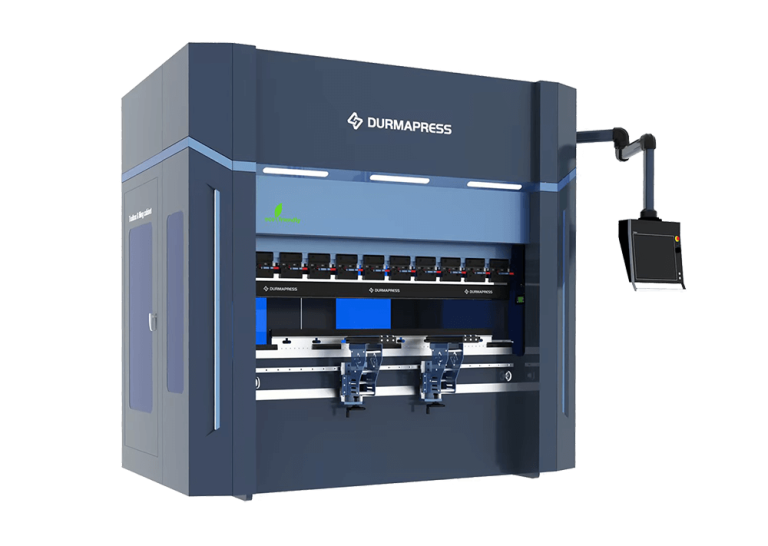
| DP-EP Series | DP-EPX Series | |
|---|---|---|
| Positioning | Standard all-electric | High-performance |
| Sistema de control | Standard CNC | Delem DA-66S/69S |
| Repeat Accuracy | High precision | ±0.01mm |
| Ahorro de energía | 50%+ vs hydraulic | 60% vs hydraulic |
| Noise | Low | 55-65 dB |
| Best For | Kitchenware, cabinets, hardware | Medical, auto, precision |
Choosing between electric and hydraulic is not about which is better — it is about which fits your production. Both technologies have clear strengths.
| Full-Electric | Hydraulic | |
|---|---|---|
| Repeat Accuracy | ±0.01mm | ±0.1mm |
| Energy Consumption | 60% lower | High |
| Hydraulic Oil | None | Required |
| Maintenance | Minimal | Regular |
| Noise | 55-65 dB | 75-85 dB |
| Max Tonnage | Limited | High |
| Best Material | Thin to medium gauge | Thin to heavy plate |
For heavy plate above 12mm or applications requiring very high tonnage, hydraulic press brakes remain the stronger choice. Durmapress offers a full hydraulic and electro-hydraulic press brake range for these requirements.

Full-electric press brakes offer four clear advantages over hydraulic systems:
1.precision: with ±0.01mm repeat accuracy and 0.005mm Y-axis resolution, bend angles stay consistent across every part and every shift.
2.energy efficiency: because the servo motor only draws significant power during the working stroke, operating costs run up to 60% lower than hydraulic equivalents.
3.maintenance: with no hydraulic oil in the system, there are no oil changes, no filter replacements, and no risk of fluid leaks — a significant advantage in clean or regulated production environments.
4.noise: at 55-65 dB, full-electric machines operate at roughly conversation level, reducing operator fatigue and improving shop floor communication.
Four specifications should drive your decision:
1. Tonnage & Working Length :Size the machine to your most common material — not your thickest. Use Durmapress's free Calculadora de la fuerza de flexión to get an accurate tonnage requirement before requesting a quote.
2. Repeat Accuracy : If your parts require tight angular tolerances, the DP-EPX at ±0.01mm is the right choice. For standard precision work, the DP-EP delivers high accuracy at a more accessible price point.
3. CNC Axes & Control System: More axes give greater control over complex bend sequences. The DP-EPX's Delem DA-66S/69S with 3D simulation is particularly valuable for high-mix production where changeover speed determines profitability.
4. After-Sales Support: A press brake is a long-term investment. Since 2005, Durmapress has supported over 100 manufacturers worldwide with spare parts availability, remote diagnostics, and application engineering.
Electric press brake pricing varies based on tonnage, working length, and control system specification. Full-electric machines carry a higher upfront cost than comparable hydraulic models, but the gap narrows significantly when energy savings and reduced maintenance costs are factored into total cost of ownership over five to ten years. For an accurate quote based on your specific requirements, póngase en contacto con the Durmapress team directly.
An electric press brake is a sheet metal bending machine powered entirely by servo motors and ball screws — no hydraulic oil required.
Yes. Full-electric press brakes achieve ±0.01mm repeat accuracy, compared to ±0.1mm for typical hydraulic systems.
Yes. Full-electric press brakes use up to 60% less energy than hydraulic equivalents.
With proper maintenance, 15 years or more. Durmapress backs every frame with a 15-year structural warranty.
The electric press brake represents a clear step forward for shops that prioritize precision, energy efficiency, and low maintenance. For high-mix production, tight-tolerance parts, or clean operating environments, full-electric technology consistently outperforms hydraulic systems on the metrics that matter most.
Durmapress offers two all-electric press brake series to cover the full range of production requirements. The DP-EP Series delivers proven precision and energy savings for everyday sheet metal work, while the DP-EPX Series is built for manufacturers who demand the highest levels of accuracy and control. Both are backed by Durmapress's global support network and 15-year frame warranty.
Ready to find the right electric press brake for your production? Póngase en contacto con the Durmapress engineering team today for a tailored recommendation and free quote.
Rellene la siguiente información para recibir un presupuesto gratuito y un folleto de productos. Le responderemos en 24 horas.