Hydraulic Shear Blade Clearance: Chart, Formula & Adjustment Guide
- Conocimientos, Noticias
- 90+ reading now
Quiénes somos
Learn how to adjust blade clearance in hydraulic shears to improve cutting accuracy, edge quality, and blade life for different materials and thicknesses.

Contáctenos
Entradas recientes


Categorías
Síganos
Nuevo vídeo semanal
Hydraulic shear blade clearance is the gap between the upper moving blade and lower fixed blade during cutting. The correct clearance is typically set as a percentage of material thickness, but the actual setting depends on material type, thickness, blade geometry, and the shear manufacturer's specifications.
As a general starting point, many sheet-metal shearing applications use a clearance of approximately 5%–10% of material thickness. Stainless steel and high-strength materials may require different settings from mild steel. Use the chart in this guide as a starting reference, and always follow the machine manufacturer's recommended clearance when it differs.
This guide covers blade clearance values, how to calculate the gap, how to adjust it on swing beam and guillotine shears, and how to diagnose cutting problems caused by incorrect clearance.
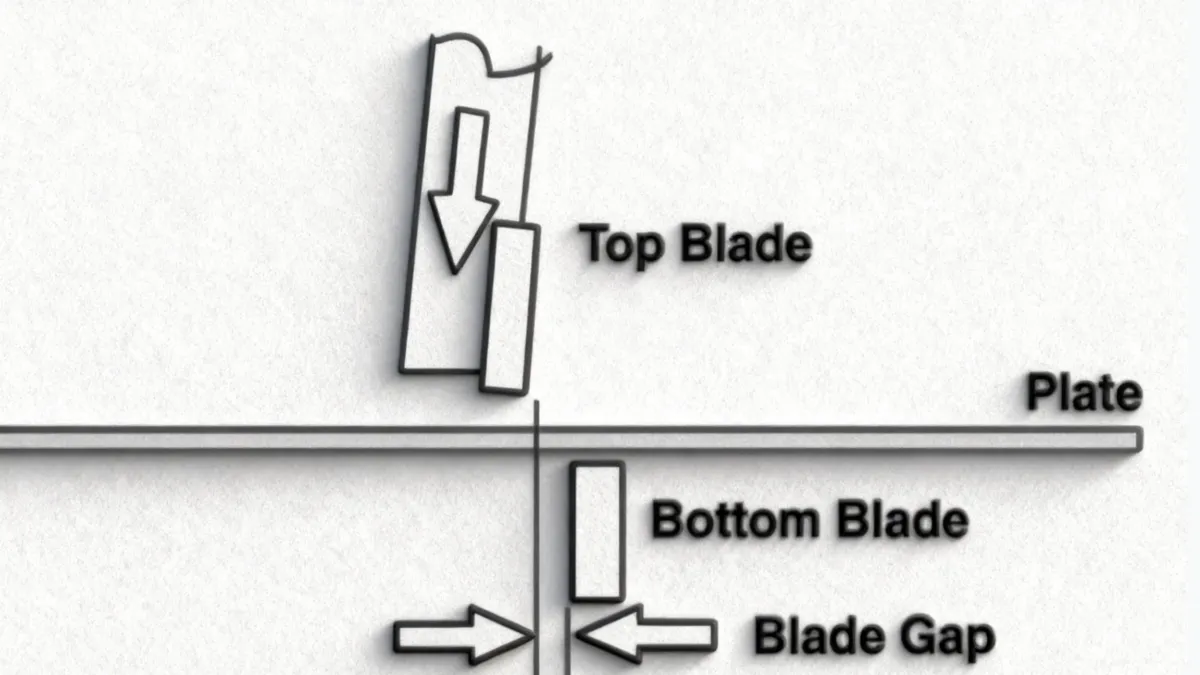
What Is Blade Clearance in a Hydraulic Shear?
Blade clearance refers to the gap between the upper moving blade and the lower fixed blade during the cutting process.
This clearance is usually expressed as a percentage of the material thickness.
The clearance is normally specified as a percentage of material thickness, although the exact setting can vary with material properties, blade geometry, machine design, and manufacturer recommendations.
Proper blade clearance allows the material to fracture cleanly along the cutting line.
If the clearance is too small or too large, cutting quality and machine performance will be negatively affected.
Why Blade Clearance Is Critical to Cutting Quality
Burr Formation and Edge Quality
Incorrect blade clearance is one of the main causes of excessive burrs.
- Too small clearance leads to secondary shearing and rough edges
- Too large clearance causes tearing rather than clean shearing
Correct blade gap produces smooth edges with minimal burr height.
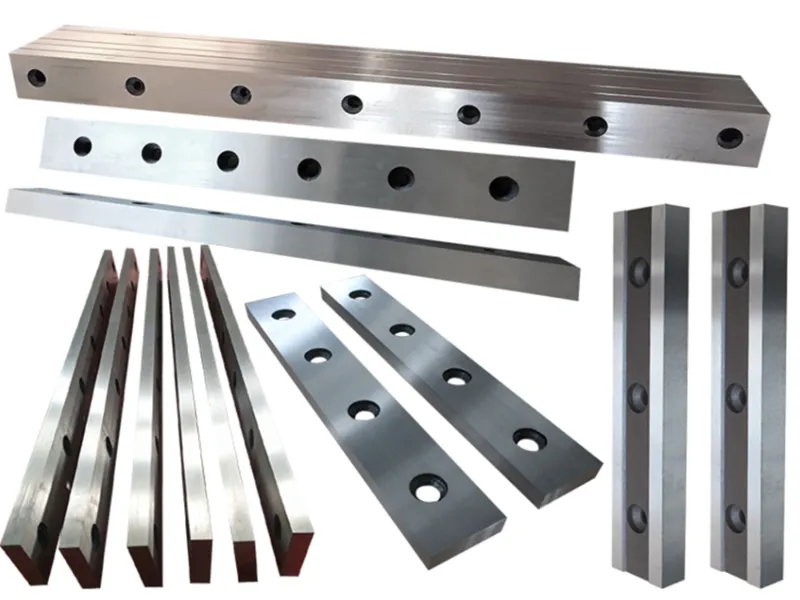
Blade Wear and Service Life
Improper clearance increases stress on the cutting blades:
- Small clearance accelerates blade wear and chipping
- Large clearance causes uneven blade loading
Maintaining the correct blade clearance significantly extends blade service life and reduces replacement costs.
Cutting Accuracy and Material Deformation
Blade clearance directly affects:
- Dimensional accuracy
- Flatness of the cut piece
- Deformation near the cutting edge
This is especially important when cutting thicker plates or high-strength materials.
Recommended Blade Clearance for Different Materials
In practice, blade clearance is typically set as a percentage of material thickness, depending on material type and tensile strength.
Hydraulic Shear Blade Clearance Chart
| Material Type | Thickness Range | Recommended Clearance |
|---|---|---|
| Mild Steel (Carbon Steel) | ≤ 3 mm | 5–6% of thickness |
| Mild Steel (Carbon Steel) | 3–10 mm | 6–8% of thickness |
| Acero inoxidable | ≤ 3 mm | 6–8% of thickness |
| Acero inoxidable | 3–10 mm | 8–10% of thickness |
| Aluminio | ≤ 3 mm | 4–5% of thickness |
| Aluminio | 3–10 mm | 5–6% of thickness |
| High-Strength Steel | ≤ 10 mm | 8–10% of thickness |
Note: These values are general industrial recommendations. Actual settings may vary depending on blade material, cutting angle, and machine rigidity.
How to Calculate Shear Blade Clearance
Blade Clearance = Material Thickness × Clearance Percentage
Example
For a 5 mm mild steel sheet with a recommended clearance of 6%:
5 mm × 6% = 0.30 mm
The calculated blade clearance is 0.30 mm.
This calculation should be treated as a starting reference. Always use the clearance specified by the shear manufacturer's manual when a machine-specific value is provided.
How to Adjust Hydraulic Shear Blade Clearance
The basic adjustment process is:
1. Identify the material and thickness
2. Determine the required blade clearance
3. Set the blade gap
4. Verify the clearance
5. Perform a test cut
Step 1: Identify the Material and Thickness
Before adjusting the blade clearance, identify the material type and measure the actual sheet thickness. Material properties such as tensile strength can also affect the recommended clearance.
For example, stainless steel and high-strength steel may require different blade clearance settings from mild steel of the same thickness.
Always check the machine manufacturer's specifications before making an adjustment.
Step 2: Determine the Required Blade Clearance
Use the machine manufacturer's blade clearance chart whenever one is available. If a machine-specific value is not provided, use a material-based clearance chart as a starting reference.
The basic calculation is:
Blade Clearance = Material Thickness × Clearance Percentage
For example, if a 5 mm mild steel sheet requires a 6% clearance:
5 mm × 6% = 0.30 mm
The calculated value should be treated as a starting reference rather than a universal setting. The final clearance may vary depending on the machine design, blade geometry, blade condition, material properties, and manufacturer's recommendations.
For recommended clearance values by material and thickness, see the [Hydraulic Shear Blade Clearance Chart](#).
Step 3: Set the Blade Clearance
Once the required clearance has been determined, adjust the machine's blade-gap mechanism according to the manufacturer's adjustment procedure.
The adjustment method depends on the type and configuration of the hydraulic shear.
Manual Adjustment in Swing Beam Shears
Many swing beam hydraulic shears use mechanical mechanisms such as eccentric shafts, adjustment bolts, or graduated scales to set blade clearance.
The general procedure is to select the required clearance based on the material thickness, adjust the blade-gap mechanism to the specified setting, and then verify the actual clearance before production.
The exact adjustment procedure varies between machine models, so operators should follow the machine-specific manual rather than relying only on a general clearance percentage.
CNC-Controlled Adjustment in Guillotine Shears
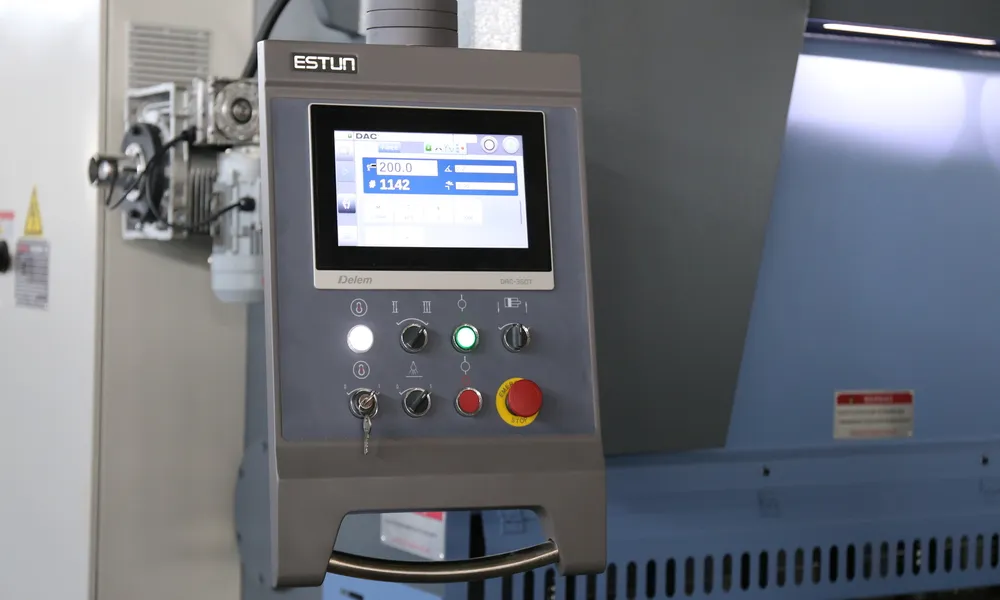
Many modern CNC guillotine shears use CNC-controlled or motorized blade-gap adjustment. Depending on the machine configuration, the operator can enter the material thickness and other cutting parameters through the CNC controller, which can then set or assist with the required blade clearance.
CNC-controlled adjustment can improve setup speed and repeatability, especially when material thickness or cutting parameters change frequently.
The operator should still verify that the selected clearance matches the machine manufacturer's recommended setting.
Step 4: Verify the Blade Gap
After setting the blade clearance, verify the actual gap using the measurement procedure specified by the machine manufacturer.
For manually adjusted machines, the clearance may need to be checked at multiple points along the blade to confirm that the gap is consistent.
If the measured clearance differs from the specified value, make the necessary adjustment before performing the production cut.
Step 5: Perform a Test Cut
After verifying the blade clearance, perform a test cut using the same material and thickness that will be used in production.
Inspect the cut edge for:
- Burrs
- Rough or torn edges
- Blade marks
- Sheet deformation
- Uneven cutting
If the cutting result is unsatisfactory, recheck the blade clearance, blade condition, blade alignment, and other machine settings before making further adjustments.
How to Tell if Blade Clearance Is Correct
| Cutting Result | Possible Cause | What to Check |
|---|---|---|
| Excessive burrs | Clearance may be too large | Blade gap and blade condition |
| Rough or torn edge | Incorrect clearance | Clearance and material thickness |
| Blade chipping | Clearance may be too small | Blade gap and blade condition |
| Uneven cut | Uneven clearance or alignment | Gap along the blade |
| Sheet deformation | Clearance or setup issue | Clearance and cutting angle |
Common Blade Clearance Problems and Solutions
| Problem | Possible Cause | What to Check | Action |
|---|---|---|---|
| Excessive burrs | Clearance may be too large | Blade gap and blade condition | Verify and adjust the gap if required |
| Rough or torn edge | Incorrect clearance | Gap and material thickness | Reset according to machine specifications |
| Blade chipping | Clearance may be too small or blade damaged | Gap and blade condition | Verify clearance and inspect the blade |
| Uneven cut | Uneven gap or blade alignment | Clearance along the blade | Check alignment and blade gap |
| Sheet deformation | Clearance or cutting setup issue | Gap, rake angle, and setup | Check the complete cutting setup |
Regular inspection and adjustment help maintain stable cutting quality.
How Blade Clearance Influences Shear Selection
Blade clearance control plays an important role when choosing between shear types:
- Swing beam shears are practical for standard thickness ranges with limited material variation
- Guillotine shears offer superior control when cutting different materials and thicknesses in one production cycle
Understanding blade clearance behavior helps buyers make more informed equipment selections rather than relying on machine type alone.
Conclusión
Proper hydraulic shear blade clearance adjustment is essential for achieving clean cuts, long blade life, and stable production performance.
By understanding clearance principles, recommended values, and adjustment methods, operators and buyers can significantly improve cutting results.
This technical knowledge also clarifies why different hydraulic shear designs—such as swing beam and guillotine—perform differently in real-world applications.
FAQ: Hydraulic Shear Blade Clearance Adjustment
What happens if blade clearance is too small?
It increases cutting force, accelerates blade wear, and may cause blade damage.
Is blade clearance the same for all materials?
No. Stainless steel and high-strength materials require larger clearance than mild steel.
Do CNC guillotine shears automatically adjust blade clearance?
Yes, most modern guillotine shears support CNC-controlled blade gap adjustment.
How often should blade clearance be adjusted?
Whenever material thickness or type changes significantly.