MAX vs Raycus vs IPG Fiber Laser Source Comparison for Laser Cutting Machines
- Conocimientos, Noticias
- 90+ reading now
Quiénes somos
Compare Max, Raycus, and IPG fiber laser sources in cutting performance, cost, and stability. Learn which laser source fits your production needs best.
Contáctenos
Entradas recientes

Categorías
Síganos
Nuevo vídeo semanal
In today’s sheet metal fabrication industry, choosing the best fiber laser source brand is one of the most critical decisions when investing in a máquina de corte por láser. Among global manufacturers, four brands are most widely referenced: Max, Raycus, IPG, and JPT. While Max, Raycus, and IPG dominate industrial sheet metal cutting, JPT has gained traction in precision marking and mixed-use applications.Each of these fiber laser sources has its own strengths, price positioning, and application focus. But which one is truly the best?The answer depends on your production needs, materials, budget, and long-term operation goals. In this guide, we provide a practical comparison of Max vs Raycus vs IPG to help you make an informed decision.
What Is a Fiber Laser Source?
A fiber laser source is the core component that generates the laser beam used in a fiber laser cutting machine. It converts electrical energy into a high-power laser beam and delivers it through a fiber optic cable to the cutting head.
In sheet metal fabrication, the performance of a fiber laser source directly affects cutting speed, edge quality, energy efficiency, and long-term machine reliability.
Different laser source brands use different technologies and designs. IPG, Raycus, and Max are widely used for industrial metal cutting because they provide stable power output for processing materials such as carbon steel, stainless steel, and aluminum.
When selecting a fiber laser source, manufacturers should consider not only the brand reputation but also laser power, material thickness, production requirements, maintenance cost, and after-sales support.
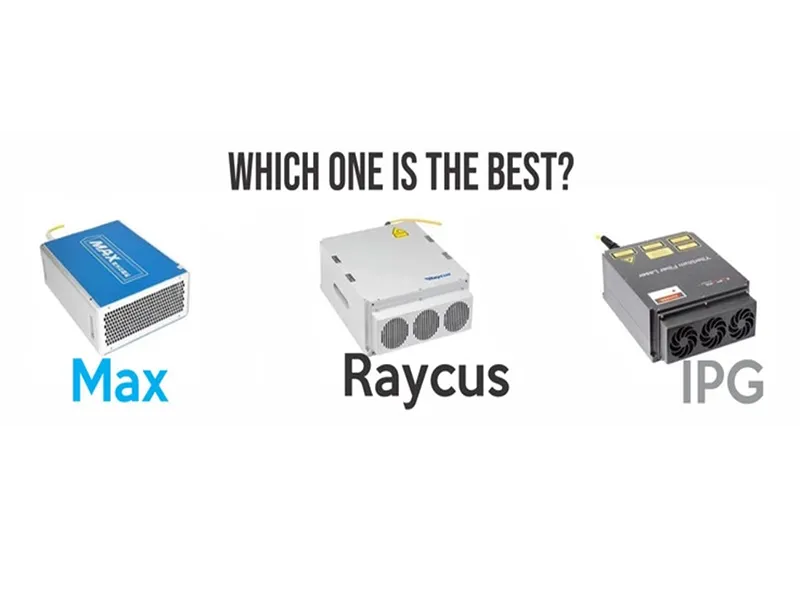
Overview of MAX, Raycus, and IPG Fiber Laser Sources
Max Fiber Laser Source
Max Photonics is a leading Chinese manufacturer specializing in high-power fiber laser technology. Over the past decade, Max has rapidly expanded its global footprint, especially in cost-sensitive markets.
Key advantages of Max laser sources:
- Competitive pricing
- Good performance for thin to medium-thickness metal
- Wide power range (1kW–20kW+)
- Improving reliability with newer generations
- Suitable for small and medium fabrication workshops
Max laser sources are commonly chosen by manufacturers looking for strong cost efficiency without sacrificing basic cutting performance.
Raycus Fiber Laser Source
Raycus is another major Chinese fiber laser producer and one of the earliest domestic brands to achieve large-scale industrial deployment. Raycus laser sources are widely used in sheet metal processing, structural steel cutting, and general fabrication.
Key advantages of Raycus laser sources:
- Proven stability in industrial environments
- Strong market adoption worldwide
- Balanced price-to-performance ratio
- Good compatibility with mainstream laser cutting machines
- Reliable support network in many regions
Raycus is often regarded as a “safe middle option,” offering dependable performance at a moderate cost.
IPG Fiber Laser Source
IPG Photonics is a global pioneer in fiber laser technology and is headquartered in Europe. IPG laser sources are widely recognized for premium beam quality, high electro-optical efficiency, and long-term reliability.
Key advantages of IPG laser sources:
- Excellent beam quality and power stability
- High cutting precision, especially on reflective materials
- Long service life
- Strong global technical support
- Preferred choice for high-end manufacturing
IPG typically comes at a higher price point, making it popular among automotive, aerospace, and precision engineering industries.
MAX vs Raycus vs IPG Fiber Laser Source Comparison
While all three brands are capable of powering modern fiber laser cutting machines, their differences become clearer when viewed side by side.
| Feature | JPT | Max | Raycus | IPG |
|---|---|---|---|---|
| Typical Price Range | Mid-range | Most cost-effective | Mid-range | Premium |
| Common Power Options | 20W–6kW | 1–20kW+ | 1–20kW+ | 1–30kW+ |
| Beam Quality (M²) | ~1.2–1.5 | ~1.6–2.0 | ~1.5–1.8 | ~1.1–1.3 |
| Technology Type | MOPA | Q-switched | Q-switched | CW / Pulsed |
| Power Stability | ±1.5–2% | ±2–3% | ±1.5–2% | ±1% |
| Cutting Speed (6mm SS) | N/A | Standard | Fast | Fastest |
| Edge Quality | N/A | Good for general fabrication | Clean edges | Excellent edge finish |
| Performance on Reflective Metals | Good (marking) | Acceptable | Good | Excellent |
| Continuous Operation Capability | Medium | Medium | High | Very High |
| Typical Downtime Risk | Low | Low–Medium | Low | Very Low |
| Spare Parts Cost | Medium | Low | Medium | High |
| Global Service Coverage | Regional-focused | Regional-focused | Regional + partial global | Strong global |
| Best Fit Applications | Color marking, electronics, mixed-use | Job shops, cost-sensitive factories | Industrial sheet metal lines | Automotive, aerospace, precision parts |
In practical production environments:
- Max offers strong value for budget-focused operations.
- Raycus delivers reliable performance for most industrial cutting needs.
- IPG provides superior cutting consistency and precision for demanding applications.
Which Fiber Laser Source Is Best for Your Business?
Rather than asking which brand is “best,” a more useful question is which laser source best matches your production requirements.
For Small and Medium Workshops
If your operation focuses on thin to medium sheet metal and cost control is important, Max or Raycus fiber laser sources usually provide excellent value. They offer sufficient cutting speed, acceptable edge quality, and lower upfront investment.
For High-Volume Industrial Production
Raycus and IPG are both strong choices for continuous operation environments. Raycus offers solid stability with moderate cost, while IPG excels in long-term consistency and precision.
For High-End Manufacturing
For industries such as automotive components, aerospace parts, or precision stainless steel processing, IPG fiber laser sources often deliver the best results thanks to superior beam quality and power control.
How to Choose a Fiber Laser Source for a Laser Cutting Machine?
Choosing the right fiber laser source depends on several production factors rather than brand name alone. A suitable laser source should match your material requirements, cutting performance expectations, and operating environment.
Laser Power Requirements
Laser power determines the thickness range and cutting speed of a fiber laser cutting machine. Higher-power sources are suitable for thicker materials and high-volume production, while lower-power sources are sufficient for thin sheet metal processing.
Material Type and Thickness
Different materials require different cutting capabilities. Stainless steel, carbon steel, and aluminum may require different power levels and beam quality depending on thickness and production requirements.
Cutting Speed and Efficiency
A stable laser source helps maintain consistent cutting speed and edge quality during continuous operation. Production volume should be considered when comparing different brands.
Reliability and Maintenance Cost
Besides initial purchase price, buyers should evaluate service life, spare parts availability, downtime risk, and technical support.
Total Cost of Ownership Matters More Than Initial Price
When evaluating fiber laser sources, many buyers focus only on the purchase price. However, long-term operating cost plays a much larger role.
Key factors include:
- Energy efficiency
- Maintenance frequency
- Spare parts availability
- Downtime risk
- Service response time
While IPG typically requires higher initial investment, its stability can reduce unexpected downtime. Max offers low entry cost and affordable maintenance. Raycus provides a balanced middle ground.
A proper evaluation should consider the entire lifecycle of your laser cutting machine.
How We Configure Fiber Laser Sources in Our Laser Cutting Machines
At Durmapress, we integrate Max, Raycus, and IPG fiber laser sources into our fiber laser cutting machines based on each customer’s production goals.
Instead of pushing a single brand, our engineering team evaluates:
- Material type and thickness
- Required cutting speed
- Budget range
- Local service availability
- Future expansion plans
This flexible configuration approach ensures every machine delivers optimal productivity and long-term reliability.
When customers ask us which is the best laser source brand for their machine, our answer is always: it depends on your material, volume, and budget — and we help you decide.
Is JPT Fiber Laser Source Suitable for Laser Cutting?
JPT is a fiber laser manufacturer known for MOPA technology. Compared with Max, Raycus, and IPG, JPT is more commonly used in laser marking, engraving, and precision processing applications.
For standard sheet metal cutting applications, Max, Raycus, and IPG are generally more common choices because they are designed for higher-power continuous cutting operations.
However, JPT can be a suitable option for businesses that require both metal cutting and precision marking, such as adding QR codes, serial numbers, or decorative marks on finished components.
For Mixed Cutting and Marking Operations
If your facility handles both sheet metal cutting and precision marking tasks - such as QR codes, serialnumbers, or color effects on finished parts -a JPT fiber laser source may complement your existingsetup. JPT's MOPA technology supports a wider range of marking effects that standard Q-switched lasers cannot achieve.
Frequently Asked Questions
Q1. Which fiber laser source brand is best??
IPG generally offers higher beam quality and stability, but Raycus provides excellent industrial performance at a lower cost. The better choice depends on your application and budget.
Q2. Is Max fiber laser source reliable?
Modern Max laser sources have significantly improved in stability and are widely used in commercial laser cutting machines, especially for standard fabrication tasks.
Q3. Can I change the laser source later?
In many cases, laser sources can be upgraded or replaced, but this depends on machine design, control system compatibility, and power configuration. It is best to plan laser source selection during initial purchase.
Q4. Which fiber laser source is best for stainless steel cutting?
All three brands can cut stainless steel effectively. IPG typically delivers the cleanest edges for high-end applications, while Raycus and Max provide strong performance for general production.
Q5. Should I consider JPT fiber laser source for sheet metal cutting?
JPT is primarily used in laser marking and engraving applications rather than heavy-duty sheet metal cutting. If your main requirement is industrial cutting of carbon steel, stainless steel, or aluminum, Max, Raycus, or IPG are more suitable choices. JPT becomes relevant when your operation also involves precision marking tasks.
Q6: What is the difference between fiber laser sources for cutting and marking?
Fiber laser sources used for cutting are usually designed for higher power continuous operation, while marking laser sources focus on precision, pulse control, and surface processing. Brands such as Max, Raycus, and IPG are commonly used for metal cutting, while JPT is often selected for marking and engraving applications.