In heavy industry, bending long and thick sheet metal parts is a constant challenge. Manufacturers in sectors such as elevator construction, shipbuilding, and large-scale engineering machinery often face limitations when relying on single press brakes. Long workpieces can result in inconsistent bending angles, extended cycle times, and higher labor and material costs.
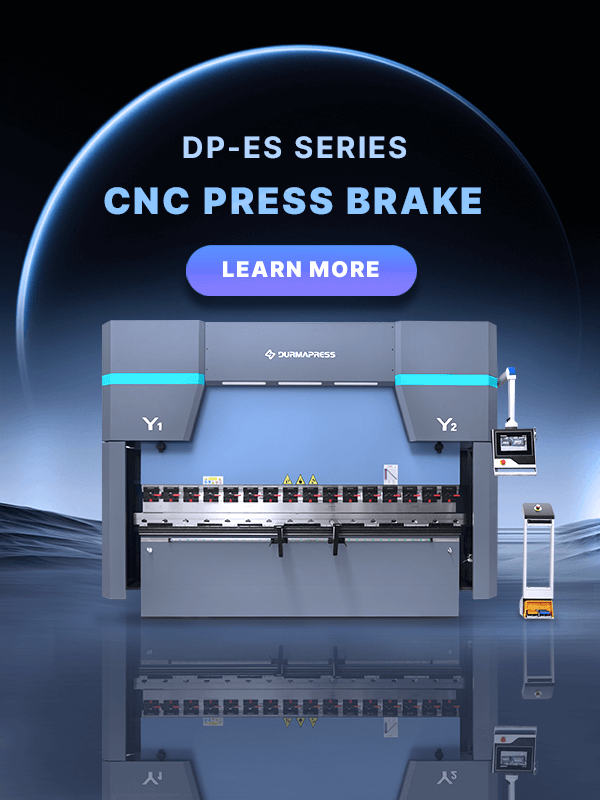
Tandem press brakes solve these challenges by synchronizing two machines to work together as a single unit. This configuration not only allows for processing longer sheets but also delivers measurable productivity gains, reduces operational costs, and achieving ±0.01mm synchronization accuracy.
By adopting tandem press brakes, fabrication facilities can achieve faster production cycles, minimize rework, and maximize return on investment (ROI). Beyond simply handling length, tandem systems provide an integrated solution that enhances both production efficiency and product quality in heavy industry applications.
The Limitations of Single Press Brakes
Single press brakes remain widely used due to their flexibility and lower upfront costs, but they encounter significant challenges when handling oversized sheets:
Maximum bending length: Single machines have physical limits, often requiring multiple setups to process long panels.
Precision challenges: Maintaining consistent angles over extended sheets is difficult, especially when ±0.01mm tolerance is needed.
Extended cycle times: Multiple setups increase overall production time.
Labor and cost implications: More operators are required for positioning and handling, increasing direct labor costs.
Material waste: Repeated handling and bending errors often lead to higher scrap rates.
These limitations can restrict production efficiency and make it harder to achieve predictable ROI in heavy industry fabrication.
Tandem Press Brakes: Unlocking Productivity
Tandem press brakes synchronize two machines to function as a single unit, enabling manufacturers to bend longer sheets efficiently without sacrificing accuracy. The economic and operational benefits are significant:
Higher throughput: Long sheets can be processed in a single cycle, reducing production time and eliminating repetitive setups.
Consistent accuracy: Synchronized Y-axis control ensures uniform bends across both machines, reducing rework and scrap.
Labor savings: Fewer operators are needed for long workpieces, lowering labor costs.
Material efficiency: Accurate bending reduces scrap and optimizes material usage.
Faster ROI: Increased throughput, reduced labor, and minimized waste accelerate the return on equipment investment.
A simple comparison illustrates the advantages:
Feature
Single Press Brake
Prensas plegadoras tándem
Max Sheet Length
3–4 m
6–8 m (or longer)
Cycle Time
5–8 min
2–4 min
Accuracy
±0.05 mm
±0.01 mm
Labor Required
2 operators
1 operator
Scrap Rate
5–8%
1–2%
Industry Applications in Heavy Fabrication
Tandem press brakes deliver measurable productivity gains across multiple sectors:
1. Elevator Manufacturing
Elevator panels often exceed 6 meters in length. Tandem systems maintain consistent bending angles, ensuring accurate assembly while reducing cycle times and labor costs.
2. Shipbuilding
Hull panels and bulkheads are typically oversized and thick. Synchronized bending minimizes setup time, ensures uniform curvature, and reduces downstream welding adjustments.
3. Construction Machinery
Large chassis plates require precise bends for structural integrity. Tandem press brakes improve fit and reduce assembly errors.
4. Electrical Cabinets and Panels
Long electrical panels benefit from consistent bending, improving fit within cabinets and reducing rework rates.
Quantifying Economic Benefits
The economic impact of tandem press brakes can be measured across several dimensions:
Production throughput: Tandem systems can double or triple output for long sheets compared to single machines.
Labor cost reduction: Fewer operators and reduced handling lower direct labor expenses.
Material waste reduction: Higher accuracy minimizes scrap, saving thousands per production run.
ROI acceleration: Combining higher throughput, lower labor, and less scrap shortens payback periods.
For example, a fabrication facility producing 6-meter elevator panels reported:
Production time per panel reduced by 40%
Scrap rate reduced by 3–5%
Labor cost reduced by 25%
These figures demonstrate how tandem press brakes convert technical precision into tangible economic value.
Maximizing the Value of Tandem Press Brakes
To fully realize the productivity and economic benefits of tandem systems, best practices include:
Professional installation and commissioning:Ensure proper leveling, alignment, and synchronization.
Regular maintenance:Maintain hydraulic balance, CNC calibration, and frame rigidity to preserve ±0.01mm accuracy.
Operator training:Skilled operators maximize throughput and minimize errors.
Performance monitoring:Track KPIs such as cycle time, scrap rate, and throughput to quantify productivity gains.
Durmapress provides tailored support to implement these best practices, ensuring facilities get the maximum value from tandem press brake investments.
Conclusión
Tandem press brakes are more than a technical solution for bending long sheets—they are a strategic investment in heavy industry productivity. By enabling higher throughput, reducing labor costs, minimizing scrap, and maintaining high precision, tandem systems offer measurable economic advantages over single press brakes.
For fabrication facilities seeking to improve efficiency and maximize ROI, tandem press brakes are a critical asset. Contact Durmapress to learn how a customized tandem solution can enhance your facility’s performance and profitability.
PREGUNTAS FRECUENTES
What is a tandem press brake?
A tandem press brake synchronizes two machines to work as one, enabling efficient bending of long sheet metal parts in a single operation while maintaining high accuracy and productivity.
2. When should I choose a tandem press brake instead of a single machine?
If your production involves long panels, heavy plates, or frequent multi-step bending, tandem press brakes significantly reduce setup time, improve consistency, and increase throughput—making them ideal for heavy industry fabrication.
3. How accurate are tandem press brake systems?
With advanced CNC synchronization, tandem press brakes can achieve bending accuracy up to ±0.01mm across both machines, ensuring uniform angles and minimal rework on long workpieces.
4. How do tandem press brakes improve ROI?
They increase production speed, reduce labor requirements, and minimize material waste. These combined benefits help manufacturers achieve faster payback and long-term cost savings.
Stay Updated on Industrial Innovations
Subscribe to our newsletter for the latest insights on manufacturing technology, sustainability, and industry trends.