



What Is Deburring? Methods, Machines, and How to Choose the Right Process
- Conocimientos, Noticias
- 90+ reading now
Quiénes somos
Durmapress specializes in designing, manufacturing, and selling various metal processing equipment, including bending machines, shears, punches, and laser cutting machines. The company was founded in 2014, with years of experience and technology accumulation. DurmaPress has become one of the well-known brands in China's metal processing machinery industry.



Contáctenos
Entradas recientes



Categorías
Síganos
Nuevo vídeo semanal
Table of Contents
Every cutting, punching, drilling, or laser operation leaves something behind: burrs. Deburring is the process of removing those unwanted sharp edges and raised material so parts are safe to handle, fit correctly at assembly, and behave predictably in coating, welding, and sealing operations.
The harder question is not what deburring is — it is which method fits your parts. A laser-cut stainless panel, a punched bracket, and a machined component all need different approaches. This guide explains burr formation, compares the main deburring methods, and walks through how to select the right process and the right deburring machine for your material, geometry, and production volume.

1.What Is Deburring?
Deburring is a finishing process that removes burrs — unwanted projections of material left on edges, holes, and surfaces after machining, cutting, punching, forming, or welding. It can be done with hand tools, dedicated deburring machines, CNC-integrated tooling, or specialized processes for internal features.
In industrial production, deburring is a defined quality step, not cosmetic cleanup. Parts are inspected for burrs, processed with a selected method, and verified before they move into forming, welding, coating, or assembly.
1.1 What Is a Burr?
A burr is any raised edge, curl, ridge, or attached fragment of material that remains on a workpiece after a manufacturing operation. Burrs form when material deforms, tears, or melts instead of separating cleanly at the cut.
Their size and hardness depend on the material, the cutting process, tool condition, and machine parameters — which is why no single removal method covers every case.
1.2 Why Deburring Matters
A burr measuring a fraction of a millimeter can stop an assembly line. The cost of skipping deburring rarely shows up at the finishing bench — it shows up downstream as rework, scrap, and field failures.
- Safety. Sharp edges cut operators, inspectors, and end users during handling and assembly.
- Assembly fit. Burrs prevent proper seating of fasteners, block mating surfaces, and throw off precision fits.
- Fatigue and corrosion. Burrs act as stress concentrations and corrode faster than clean edges.
- Coating quality. Paint and powder coating thin out over sharp, burred edges and fail early.
- Sealing performance. A burr on an O-ring groove or hydraulic port can cut the seal or break loose into the system.
- Welding and automation. Inconsistent edges disrupt weld quality and automated handling.
In safety-critical sectors — aerospace, medical, hydraulics — burr-free edges are a hard acceptance requirement. In general fabrication, consistent deburring removes one of the largest untracked labor costs in the shop.
2. What Causes Burrs?
Burrs form whenever material fails to separate cleanly. Knowing the cause tells you what kind of burr to expect and often points to upstream adjustments that shrink the burr before it reaches the deburring step.
- Drilling — burrs at hole entry and especially at breakout on the exit side
- Milling and turning — burrs at tool exit points, slot boundaries, and part-off locations
- Punching, blanking, and shearing — shear burrs, made worse by worn dies or incorrect clearance
- Laser and plasma cutting — hardened dross and heat-affected edge deposits
- Stamping and forming — tear burrs on ductile materials
- Welding — spatter and raised material along seams
Dull tools, excessive feed rates, poor die clearance, unstable workholding, and heat buildup all increase burr size. Soft, ductile materials such as aluminum smear and stretch into larger burrs, while brittle materials chip more cleanly.
Burr formation cannot be fully eliminated. The realistic goal is a small, uniform, predictable burr that a consistent deburring process can remove reliably.
3.Types of Burrs
Identifying the burr type is the first step in method selection. The brush pass that cleans a light rollover burr will barely touch hardened plasma dross.
3.1 Rollover Burrs
Rollover burrs are curls of material folded over the exit edge of a cut instead of separating cleanly. They are the most common burr in milling, drilling, punching, and laser cutting, appearing on the exit side of the tool path or hole. They are usually the easiest to remove — a chamfer pass, brush head, or abrasive belt typically handles them.
3.2 Tear Burrs
Tear burrs occur when material fractures or tears rather than shearing cleanly, leaving jagged, irregular, sharp edges. They are common in stamping, punching, and shearing on ductile materials, especially with worn tooling or incorrect die clearance.
In critical applications, edges with tear burrs should be inspected for additional surface damage after removal. Recurring tear burrs usually signal a tooling or clearance problem worth fixing at the source.
3.3 Cut-Off and Breakout Burrs
Cut-off and breakout burrs form where a part separates from stock — at parting operations, saw cuts, and drilled hole exits. Their advantage is predictability: they appear at a known location, so a countersink, back-chamfer tool, or programmed deburring pass can target them directly.
A related type, the Poisson burr, forms when compressive force displaces material sideways at an edge. It sits tighter than a rollover burr and usually needs genuine cutting or abrasive action rather than light brushing.
3.4 Internal Burrs
Internal burrs form inside drilled passages, at cross-hole intersections, and in grooves — exactly where belts and external brushes cannot reach. They matter most in hydraulic, fuel, and medical components, where a loose internal burr can migrate and cause functional failure. Removal typically requires back-chamfer tooling, waterjet, electrochemical, or thermal processes.
3.5 Thermal Cutting Dross and Weld Spatter
Laser and plasma cutting melt material, and some of that molten metal re-solidifies on the lower edge as dross — a hardened deposit that behaves differently from a mechanical burr. Welding leaves spatter and raised material along seams.
Because these deposits are typically harder than a mechanical burr, light brushing is rarely enough. Abrasive belt grinding, aggressive brush heads, or dedicated slag-removal heads are the usual answers in sheet metal work.
4. Deburring vs Edge Rounding vs Chamfering
These terms specify different edge outcomes, and the distinction matters when writing drawings and buying equipment.
| Process | Removes burrs | Creates a defined radius | Changes surface finish |
|---|---|---|---|
| Deburring | Yes | Not necessarily | Sometimes |
| Edge rounding | Yes / partly | Yes | Sometimes |
| Chamfering | Yes / partly | No (creates a bevel) | No |
| Polishing | No / limited | No | Yes |
The distinction that matters most in sheet metal work is deburring vs edge rounding. A deburred edge is burr-free but can still be sharp. Paint and powder coatings pull thin over sharp edges, which is why coating specifications often call for a defined edge radius. If parts are coated or handled frequently, edge rounding is usually required in addition to burr removal — and modern machines perform both in one pass.
Deburring vs chamfering is a drawing question: a chamfer is designed geometry cut to a specification, while deburring removes an unintended defect. A chamfering pass often removes the burr at the same time, but "chamfered" and "burr-free" are separate requirements.
5. Common Deburring Methods
No deburring method is universally best — each trades off cost, speed, selectivity, and reach.
5.1 Manual Deburring
Manual deburring uses hand tools: files, swivel-blade deburring tools, scrapers, countersinks, abrasive stones, and small rotary tools.
- Best for: prototypes, low volumes, rework, high part variety, and features machines cannot access
- Limitations: slow, operator-dependent, inconsistent between shifts, and often the largest hidden labor cost in a shop
If quality escapes trace back to "operator missed a burr," the process — not the operator — is usually the problem. That is the typical trigger for moving to machine-based deburring.
5.2 Mechanical Deburring Machines
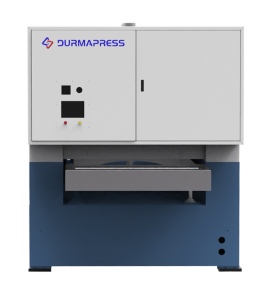
Mechanical deburring machines process parts with abrasive belts, rotating brushes, oscillating discs, rollers, or combinations of these heads. Wide-belt and multi-head machines are the workhorses of sheet metal fabrication, handling laser-cut, punched, and stamped flat parts at production speed.
Multi-head configurations remove burrs, apply edge rounding, and set a surface finish in a single pass. Machines run wet or dry depending on material and dust considerations. Their main limitation is reach: they process accessible edges and faces, not internal features or complex 3D geometry.
5.3 Brushing
Brushing uses rotating wire or abrasive filament brushes to remove light burrs and refine edges — as handheld tools, as brush heads inside deburring machines, or mounted in CNC spindles. It suits small-to-medium burrs, hole edges, and coated parts that aggressive grinding would damage. Brushes refine edges; they do not cut heavy material, so large or hardened burrs need a cutting pass first.
5.4 Tumbling and Vibratory Finishing
Mass finishing processes parts in batches with abrasive media in a barrel or vibratory bowl. It suits large batches of small parts needing overall edge smoothing, with low labor per part. The trade-offs: no selectivity, possible part-on-part contact damage, media lodging in holes, and longer cycle times than inline methods.
5.5 CNC and Robotic Deburring
CNC deburring integrates burr removal into the machining program using chamfer mills, back-chamfer tools, brushes, and compliant tools. Parts come off the machine finished — no secondary bench operation and no operator variation, which is often the step that makes lights-out machining possible.
Robotic cells mount compliant spindles or grinders on industrial robots for parts too large or numerous for a bench: castings, weldments, and complex 3D components. Both approaches pay back at volumes that justify programming and integration effort.
5.6 Specialized Deburring Processes
Specialized methods handle burrs that conventional mechanical tools cannot reach or materials they cannot process:
- Electrochemical deburring (ECD) dissolves burrs at precise locations without contact — standard for cross-holes in hydraulic and fuel-system parts at production volume.
- Thermal deburring (TEM) removes small burrs throughout complex internal geometry in one controlled combustion cycle.
- Abrasive flow machining (AFM) pushes abrasive media through internal channels.
- Waterjet deburring combines burr removal and cleaning for deep holes and passages.
- Cryogenic deburring freezes rubber and flexible plastics so flash breaks away cleanly.
These are production solutions for specific geometries and materials rather than general-purpose alternatives. For most sheet metal and machined parts, mechanical, brush, and CNC methods remain the practical starting point.
6. Deburring for Sheet Metal Parts
Sheet metal deburring is its own discipline. Flat parts arrive from cutting processes in high volume, both faces and all edges need treatment, and the finished edge condition directly affects coating, forming, and handling.
6.1 Deburring Laser-Cut Parts
Laser cutting leaves two distinct problems: a sharp burr along the cut edge and, depending on material and parameters, dross on the bottom face. On stainless and oxide-cut mild steel, an oxide layer along the edge can also interfere with powder coating adhesion.
A typical machine setup for laser-cut parts combines an abrasive belt head to remove the vertical burr and dross, followed by brush or disc heads for edge rounding and oxide removal. Parts cut on a máquina de corte por láser de fibra usually go through deburring before bending, so the press brake operator handles clean, safe blanks and coatings apply evenly after forming.
6.2 Deburring Punched and Sheared Parts
Punching and shearing produce shear burrs — typically a rollover on the entry side and a sharper burr on the exit side. Burr direction matters: all burrs on a punched blank point the same way, so machines with top and bottom processing heads, or a second pass with the part flipped, are needed for double-sided edge treatment.
Worn punches and incorrect die clearance increase burr height quickly. If deburring times are creeping up on punched parts, check tooling condition before adding finishing capacity.
6.3 Why Deburring and Edge Rounding Are Combined
In modern sheet metal finishing, deburring and edge rounding are usually one machine operation, not two. The reasons are practical:
- Coating performance. Paint and powder coating need a radius to wrap the edge at full thickness; a deburred-but-sharp edge still causes premature coating failure and corrosion.
- Handling safety. Rounded edges eliminate cut hazards through bending, welding, and assembly.
- One pass instead of two. Multi-head machines apply belt deburring and brush edge rounding sequentially in a single feed, at production speed.
If your parts are coated, galvanized, or handled manually downstream, specify edge rounding alongside deburring when evaluating equipment — retrofitting the capability later usually means buying another machine.
7.How to Choose a Deburring Method
Start from the part, not the machine. Four questions narrow the field quickly.
Material. Aluminum smears and loads abrasives — use sharp tools and clean belts. Stainless steel work-hardens — use abrasives that genuinely cut, with controlled pressure. Plastics melt or chip — use sharp blades and low heat. Coated parts need gentle brushes that clear burrs without breaking through the finish.
Geometry. Flat sheet parts suit belt and brush machines. Small parts in batches suit vibratory finishing. Holes and internal features need targeted tooling or specialized processes. Large weldments point to robotic or heavy grinding solutions.
Volume. Manual tools win at prototype volume. Machines and CNC integration win when parts repeat. Dedicated automation wins on stable, high-volume part families — and locks capital into them, which high-mix shops should avoid.
Edge requirement and downstream process. Decide whether the edge needs a simple break, a defined chamfer, a coating-ready radius, or a verified burr-free sealing surface. Over-deburring is a real failure mode: removing too much material pushes parts out of tolerance and wastes cycle time.
8. How to Choose a Deburring Machine
A deburring machine earns its cost when manual finishing becomes the constraint: labor hours climbing, edge quality varying between operators, rework accumulating downstream, or throughput stalling at the bench.
8.1 Signs You Need a Deburring Machine
- Manual deburring consumes a growing share of labor hours
- Burr and edge quality vary between operators and shifts
- Laser-cut or punched part volume is increasing
- Coating or customer specifications now require edge rounding
- Parts need consistent finishing before painting or powder coating
- Finishing has become the bottleneck between cutting and bending
If two or more of these apply, it is worth evaluating a sheet metal deburring machine against your actual part mix and volume.
8.2 Key Machine Selection Criteria
- Working width and thickness range — match to your largest common blank, not your largest-ever part
- Minimum part size — conveyor and hold-down design determines how small a part the machine can process safely
- Head configuration — belt only, or belt plus brush/disc heads for edge rounding and oxide removal in one pass
- Wet vs dry operation — wet processing controls heat and suppresses combustible dust; aluminum dust in particular is explosive, so dust extraction or wet operation is a safety requirement, not an option
- Throughput — feed speed and single-pass capability against your actual daily volume
- Operating cost — abrasive and brush consumables, energy, maintenance, and filtration
- Footprint and integration — floor space, dust collection, and position in the cutting-to-bending flow
For fabricators running cutting and press brake bending lines, the deburring machine typically sits between them, so forming and welding receive clean, consistent blanks. The same applies to HVAC duct and fitting fabrication, where deburred edges protect both installers and sealing surfaces.
8.3 Manual vs CNC vs Machine: Quick Comparison
| Approach | Part type | Volume | Edge rounding | Internal features | Consistency |
|---|---|---|---|---|---|
| Manual tools | Mixed, any shape | Low | Limited | Good | Operator-dependent |
| CNC deburring | Machined parts | Low–high | Limited | Good | High |
| Belt/brush machine | Sheet metal, flat parts | Medium–high | Excellent | Limited | High |
| Vibratory finishing | Small batch parts | High | Partial | Limited | High per batch |
| Specialized (ECD/TEM/AFM) | Complex internal geometry | Medium–high | Application-dependent | Excellent | High |
| Outsourcing | Any | Low or occasional | Supplier-dependent | Supplier-dependent | Supplier-dependent |
A production plant often runs several of these side by side. The question is never "which method is best" but "which burr, on which feature, at what volume."
9. Deburring Process and Inspection
A repeatable workflow matters as much as the method:
- Inspect and classify. Locate every burr under good lighting, including exit sides and internal features; identify type, size, and hardness.
- Select and set up. Choose the method based on material, geometry, and edge requirement; secure the part properly.
- Remove gradually. Multiple light passes beat one aggressive cut; excessive pressure creates heat, smearing, and secondary burrs.
- Clean and verify. Remove grit, media, and residue; check edges visually and by touch, with magnification or gauges for critical features.
- Feed back upstream. Growing burrs usually mean worn cutting tools or drifting parameters — a smaller incoming burr makes every later step cheaper.
On drawings, separate critical edges from general ones. A blanket "break all sharp edges" note works for non-functional edges; sealing surfaces, coating-prep edges, and mating features need explicit callouts with chamfer or radius dimensions. For internal passages, specify "burr-free, no loose material" and inspect with a borescope where failure risk justifies it.
10. FAQs
Q1: What is deburring in manufacturing?
Answer: Deburring is the removal of burrs — unwanted raised material and sharp edges left after cutting, machining, punching, or welding. It ensures parts are safe to handle, fit correctly at assembly, and accept coatings evenly.
Q2: What is the difference between deburring and edge rounding?
Answer: Deburring removes unintended burrs; edge rounding adds a controlled radius afterward. A deburred edge can still be sharp. Edge rounding is specified when parts need safe handling or when paint and powder coating must wrap the edge without thinning.
Q3: What is the best deburring method for sheet metal?
Answer: For flat sheet metal parts, abrasive-belt and rotary-brush machines are common choices, especially when deburring, edge rounding, and surface finishing are needed in one process. The right configuration depends on material, thickness, burr severity, part size, and the required edge radius.
Q4: What is the best deburring method for CNC machined parts?
Answer: For repeat parts, in-machine deburring with chamfer mills, back-chamfer tools, and brushes is usually the most consistent, since parts leave the machine finished. Heavy burrs or unreachable features still need a secondary method.
Q5: Can deburring be automated?
Answer: Largely, yes — through deburring machines, CNC-integrated tooling, and robotic cells. Automation works best when upstream cutting produces small, uniform burrs; the practical limits are burr size, feature access, and part variety.
Q6: How do you remove burrs from holes and internal passages?
Answer: Hole edges take countersinks or back-chamfer tools. True internal burrs — cross-hole intersections, channels, manifolds — need non-line-of-sight methods such as waterjet, electrochemical, abrasive flow, or thermal deburring, depending on material and volume.
11. Conclusion
Deburring decisions go wrong when they start with a tool catalog instead of the part. Identify the burr type, understand the material, check what the geometry allows you to reach, and let volume and edge requirements narrow the field. For sheet metal fabricators, the practical center of gravity is clear: belt-and-brush machines that combine deburring and edge rounding handle the bulk of laser-cut and punched production, with manual and specialized methods covering the exceptions.
When evaluating a machine, count the full cost — bench labor, rework, coating failures, and throughput bottlenecks, not just the purchase price. The most useful next step is a sample test: send representative parts with your material, thickness, burr condition, and target edge specification, and judge the machine against your actual downstream requirements rather than a demonstration blank.