Press Brake Tooling for Air Bending vs Bottoming vs Coining: The Complete Guide
- Conocimientos, Noticias
- 90+ reading now
Durmapress specializes in designing, manufacturing, and selling various metal processing equipment, including bending machines, shears, punches, and laser cutting machines. The company was founded in 2014, with years of experience and technology accumulation. DurmaPress has become one of the well-known brands in China's metal processing machinery industry.

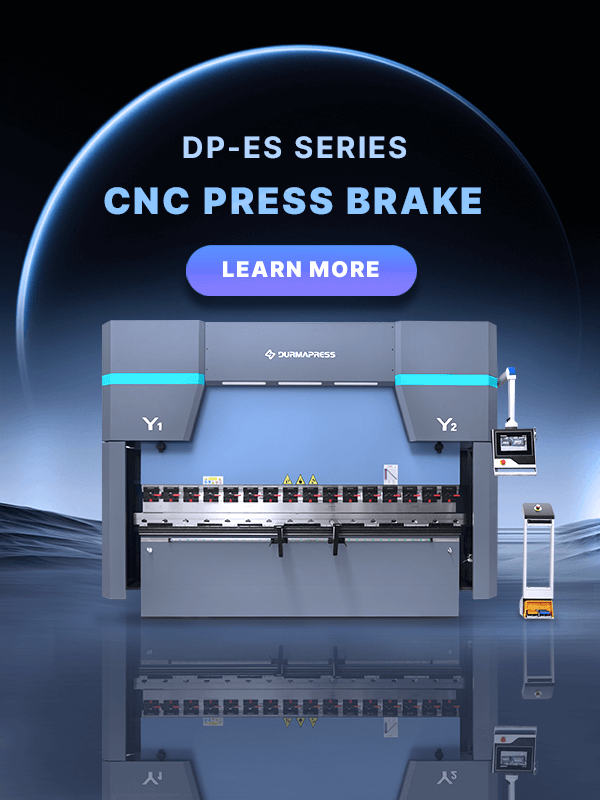
When operating a press brake, the bending method you choose directly determines the tooling you need. Air bending, bottoming, and coining each place different demands on the punch and die — in terms of geometry, contact area, wear rate, and precision.
This guide breaks down exactly how press brake tooling works in each method, what to look for when selecting tools, and how to avoid common mistakes.
In air bending, the sheet metal contacts the tooling at only three points: the punch tip and both shoulders of the die. The metal never touches the bottom of the die, leaving an air gap — hence the name.
The bend angle is controlled by punch stroke depth, not by die geometry. This means a single set of tooling can produce a range of angles simply by adjusting how far the punch descends.
Tooling characteristics for air bending:

Springback note: Air bending produces the most springback of the three methods. Operators must overbend to compensate, typically by 1–3° depending on material and thickness.
In bottoming (also called bottom bending), the punch pushes the sheet metal all the way into the die until it contacts both the punch tip and the die sidewalls. The metal conforms more closely to the tooling shape.
Because the material is forced deeper into the die, the bend angle is more precisely controlled — but this also means each target angle requires its own dedicated die.
Tooling characteristics for bottoming :

Coining uses extreme tonnage — typically 10× more than air bending — to fully plastically deform the sheet metal against the die. The material is literally compressed between punch and die, thinning slightly at the bend zone.
The bend angle is determined entirely by die geometry, making it the most accurate method but also the most demanding on equipment and tooling.
Tooling characteristics for coining:

| Criteria | Air Bending | Bottoming | Coining |
|---|---|---|---|
| Tooling Versatility | High — one die, multiple angles | Low — one die per angle | Low — exact match required |
| Angle Accuracy | ±1° | ±0.5° | <±0.25° |
| Springback | High | Moderate | Near zero |
| Tonnage Required | Low (1×) | Medium (5×) | High (10×+) |
| Tooling Wear | Low | Medium | High |
| Surface Marks | Minimal | Possible | Likely |
| Setup Cost | Low | Medium | High |
| Best For | Prototypes, varied angles | Precision production | Aerospace, tight tolerances |
The die opening width is the most critical tooling variable. A general rule:
Die width = 8× material thickness (for air bending and bottoming)
For coining, the die must be precisely matched to both the punch profile and the target angle — no general formula applies.
| Material | Recommended Method | Notes |
|---|---|---|
| Mild Steel | Air bending or bottoming | Standard tooling works well |
| Acero inoxidable | Air bending | Requires 1.5–2× more tonnage |
| Aluminio | Air bending | Hard aluminum prone to cracking; use soft alloys |
| High-Strength Steel | Coining | High precision required |
| Cobre | Bottoming or coining | Soft and ductile; precise tooling recommended |
Springback is elastic recovery — after the bending load is removed, the metal tries to return toward its original flat shape. How much it does depends on the bending method and tooling:
"Use our press brake tonnage calculator to estimate the force required for your specific material and die width."
Not all press brakes are equally suited to all three bending methods. Your machine type affects tooling selection:
1. Using the wrong die width for the material thickness
→ Too narrow: excessive force, tooling damage, potential cracking
→ Too wide: insufficient deformation, inaccurate angles
2. Ignoring punch tip radius
→ A punch tip smaller than 0.63× material thickness concentrates stress and risks cracking
3. Using air bending tooling for coining
→ Standard V-dies are not designed for coining tonnage and will fail prematurely
4. Skipping springback compensation in air bending
→ Results in angles wider than intended; always factor in material springback
5. Neglecting tooling maintenance for coining
→ High contact stress accelerates wear; inspect tooling regularly for deformation or surface damage
Choosing the right press brake tooling for air bending, bottoming, or coining comes down to three core factors: the precision your application demands, the material you're working with, and the equipment you have available.
Air bending tooling offers the best flexibility and lowest cost. Bottoming tooling delivers reliable precision for production runs. Coining tooling provides the highest accuracy for critical, tight-tolerance components — at the cost of higher tonnage and faster wear.
Explore our full range of CNC press brake machines to find the right equipment for your bending application, or contact our team for a customized tooling recommendation.
Q1: Can I use the same tooling for air bending and bottoming?
A: In some cases yes, but with caveats. A standard V-die used for air bending can be used for bottoming if the angle matches your target (accounting for springback), but the higher tonnage in bottoming will accelerate wear on tooling not rated for it.
Q2: How do I know which die width to use?
A: Start with the 8× rule: die opening = 8× material thickness. Adjust narrower for sharper bends (more force needed) or wider for softer materials to avoid cracking.
Q3: Does coining require special press brake equipment?
A: Yes. Coining requires significantly higher tonnage — typically 10× that of air bending for the same material. Ensure your press brake is rated for the required force before attempting coining to avoid machine damage.
Rellene la siguiente información para recibir un presupuesto gratuito y un folleto de productos. Le responderemos en 24 horas.