Durmapress specializes in designing, manufacturing, and selling various metal processing equipment, including bending machines, shears, punches, and laser cutting machines. The company was founded in 2014, with years of experience and technology accumulation. DurmaPress has become one of the well-known brands in China's metal processing machinery industry.
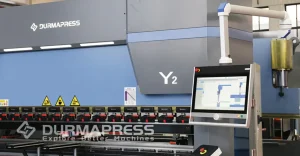
An electric press brake is a sheet metal bending machine powered by electric servo motors rather than a hydraulic system. It uses ball screws or belt drives to convert the motor's rotary motion into the linear downward force needed to bend metal — delivering precise, repeatable bends with significantly lower energy consumption.
2.How Does an Electric Press Brake Work?
The working principle of an electric press brake centers on servo motor-driven ball screws:
The CNC controller receives the programmed bending parameters — angle, depth, speed
Servo motors activate and rotate the ball screws
Ball screws convert rotary motion into linear motion, driving the ram downward
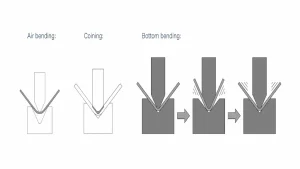
The punch (upper tool) presses the sheet metal into the die (lower tool)
The backgauge positions the material at the exact programmed location before each bend
Unlike hydraulic systems that rely on pressurized oil, electric press brakes use purely mechanical-electrical force transfer — resulting in cleaner operation, faster response, and higher positional accuracy.
3. Main Components of an Electric Press Brake
Component
Function
Frame
Provides structural rigidity
Ram / Top Beam
Delivers downward bending force
Bed / Bottom Beam
Supports the sheet metal
Calibre traseiro
Positions material precisely
Servo Motors
Powers ram movement
Ball Screws
Converts rotation to linear motion
CNC Controller
Controls all operations
Tooling (Punch & Die)
Creates the actual bend
Choosing the right tooling is just as important as the machine itself — see our full press brake tooling guide.
4.Press Brake vs Electric Press Brake: What’s the Difference?
A press brake is a machine tool used to bend sheet metal and plate material by clamping the workpiece between a matching punch and die. Press brakes are one of the most common machines in metal fabrication shops worldwide.
The electric press brake is a modern evolution of this machine — replacing the hydraulic pump and oil circuit with servo motors and ball screws, delivering higher precision and lower operating costs.
Powered entirely by servo motors with zero hydraulic components. The most energy-efficient option, consuming power only during active bending. Ideal for precision work and high-volume production.
6.2 Electro-Hydraulic Press Brake
Uses hydraulic cylinders driven by servo motors — combining hydraulic force capacity with electric precision control. A strong choice when higher tonnage is needed without sacrificing accuracy.
6.3 Hybrid Press Brake
A small amount of hydraulic oil is pressurized by electrically driven pumps. Offers the power of hydraulics with significantly reduced energy consumption — suitable for heavy fabrication environments.
6.4. Direct Drive Electric Press Brake
The motor connects directly to the ram with no intermediate transmission. Fewer moving parts means less energy loss, higher precision, and easier maintenance.
Comprimento de dobragem — must accommodate your largest workpiece 必须能容纳最大工件
Accuracy requirements — tighter tolerances require servo-electric or direct drive
Production volume — high-volume benefits most from electric speed and efficiency
Budget — factor in total cost of ownership, not just purchase price
Manufacturer support— look for established manufacturers with proven
11.FAQ
Q1: How long does an electric press brake last?
A:With regular maintenance, electric press brakes typically last 10–20 years. The absence of hydraulic components reduces wear and extends service life.
Q2: Are electric press brakes better than hydraulic?
A:For precision work and medium tonnage, yes. For heavy-duty high-tonnage applications above 500T, hydraulic machines remain the stronger option.
Q3: What materials can an electric press brake bend?
A:Steel, stainless steel, aluminum, copper, and other sheet metals — typically up to 12mm thickness depending on tonnage.
12. Conclusion
The electric press brake represents a clear step forward for shops that prioritize precision, energy efficiency, and low maintenance. For high-mix production, tight-tolerance parts, or clean operating environments, full-electric technology consistently outperforms hydraulic systems on the metrics that matter most.
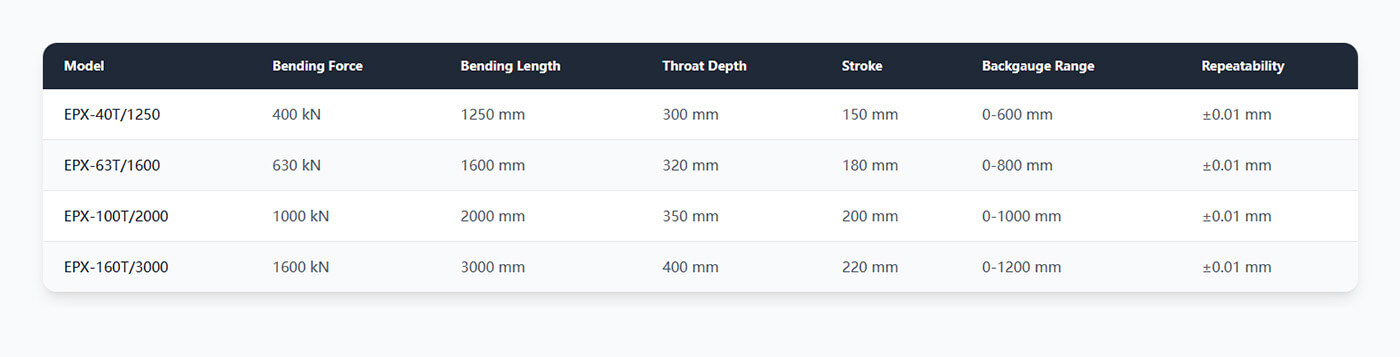
Durmapress offers two all-electric press brake series to cover the full range of production requirements. The DP-EP Series delivers proven precision and energy savings for everyday sheet metal work, while the DP-EPX Series is built for manufacturers who demand the highest levels of accuracy and control. Both are backed by Durmapress's global support network and 15-year frame warranty.
Ready to find the right electric press brake for your production? Contacto the Durmapress engineering team today for a tailored recommendation and free quote.
Stay Updated on Industrial Innovations
Subscribe to our newsletter for the latest insights on manufacturing technology, sustainability, and industry trends.