Learn how to adjust blade clearance in hydraulic shears to improve cutting accuracy, edge quality, and blade life for different materials and thicknesses.
Blade clearance adjustment is one of the most critical factors affecting cutting quality, blade life, and long-term accuracy in hydraulic shearing machines. Whether you are using a swing beam shear or a guillotine shear, understanding hydraulic shear blade clearance adjustment is essential for achieving clean edges and stable performance.
This guide explains what blade clearance is, why it matters, how to set it correctly for different materials, and how adjustment methods differ between swing beam and guillotine hydraulic shears.
What Is Blade Clearance in a Hydraulic Shear?
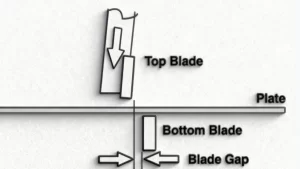
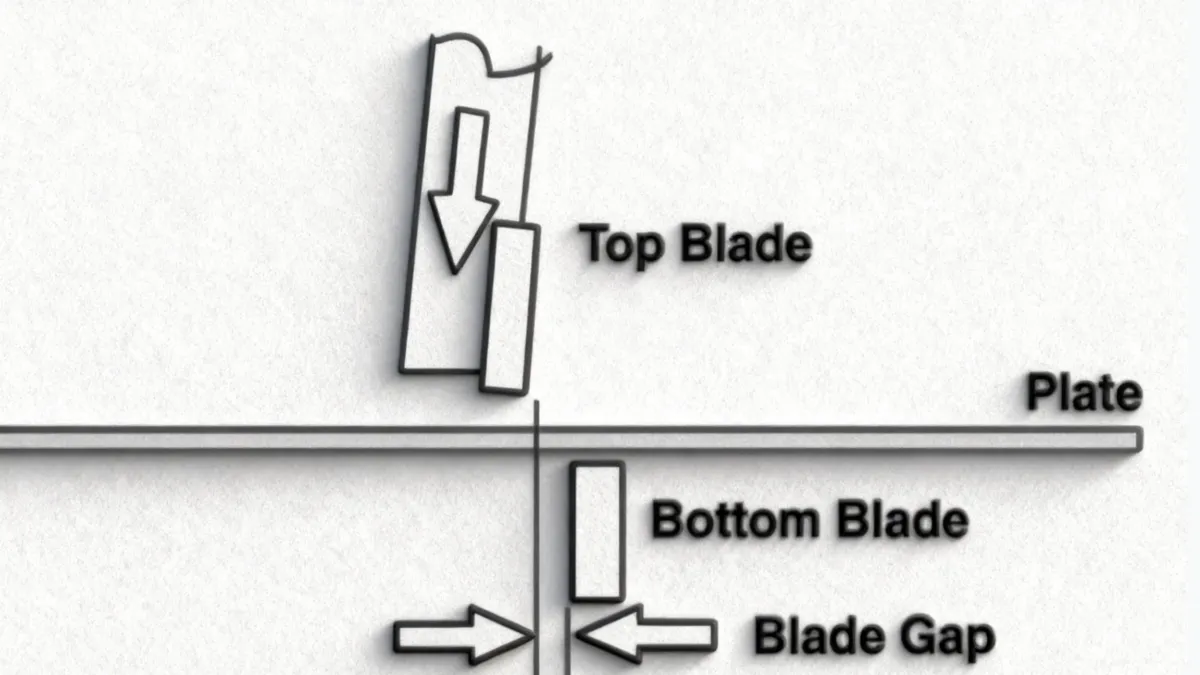
Blade clearance refers to the gap between the upper moving blade and the lower fixed blade during the cutting process. This clearance is usually expressed as a percentage of the material thickness.
Proper blade clearance allows the material to fracture cleanly along the cutting line. If the clearance is too small or too large, cutting quality and machine performance will be negatively affected.
Why Blade Clearance Is Critical to Cutting Quality
Burr Formation and Edge Quality
Incorrect blade clearance is one of the main causes of excessive burrs.
Too small clearance leads to secondary shearing and rough edges
Too large clearance causes tearing rather than clean shearing
Correct blade gap produces smooth edges with minimal burr height.
Blade Wear and Service Life
Improper clearance increases stress on the cutting blades:
Small clearance accelerates blade wear and chipping
Large clearance causes uneven blade loading
Maintaining the correct blade clearance significantly extends blade service life and reduces replacement costs.
Cutting Accuracy and Material Deformation
Blade clearance directly affects:
Dimensional accuracy
Flatness of the cut piece
Deformation near the cutting edge
This is especially important when cutting thicker plates or high-strength materials.
Recommended Blade Clearance for Different Materials
In practice, blade clearance is typically set as a percentage of material thickness, depending on material type and tensile strength.
Recommended Blade Clearance Table
Material Type
Thickness Range
Recommended Clearance
Mild Steel (Carbon Steel)
≤ 3 mm
5–6% of thickness
Mild Steel (Carbon Steel)
3–10 mm
6–8% of thickness
Aço inoxidável
≤ 3 mm
6–8% of thickness
Aço inoxidável
3–10 mm
8–10% of thickness
Aluminum
≤ 3 mm
4–5% of thickness
Aluminum
3–10 mm
5–6% of thickness
High-Strength Steel
≤ 10 mm
8–10% of thickness
Note: These values are general industrial recommendations. Actual settings may vary depending on blade material, cutting angle, and machine rigidity.
Blade Clearance Adjustment Methods
Manual Adjustment in Swing Beam Shears
Most swing beam hydraulic shears use manual or mechanical blade clearance adjustment. The operator adjusts the clearance using eccentric shafts, adjustment bolts, or mechanical scales.
Characteristics:
Simple structure
Custo mais baixo
Requires operator experience
Adjustment typically done offline
This method is suitable for workshops where material thickness does not change frequently.
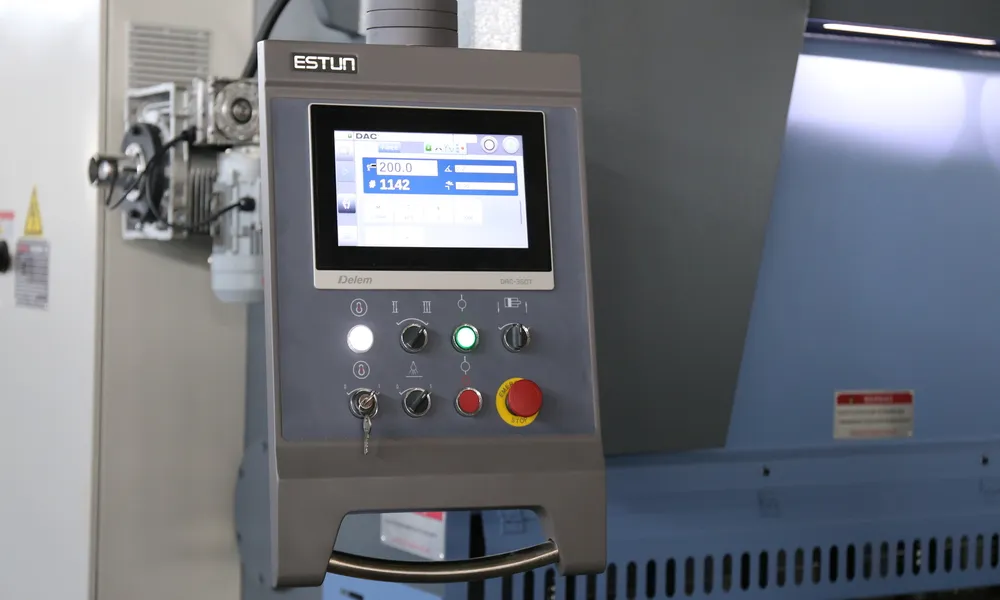
Modern guillotine hydraulic shears often feature CNC-controlled blade clearance systems. The operator inputs material thickness and type, and the machine automatically adjusts the blade gap.
Advantages:
High accuracy and repeatability
Faster setup for mixed production
Reduced operator dependency
Ideal for thick plates and precision cutting
This is one of the key reasons guillotine shears are preferred in high-precision fabrication.
Common Blade Clearance Problems and Solutions
Problem
Likely Cause
Solução
Excessive burrs
Clearance too large
Reduce blade clearance
Rough or torn edge
Clearance mismatch
Adjust according to material
Blade chipping
Clearance too small
Increase clearance slightly
Sheet deformation
Incorrect clearance or angle
Reset clearance and cutting angle
Regular inspection and adjustment help maintain stable cutting quality.
How Blade Clearance Influences Shear Selection
Blade clearance control plays an important role when choosing between shear types:
Swing beam shears are practical for standard thickness ranges with limited material variation
Guillotine shears offer superior control when cutting different materials and thicknesses in one production cycle
Understanding blade clearance behavior helps buyers make more informed equipment selections rather than relying on machine type alone.
Conclusão
Proper hydraulic shear blade clearance adjustment is essential for achieving clean cuts, long blade life, and stable production performance. By understanding clearance principles, recommended values, and adjustment methods, operators and buyers can significantly improve cutting results.
This technical knowledge also clarifies why different hydraulic shear designs—such as swing beam and guillotine—perform differently in real-world applications.
FAQ: Hydraulic Shear Blade Clearance Adjustment
What happens if blade clearance is too small? It increases cutting force, accelerates blade wear, and may cause blade damage.
Is blade clearance the same for all materials? No. Stainless steel and high-strength materials require larger clearance than mild steel.
Do CNC guillotine shears automatically adjust blade clearance? Yes, most modern guillotine shears support CNC-controlled blade gap adjustment.
How often should blade clearance be adjusted? Whenever material thickness or type changes significantly.
Stay Updated on Industrial Innovations
Subscribe to our newsletter for the latest insights on manufacturing technology, sustainability, and industry trends.