Press Brake Bending Angle Inaccuracy: Causes, Fixes & Accuracy Tips
- Conhecimento, Notícias
- 90+ reading now
Press brake bending angle inaccuracy causes rework and scrap. Learn the key reasons behind angle deviation and proven solutions to improve CNC press brake accuracy.

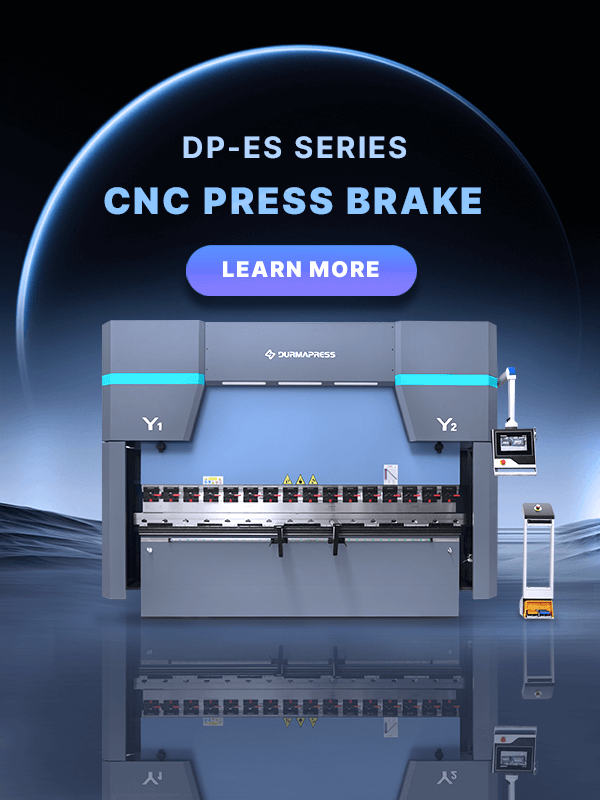
Bending angle accuracy is one of the most critical factors in press brake operations. Even small angle deviations can lead to assembly problems, dimensional errors, excessive rework, and material waste. For manufacturers handling precision sheet metal parts, bending angle inaccuracy directly affects productivity, cost control, and final product quality.
Despite the widespread use of CNC press brakes, bending angle deviation remains a common issue. Many operators assume that inaccurate bending angles are caused by machine defects, but in reality, most problems stem from process-related factors such as material variation, tooling selection, bending force calculation, crowning compensation, and parameter setup.
Understanding why bending angle inaccuracies occur—and how to correct them—is essential for achieving consistent and repeatable bending results.

Press brake bending angle inaccuracy refers to the difference between the programmed bending angle and the actual angle achieved after bending. This deviation can occur even when the machine is properly maintained and the program appears correct.
Bending angle deviation occurs when the final bent angle does not match the target angle specified in the CNC program. This can appear as:
Both situations negatively impact downstream processes and assembly accuracy.
In most general sheet metal applications, a bending angle tolerance of ±0.3° is considered acceptable. However, industries such as precision enclosures, electrical cabinets, architectural metalwork, and aerospace components often require tighter tolerances. As accuracy requirements increase, controlling bending angle deviation becomes even more critical.
In most general sheet metal applications, a bending angle tolerance of ±0.3° is considered acceptable. However, industries such as precision enclosures, electrical cabinets, architectural metalwork, and aerospace components often require tighter tolerances. As accuracy requirements increase, controlling bending angle deviation becomes even more critical.

One of the most noticeable symptoms is inconsistent angles along long bending lengths. The center of the workpiece may show a smaller angle than the edges, especially when bending thick materials or long parts.
Even when using the same program, different material batches can produce different bending angles. This inconsistency increases setup time and reduces production efficiency.
If operators constantly need to adjust angles manually, it is a strong indicator that the bending process lacks proper compensation or parameter control.
Material variation is one of the most common causes of bending angle deviation. Even materials with the same grade designation can vary significantly in yield strength, thickness tolerance, and mechanical properties.
These variations directly affect springback behavior, causing inconsistent bending results across different sheets or batches.
Key impacts include:
Different angles when switching material batches
Increased trial bends
Reduced repeatability
To minimize this issue, material data must be accurately entered into the CNC system, and test bends should be performed when material conditions change.

Bending force plays a direct role in bending angle accuracy. If the calculated tonnage is incorrect, the press brake may apply too much or too little force, resulting in over-bending or under-bending.
Common calculation errors include:
Using accurate bending force calculation methods and matching tooling to material thickness significantly improves bending consistency.
Press brake tooling condition has a major influence on bending accuracy. Worn punches or dies can cause uneven force distribution, while improper tooling selection increases springback variation.
Typical tooling-related issues include:
Regular inspection and correct tooling selection are essential for maintaining stable bending angles.

During bending, the press brake ram and table naturally deflect under load. Without proper crowning compensation, this deflection leads to uneven bending angles across the workpiece.
Crowning-related problems are especially common when bending:
Mechanical, hydraulic, or CNC-controlled crowning systems help compensate for deflection and maintain uniform bending angles across the entire length.
Modern CNC press brakes rely heavily on control system accuracy. Incorrect parameters or poor calibration can result in consistent bending angle errors.
Common issues include:
Regular calibration and proper CNC parameter management are essential for achieving reliable bending accuracy.
Although CNC press brakes reduce manual intervention, operator setup still plays an important role. Improper positioning, inconsistent material contact, or incorrect sequencing can introduce angle deviations.
Standardized operating procedures and reduced reliance on manual adjustments help improve repeatability and reduce operator-related variability.

When facing bending angle inaccuracy, a structured troubleshooting approach helps identify the root cause efficiently:
Verify material thickness and grade
Inspect tooling condition and alignment
Recalculate bending force
Activate or adjust crowning compensation
Perform test bends and fine-tune CNC parameters
This checklist minimizes guesswork and reduces production downtime.
Most modern CNC press brakes offer angle correction and compensation features. These functions allow the control system to adjust ram depth based on actual bending results, improving accuracy over time.
Utilizing these features reduces trial bends and enhances repeatability, particularly in short-run or multi-material production.
For applications requiring high precision or frequent material changes, real-time angle measurement systems provide significant advantages.
Benefits include:
These systems are especially valuable for complex or high-value components.
Creating standardized bending parameters for common materials and thicknesses improves consistency and reduces setup time.
Advanced crowning and compensation systems adapt to changing bending conditions in real time, minimizing angle deviation caused by deflection and material variation.
Regular machine maintenance ensures:
Preventive maintenance is critical for sustaining bending accuracy over time.
If your production requires frequent manual corrections, struggles with material variability, or demands tighter tolerances, your current press brake configuration may be limiting accuracy.
When upgrading or selecting a new press brake, prioritize features such as:
These features significantly enhance bending accuracy and process stability.
Material variation, improper crowning, incorrect bending force, or CNC parameter issues are the most common causes.
With proper setup and compensation, modern CNC press brakes can achieve angle accuracy within ±0.2°.
Yes. Crowning compensates for ram and table deflection, ensuring consistent angles across the bending length.
You can adjust CNC parameters, recalibrate axes, update material data, or use angle correction functions.
Press brake bending angle inaccuracy is not caused by a single factor, but by the interaction of material properties, tooling, machine setup, and process control. By understanding these factors and applying proper compensation, calibration, and standardization, manufacturers can significantly improve bending accuracy, reduce rework, and enhance production efficiency.
Preencha as informações abaixo para receber um orçamento gratuito e uma brochura do produto. Responderemos dentro de 24 horas!