Press Brake Forming: How It Works, Materials, and Key Benefits
- Conhecimento, Notícias
- 90+ reading now
Durmapress specializes in designing, manufacturing, and selling various metal processing equipment, including bending machines, shears, punches, and laser cutting machines. The company was founded in 2014, with years of experience and technology accumulation. DurmaPress has become one of the well-known brands in China's metal processing machinery industry.
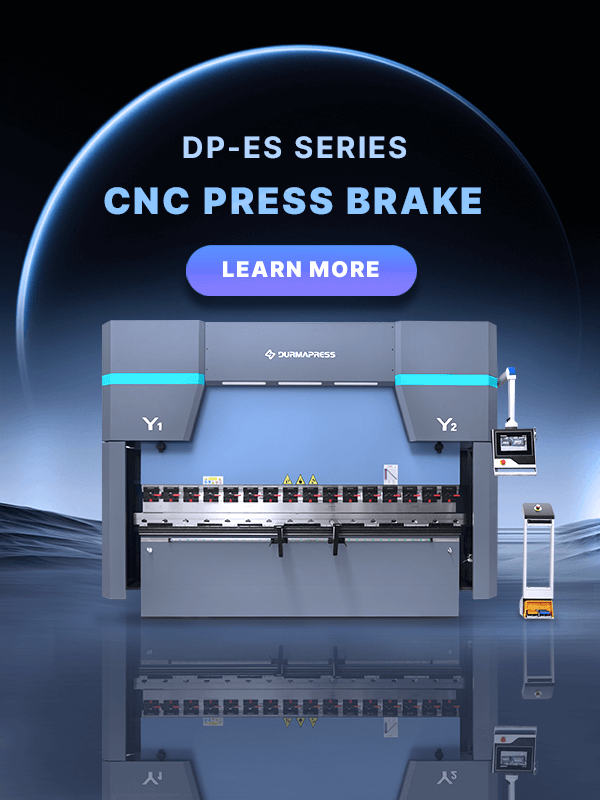
Press brake forming is one of the most widely used processes in sheet metal fabrication. Whether you are producing structural brackets, HVAC components, or precision enclosures, understanding how press brake forming works helps you make smarter decisions about materials, machine types, and production methods. This guide covers everything from the basic mechanics to the advantages that make press brake forming a preferred choice across industries worldwide.
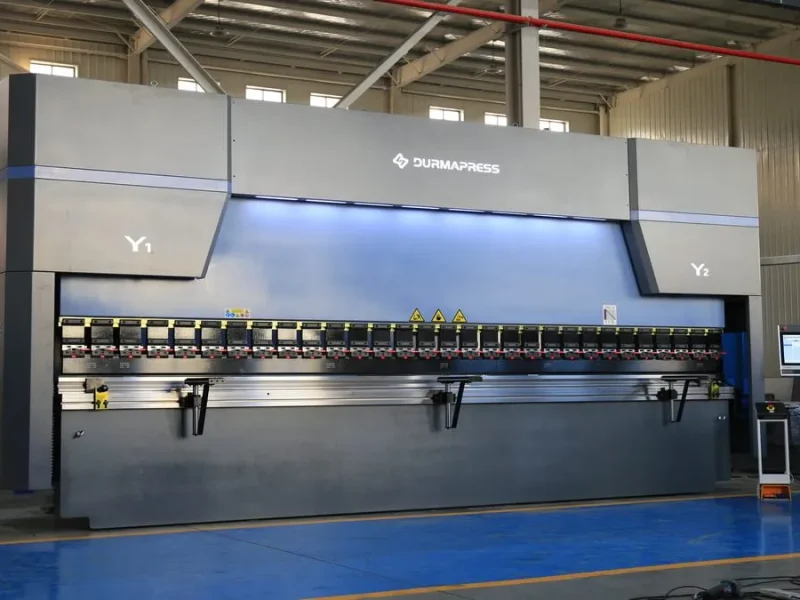
Press brake forming is a metal fabrication process that bends sheet or plate metal along a straight axis using a punch and die set. The punch — the upper tool — presses the workpiece into the die below, forcing the metal to deform at a controlled angle and radius.
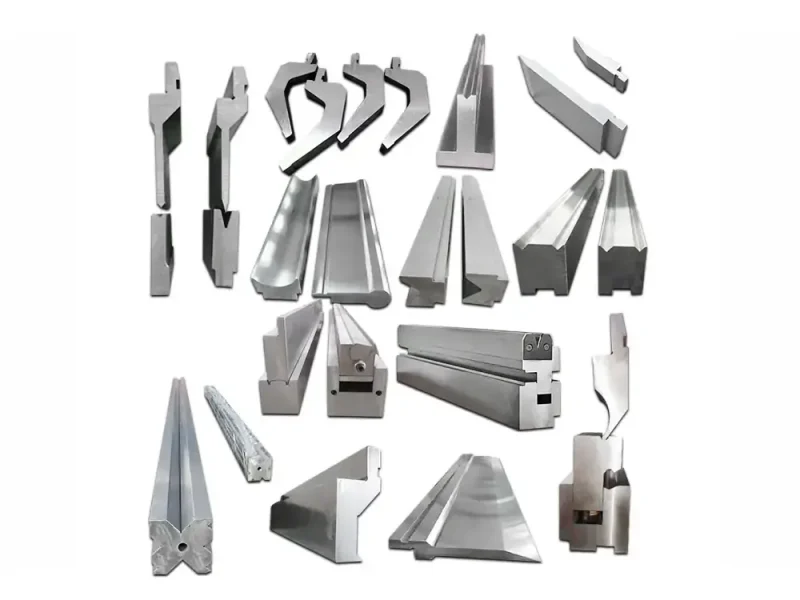
The geometry of the punch and die determines the shape of the bend. Common die profiles include V-shaped, U-shaped, and channel-shaped configurations, each suited to different bend types and angles.
Three key variables govern the outcome of every press brake forming operation:
Tonnage refers to the pressing force the machine can deliver. Harder or thicker materials require higher tonnage. Mismatching tonnage to the job can damage tooling or compromise the finished part.
Comprimento de dobragem is the maximum span the machine can form in a single stroke. This sets a hard limit on part size.
Material properties — including yield strength, hardness, and ductility — all influence how the metal responds to bending, particularly the degree of springback, where the metal partially recovers its original shape after the punch is released.
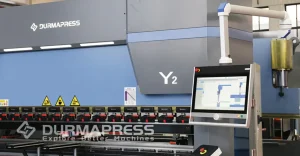
Modern CNC press brake machines, especially hydraulic models, deliver bend repeatability measured in thousandths of an inch.
Press brake forming is compatible with a broad range of metals. The right material choice depends on the application's strength requirements, corrosion resistance needs, and the machine's available tonnage.
Mild Steel (Cold-Rolled / Hot-Rolled Carbon Steel): The most common material in press brake forming. Mild steel offers excellent formability, predictable springback, and is widely used in structural components, brackets, and enclosures.
Aço inoxidável :Higher yield strength than mild steel, which means greater springback and higher tonnage requirements. Grades 304 and 316 are frequently used in food processing, HVAC, and industrial equipment applications.
Aluminum :Lightweight and highly formable, aluminum is popular in aerospace, transportation, and HVAC ductwork. Different alloys behave differently under bending — softer grades like 1100 or 3003 are easy to form, while harder grades like 6061-T6 require careful handling to avoid cracking.
Brass and Copper :Used in electrical components and decorative applications. Both materials are ductile and form cleanly, though they are softer and require lower tonnage settings.
Galvanized Steel: Common in HVAC duct forming and construction applications. The zinc coating must be considered when setting bend parameters to avoid surface cracking.
Material thickness is a critical factor: press brake forming can typically handle material ranging from thin sheet gauge up to plate thicknesses of several inches, depending on machine capacity.
Press brake forming produces a wide range of components across industries. Because the process can achieve precise, repeatable bends in various geometries, it is suited to both simple single-bend parts and complex multi-bend assemblies.
Common applications include:
The ability to work with both short-run prototype quantities and medium-volume production makes press brake forming particularly valuable compared to stamping, which requires expensive dedicated tooling.
Press brake forming occupies a unique position in the metal fabrication workflow. Unlike cutting or welding, it shapes metal without removing material or adding heat, which preserves the structural integrity of the workpiece.
Several factors make press brake forming indispensable in modern production:
Minimal tooling costs. A single set of standard punch and die tooling can produce hundreds of different part geometries simply by adjusting the stroke depth, die width, and bend sequence. This makes press brake forming cost-effective for both low-volume custom parts and medium-volume production runs.
High dimensional accuracy. CNC-controlled press brakes deliver bend repeatability of ±0.01 mm across a production run, ensuring consistent part quality with minimal scrap.
Flexibility across industries. From HVAC ductwork to precision aerospace brackets, press brake forming serves an exceptionally broad range of end markets without requiring dedicated tooling for each application.
Speed of setup and changeover. Modern CNC press brakes with 3D bend simulation software can validate complex multi-bend sequences before a single part is formed, reducing setup time and the risk of costly errors.
Integration with other processes. Press brake forming works seamlessly after corte a laser or plasma cutting and before welding or assembly, fitting naturally into multi-step fabrication workflows.

Press brakes are available in several configurations, each with distinct capabilities suited to different production environments and material requirements.
Manual press brakes require the operator to set bending dimensions and angles for each operation by hand. They are best suited to simple, repetitive bends in consistent material thicknesses where setup variables do not change frequently. Low cost of ownership makes them appropriate for smaller workshops.
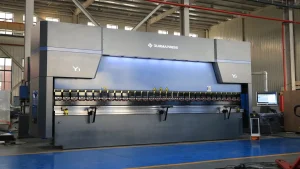
Hydraulic press brakes use twin hydraulic cylinders to deliver controlled, consistent pressing force. They are classified by ram direction — up-acting or down-acting — and offer greater force capacity than manual systems. Hydraulic models are widely used across medium and heavy fabrication environments.
CNC press brakes combine hydraulic force with computer-controlled precision. The operator inputs parameters — material type, thickness, bend angle, and sequence — and the machine executes accordingly. CNC systems minimize operator error, enable complex multi-bend programming, and deliver the highest levels of repeatability. They are the standard choice for precision fabrication at production scale.
Electric press brakes use servo motors instead of hydraulic systems, offering faster response, lower energy consumption, and quieter operation. They are well suited to environments where energy efficiency and precision are priorities, and are increasingly common in modern sheet metal fabrication shops.
Press brake forming offers a combination of precision, flexibility, and cost efficiency that few other metal forming methods can match. The key advantages include:
Versatility across materials and thicknesses. The same machine can form mild steel, stainless steel, aluminum, and copper across a wide range of gauges, making it a single-platform solution for diverse fabrication needs.
Low tooling investment. Standard punch and die sets serve a wide range of part geometries. Unlike stamping, press brake forming does not require expensive dedicated tooling for each new part design, making it ideal for custom and short-run production.
High precision and repeatability. CNC-controlled systems maintain consistent bend angles across an entire production run, reducing scrap rates and ensuring parts meet tight dimensional tolerances.
Scalability. Press brake forming scales efficiently from single-piece prototypes to medium-volume production without process changes, making it suitable throughout a product's lifecycle.
Speed. Setup times are short, particularly on CNC systems with bend simulation software that validates sequences before forming begins. This reduces lead times and lowers per-part cost.
Compatibility with complex geometries. Multi-axis back gauges and 3D programming enable complex, multi-bend parts to be formed accurately in a single setup, reducing handling and the number of operations required.
Durmapress manufactures a full range of CNC press brakes, hydraulic press brakes, and electric press brakes designed for precision sheet metal forming across industrial applications. Whether you need a machine for HVAC ductwork, structural components, or high-tolerance precision parts, our engineering team can help you identify the right equipment for your material, thickness range, and production volume.
Contactar-nos today to discuss your requirements or request a product quote.
Preencha as informações abaixo para receber um orçamento gratuito e uma brochura do produto. Responderemos dentro de 24 horas!