Sobre nós
Durmapress specializes in designing, manufacturing, and selling various metal processing equipment, including bending machines, shears, punches, and laser cutting machines. The company was founded in 2014, with years of experience and technology accumulation. DurmaPress has become one of the well-known brands in China's metal processing machinery industry.
Contate-nos
Publicações recentes

Categorias
Siga-nos
Novo vídeo semanal
Table of Contents
If you are choosing between a fiber laser and a CO2 laser for your production line, the decision comes down to more than just price. Material type, cutting speed, maintenance requirements, and long-term operating cost all factor in. This guide breaks down the real differences so you can make a well-informed decision.
1. What Is a Fiber Laser?
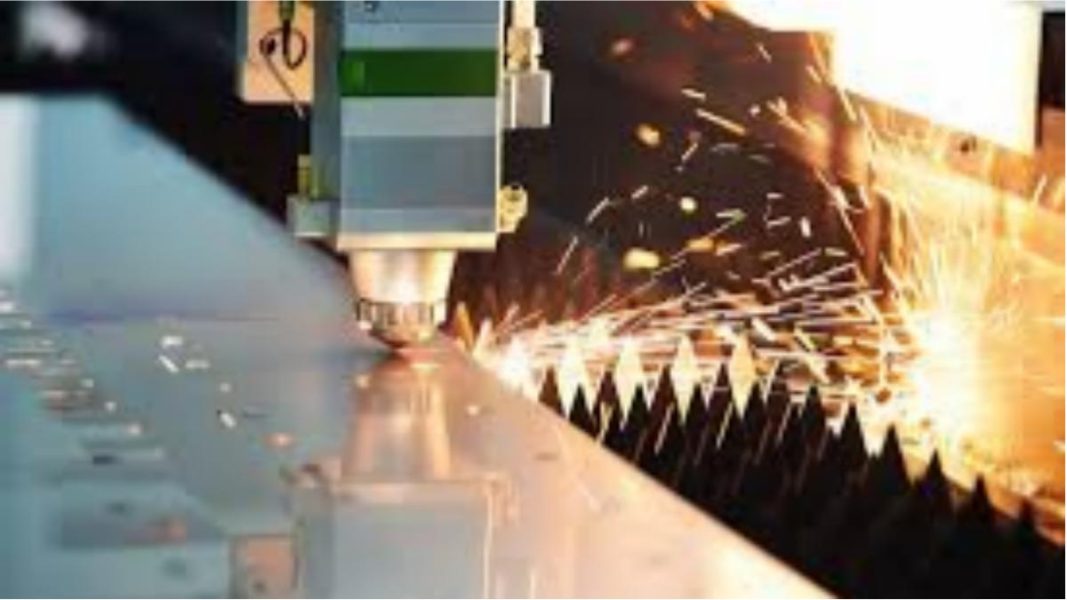
A fiber laser uses a doped optical fiber as the gain medium. Light from a pump diode is amplified as it travels through rare-earth elements — typically ytterbium — embedded in the fiber. The result is a high-intensity infrared beam at approximately 1064 nm wavelength.
This wavelength is highly absorbed by metals, making fiber lasers the dominant solution for modern sheet metal fabrication. Fiber laser sales have overtaken CO2 in recent years, driven by their speed advantage on thin-to-mid gauge materials and significantly lower operating costs.
2. What Is a CO2 Laser?

A CO2 laser generates its beam using an electrically stimulated mixture of carbon dioxide, nitrogen, and helium in a sealed tube. This produces infrared light at a wavelength of 10.6 μm — roughly ten times longer than fiber.
That longer wavelength absorbs well into organic and non-metallic materials — wood, acrylic, glass, fabric — but poorly into bare metal surfaces. CO2 lasers dominated the laser cutting market for decades and still hold advantages in certain thick-plate and non-metal applications.
3. Fiber Laser vs CO2 Laser: Key Differences
| Parameter | Fiber Laser | CO2 Laser |
|---|---|---|
| Wavelength | ~1064 nm | ~10,600 nm |
| Gain Medium | Doped optical fiber | CO₂/N₂/He gas mixture |
| Best For | Metals | Non-metals & thick plate |
| Cutting Speed (thin plate) | 3-5× faster | Baseline |
| Electrical Efficiency | >30% | 5-10% |
| Maintenance | Minimal (no mirrors) | Higher (optical mirrors, gas) |
| Purchase Price | Higher upfront | Lower upfront |
| Operating Cost | Low | High |
| Lifespan | ~100,000 hrs | ~20,000-30,000 hrs |
4. Cutting Speed Comparison
On thin sheet metal — roughly 1 to 6 mm — a fiber laser typically cuts 3 to 5 times faster than a comparably powered CO2 machine. This gap narrows on mid-thickness plate (6–20 mm) but fiber still holds a clear advantage in most cases. Beyond 20 mm, fiber lasers lose efficiency rapidly; CO2 with oxygen assist remains competitive on very thick steel plate.
For high-volume sheet metal shops, the speed difference translates directly into throughput and cost per part.
5. Material Compatibility
5.1 Materials Best Cut by Fiber
Fiber lasers absorb efficiently into conductive and metallic surfaces. Typical applications include:
Carbon steel, stainless steel, aluminum, brass, copper, titanium, and most reflective alloys. For copper and other highly reflective metals, fiber lasers require careful parameter management — or a UV laser may be more appropriate for thin gauges.
5.2 Materials Best Cut by CO2 Lasers
CO2 lasers perform well on non-metallic and organic materials: acrylic, wood, MDF, fabric, rubber, paper, leather, and glass. These materials absorb the 10.6 μm wavelength efficiently, producing clean edges with controlled heat input.
CO2 lasers can cut metal, but efficiency and cut quality on steel below 10 mm are generally inferior to fiber. Above 20 mm with oxygen assist, CO2 regains competitiveness.
6. Cutting Quality and Precision
Fiber lasers produce a more tightly focused beam — the spot size is smaller, which means narrower kerf widths and higher dimensional accuracy. On most metals under 20 mm, fiber delivers cleaner, more consistent cut edges.
On thick plate (above 20 mm), CO2 lasers can produce smoother edge finishes due to the longer interaction time with the material. For applications requiring tight tolerances on heavy plate, CO2 remains a viable option.
7. Operating Cost and Maintenance
This is where fiber lasers have the most decisive long-term advantage.
Fiber laser cost factors: Electrical efficiency exceeds 30%, no reflective mirrors in the beam path, no laser gas consumables, minimal scheduled maintenance, and operational lifespan often exceeding 100,000 hours.
CO2 laser cost factors: Electrical efficiency of only 5–10% means far higher power draw. The optical mirror system requires regular cleaning and alignment. Laser gas (CO₂, N₂, He) is a recurring consumable cost. The beam delivery system needs routine inspection and periodic replacement.
Operating cost estimates commonly cited in the industry put fiber at around $4/hour versus CO2 at roughly $20/hour — though actual figures vary by machine, power level, and usage pattern.
8. Which Laser Is Better for Different Applications?
| Application | Recommended Laser |
|---|---|
| Sheet Metal Fabrication | Fiber |
| Automotive Parts | Fiber |
| Stainless Steel Processing | Fiber |
| Copper / Brass Parts | Fiber (with care) |
| Thick Plate Steel (>20mm) | CO2 |
| Acrylic Cutting | CO2 |
| Wood / MDF Engraving | CO2 |
| Sign Making | CO2 |
| Packaging / Paper | CO2 |
| Rubber / Fabric | CO2 |
9. Fiber Laser vs CO2 Laser: Which One Should You Choose?
Choose a fiber laser if: your primary workload is cutting metal — carbon steel, stainless steel, aluminum, or other alloys. If production volume is high, operating cost matters, or you need fast turnaround on sheet metal orders, fiber is the straightforward choice for most modern fabrication shops.
Choose a CO2 laser if: your applications involve acrylic, wood, fabric, rubber, or other non-metal materials, or you regularly cut very thick steel plate where CO2 with oxygen assist is more cost-effective.
For most industrial sheet metal operations today, fiber laser is the default starting point. CO2 fills specific niches where its material compatibility or thick-plate performance is genuinely needed.
10. FAQ
Q1:Is fiber laser better than CO2 laser?
A:For metal cutting, yes — in most cases. Fiber lasers cut faster, cost less to operate, and require far less maintenance on steel, stainless, and aluminum. CO2 has the edge on non-metal materials and some thick-plate applications.
Q2:Can a CO2 laser cut metal?
Yes, but with limitations. CO2 lasers can cut metal, particularly thicker carbon steel with oxygen assist. However, they are significantly slower and less efficient than fiber lasers on most sheet metal thicknesses below 20 mm.
Q3:Which laser is cheaper to operate?
Fiber laser, by a significant margin. Higher electrical efficiency, no mirror system, and no laser gas consumables make fiber the lower-cost option over the long term.
Q4:What materials cannot be cut by a fiber laser?
Fiber lasers struggle with transparent materials (glass, clear plastics) and organic non-metals like wood and acrylic. The 1064 nm infrared wavelength passes through these materials without being absorbed effectively.
Q5:Is fiber laser replacing CO2 laser?
In metal fabrication, largely yes. Fiber laser sales have surpassed CO2 in the industrial cutting segment. However, CO2 is not disappearing — it remains the practical choice for non-metal applications and holds its own in specific thick-plate scenarios. The two technologies serve different needs.
11. Conclusion
Fiber laser and CO2 laser are both mature, proven technologies — but they are not interchangeable. Fiber dominates metal cutting for its speed, precision, and low operating cost. CO2 holds its ground wherever non-metallic materials or very thick plate are involved. Understanding your material mix and production requirements is the only reliable basis for making the right choice.
Stay Updated on Industrial Innovations
Subscribe to our newsletter for the latest insights on manufacturing technology, sustainability, and industry trends.