О нас
Durmapress specializes in designing, manufacturing, and selling various metal processing equipment, including bending machines, shears, punches, and laser cutting machines. The company was founded in 2014, with years of experience and technology accumulation. DurmaPress has become one of the well-known brands in China's metal processing machinery industry.

Свяжитесь с нами
Последние сообщения
Категории
Следуйте за нами
Еженедельное новое видео
Оглавление
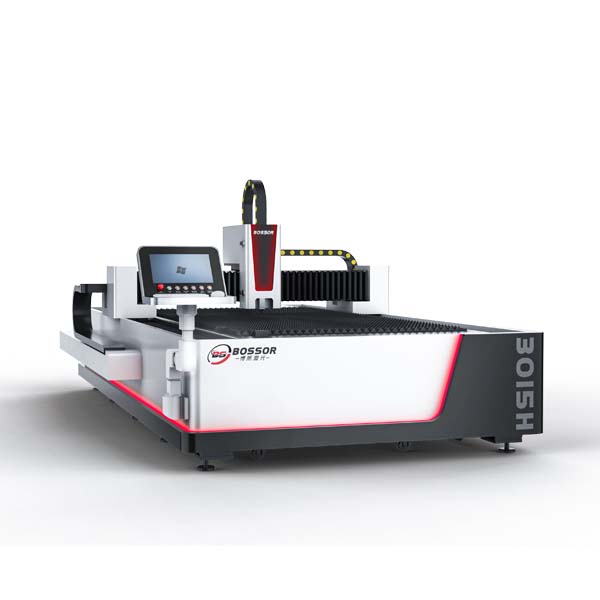
A fiber laser cutting machine typically costs 15,000 to 15,000to300,000+. Entry-level systems may start at about 15,000–15,000–40,000, industrial 3–6 kW machines commonly fall around 40,000–40,000–100,000, and high-power or fully automated systems can reach 100,000–100,000–500,000+.
The final fiber laser cutting machine price depends mainly on laser power, working area, machine type, laser source, cutting head, CNC system, automation, installation, and delivery conditions. The figures below are indicative market ranges, not fixed quotations. A machine with the same laser power can have a very different price when it has a larger bed, an exchange table, automatic loading, premium components, or local installation and service.
1. Fiber Laser Cutting Machine Price Range by Power and Configuration
The quickest way to estimate a fiber laser cutting machine cost is to compare the power class and configuration together. Power affects the machine’s cutting capacity, but the work area and automation level often explain why two machines in the same power class have different prices.
1.1 Fiber Laser Cutting Machine Price Comparison Table
| Машина | Typical Power | Price Range | Typical Application |
|---|---|---|---|
| Small fiber laser | 1–2 kW | $15,000–$40,000 | Small fabrication and thin sheet |
| Medium fiber laser | 3–6 kW | $40,000–$100,000 | Sheet-metal production |
| High-power fiber laser | 8–12 kW | $100,000–$200,000+ | Heavy sheet and higher-volume work |
| Ultra-high-power system | 15–20 kW+ | $140,000–$300,000+ | Heavy plate and large production lines |
| Tube fiber laser | 1–12 kW+ | $30,000–$500,000+ | Tube and profile cutting |
| Fully automated fiber laser line | 3–20 kW+ | $200,000–$500,000+ | High-volume automated production |
These ranges are intended for early budgeting. The final quotation may also include or exclude the chiller, dust collector, air compressor, exchange table, loading system, software, installation, training, freight, duties, and local taxes. Always ask the supplier to state the quote scope in writing.
Pricing methodology: These benchmark ranges reflect public manufacturer price guides and competitor pricing information reviewed for this article. They should be updated with a review date, target region, currency, and configuration assumptions. A public price range is a starting point for commercial investigation, not a substitute for a material-specific quotation.
1.2 Machine Price, Delivered Price, and Total Purchase Cost
A price list can refer to several different cost levels:
- Machine-only price: The laser cutting machine before freight, taxes, installation, and local service.
- Delivered price: The machine plus transport, insurance, customs clearance, duties, and local delivery.
- Installed price: The delivered machine plus positioning, commissioning, test cuts, training, and required site preparation.
- Total first-year purchase cost: The installed machine plus initial electricity, assist gas, consumables, maintenance, software, and operating reserve.
For a procurement manager, the lowest machine-only price is rarely enough to approve a purchase. The more useful question is:
How much will this станок для лазерной резки волокна cost before it can produce acceptable parts at a stable production rate?
2. What Determines Fiber Laser Cutting Machine Cost?
Once the power range is clear, the next question is why fiber laser cutter prices vary so widely. The factors below affect the purchase price without repeating the power-based price ranges.
2.1 Laser Source and Cutting Head
The laser source is one of the most important components in a CNC fiber laser cutting machine. When comparing quotations, check the exact source model, rated output, warranty, expected service support, and replacement policy rather than comparing brand names alone.
The cutting head also affects price and process capability. Auto-focus, height sensing, collision protection, nozzle monitoring, and reflective-metal protection may increase the initial cost, but they can improve process consistency and reduce operator intervention.
For a fair comparison, ask every supplier to identify the laser source and cutting-head model included in the quotation. A quote that says only “3 kW fiber laser” does not provide enough information for a technical comparison.
2.2 Working Area and Machine Bed Size
Common fiber laser formats include 3015, 4020, 6020, and larger custom work areas. A larger work area requires a longer frame, longer linear guides, a larger crossbeam, additional drive components, and more floor space.
A larger bed can reduce material handling and improve nesting when it matches the sheet sizes used in production. However, a large-format fiber laser cutting machine is not automatically more economical. If most orders use standard sheets, the additional structure and floor space may not create enough value to justify the price increase.
2.3 Automation Level and Exchange Table
Automation options can include:
- Exchange tables
- Automatic sheet loading
- Automatic unloading
- Material towers and storage systems
- Pallet handling
- Tube bundle loading
- Production-line integration
Automation adds to the initial fiber laser cutting machine cost but may reduce loading labor, idle time, and production interruptions. The right comparison is not simply manual versus automatic. It is the expected investment versus the number of productive hours and labor hours saved under the factory’s actual schedule.
A manual table may be suitable for flexible, low-volume work. An exchange table may be more suitable when loading and unloading interrupt cutting. Full automation requires stable material flow and enough production volume to use the added capacity.
2.4 CNC, Servo System, and Machine Structure
The CNC controller, servo motors, linear guides, rack-and-pinion system, reducers, machine frame, and thermal treatment all influence the price of an industrial laser cutting machine.
A lower quotation may use a lower-cost component tier, lighter structural design, fewer included accessories, or a narrower service scope. That does not automatically make the machine unsuitable, but the buyer should understand the trade-off between initial cost, precision, uptime, maintenance, and long-term support.
Ask for a complete component list. Comparing only laser wattage can hide important differences in motion control, frame stability, cutting accuracy, and serviceability.
2.5 Warranty, Installation, and After-Sales Support
Support should be treated as part of the total fiber laser cutting machine price. Confirm:
- Warranty duration and covered components
- Whether labor, travel, and replacement parts are included
- Installation and commissioning scope
- Operator training format and duration
- Spare-parts availability in your region
- Remote-support response time
- On-site engineer availability
- Software support and documentation
A low factory price can become a high total cost if a technical problem causes extended production downtime.
Need help choosing the right fiber laser power and configuration? Send us your material, thickness, working area, and production volume. Our engineers can recommend a suitable configuration before you request a quotation.
3. Additional Costs After Buying a Fiber Laser Cutting Machine
The purchase price is only the first part of the investment. For buyers comparing industrial laser cutting machine cost, the additional budget after purchase can be just as important as the machine quotation itself.
After buying a fiber laser cutter, additional costs usually come from installation, utilities, assist gas, consumables, maintenance, software, shipping, and local service.
3.1 Installation and Setup Cost
Before delivery, confirm whether the facility is ready for:
- Machine unloading and positioning
- Floor loading and foundation requirements
- Three-phase electrical supply
- Cooling-water connections
- Compressed-air delivery
- Dust collection and ventilation
- Material storage and safe operating space
- Fire and laser-safety measures
Installation may include alignment, commissioning, test cuts, operator training, and process-parameter setup. These items should be listed in the quotation rather than assumed to be included.
3.2 Electricity and Assist Gas Cost
Electricity cost should be calculated using the machine’s total input power, average load, operating hours, and local electricity rate. The laser source rating alone does not represent the complete power consumption of the machine.
A practical calculation is:
Electricity cost = total input power × average load factor × operating hours × electricity rate
The calculation may need to include the laser source, chiller, air compressor, dust collector, control system, and other auxiliary equipment.
Assist-gas cost depends on gas type, flow rate, cutting time, gas price, and supply method. Oxygen, nitrogen, and compressed air may be used under different material and edge-quality requirements. Cylinders, liquid-gas systems, and on-site generation have different capital and running-cost profiles.
Do not apply one published cylinder price to every factory. Ask the supplier for gas-flow requirements for your material and thickness, then apply local gas pricing.
3.3 Consumables and Maintenance Cost
Common consumables include:
- Protective windows or lenses
- Cutting nozzles
- Ceramic rings
- Filters
- Lubricants
- Dust-collector elements
- Worktable slats
Maintenance may include daily inspection, cleaning, lubrication, calibration, chiller checks, cutting-head inspection, and preventive service.
Replacement intervals depend on material, shift pattern, contamination, collision events, cutting parameters, and operator practice.
For this reason, a single fixed annual maintenance number should not be used for every industrial laser cutting machine. Request a recommended preventive-maintenance schedule and spare-parts list for the exact model being quoted.
3.4 Dust Collection, Ventilation, and Software
Metal cutting produces fumes and particles that require suitable extraction and filtration. The correct system depends on the material, cutting volume, facility design, and local occupational-safety rules.
Software costs may include:
- CNC control software
- Nesting software
- Production-management tools
- Software updates
- Operator training
- Advanced workflow functions
Some suppliers include basic software in the machine price, while advanced nesting or workflow functions may be quoted separately.
3.5 Shipping, Import, and Local Service Cost
For an imported machine, the landed cost may include:
- Ocean freight or other transport
- Transit insurance
- Import duties and tariffs
- Customs clearance
- Taxes or VAT
- Local delivery
- Unloading and positioning
- On-site commissioning
- Local service visits
Compare suppliers using landed and installed cost, not only the factory-direct machine price.
4. Fiber Laser Cutting Machine Types and Applications
After understanding the price range and its main cost drivers, buyers can compare the machine type that matches the workpiece. This section is intentionally shorter than the price sections because the primary search intent is cost, not a general machine encyclopedia.
4.1 Sheet Fiber Laser Cutting Machines
Sheet fiber laser cutting machines are designed for flat metal sheets such as carbon steel, stainless steel, aluminum, copper, and brass.
Price depends on:
- Мощность лазера
- Sheet size
- Working area
- Exchange-table design
- Cutting head
- Автоматизация
- Структура машины
Common working formats include 3015, 4020, 6020, and large-format systems. Choose the work area according to actual sheet sizes and production requirements rather than selecting the largest available bed.
4.2 Tube Fiber Laser Cutting Machines
Tube fiber laser cutting machines process:
- Round tubes
- Square tubes
- Rectangular tubes
- Structural profiles
- Other hollow sections
Price depends on:
- Chuck diameter
- Tube length
- Maximum workpiece weight
- Rotary-axis design
- Мощность лазера
- Loading system
Manual loading may be appropriate for varied or low-volume work. Automatic bundle loading becomes more relevant when the factory runs repetitive tube orders and material handling represents a significant labor cost.
4.3 Sheet-and-Tube Fiber Laser Machines
Sheet-and-tube systems combine flat-sheet and profile cutting on one machine. They may be attractive when both types of work are important but the factory cannot justify two dedicated machines.
The purchase decision should consider:
- Sheet-to-tube order ratio
- Changeover time
- Tube capacity
- Available floor space
- Maintenance requirements
- Future production growth
Flexibility is the main value of this machine type. It is not automatically the lowest-cost option.
5. Is Buying a Fiber Laser Cutting Machine Worth It?
A fiber laser cutting machine can be a strong investment when the factory has stable metal-cutting demand, enough operating hours, trained staff, and the infrastructure required to operate the equipment.
It may be a poor investment when production is irregular and the machine will remain idle.
This is not a complex ROI report. For a first decision, focus on three practical questions:
- How much work will be processed?
- How much labor and lead time can be saved?
- How much would the same work cost to outsource?
5.1 Buying vs. Outsourcing Laser Cutting
Buying may be more attractive when:
- Cutting demand is stable
- Delivery speed is important
- Outsourcing prices are high or unpredictable
- Parts require frequent design revisions
- Quality control must remain in-house
- The machine can achieve a consistent production schedule
Outsourcing may be more practical when:
- Annual cutting volume is low
- Orders are unpredictable
- Capital is limited
- There is no trained operator or maintenance support
- The facility does not have suitable space or utilities
Compare the machine’s purchase and operating costs with actual outsourcing costs, including:
- Material handling
- Quality inspection
- Rework
- Delivery
- Lead time
- External processing fees
5.2 When Does Automation Make Sense?
Automation is easier to justify when:
- The machine runs multiple shifts
- Sheet handling is repetitive
- Labor costs are significant
- Idle time between cutting cycles reduces output
- The same materials are processed frequently
For lower-volume work with frequent material changes, manual loading may be more flexible.
For repetitive production, an exchange table or automatic loading system may improve machine utilization and reduce operator handling.
The decision should be based on production data rather than the assumption that more automation is always better.
5.3 When Is Higher Laser Power Worth the Cost?
Higher power may be worthwhile when the factory:
- Regularly processes thicker materials
- Needs shorter cycle times
- Has stable orders
- Plans to expand production
- Operates multiple shifts
Higher power may not be worthwhile when:
- Most work is thin sheet
- The machine will run only a few hours per week
- The main bottleneck is loading, nesting, or labor
- The factory cannot support the required infrastructure
In some cases, a second standard-power machine may offer more flexibility and uptime than one oversized machine.
6. How to Choose the Right Fiber Laser Cutting Machine for the Price
The goal is not to find the cheapest fiber laser cutter. The goal is to find the lowest-cost configuration that can produce your regular work at the required quality and production rate.
6.1 Choose Power Based on Regular Material Thickness
Choose laser power based on the thickest material you process regularly, not an occasional maximum thickness.
Then confirm:
- Required edge quality
- Скорость резки
- Assist gas
- Expected production hours
- Material type
- Part complexity
Ask the supplier to test your own material and thickness. A sample cut can show actual edge quality, burr level, speed, and gas requirements more reliably than a headline maximum-thickness figure.
6.2 Choose Working Area Based on Sheet Size
Select a work area that matches your:
- Sheet sizes
- Nesting patterns
- Material-handling system
- Available floor space
- Expected production volume
Common formats include:
- 3015: A common choice for standard sheet-metal work.
- 4020: Useful for larger parts and higher sheet capacity.
- 6020 and large format: Suitable when large sheets or long parts justify the additional structure and space.
The largest available bed is not automatically the best choice. It should be supported by actual production requirements.
6.3 Choose Sheet, Tube, or Sheet-and-Tube Cutting
Choose a sheet machine when flat sheets represent most of your work.
Choose a tube machine when pipes, profiles, or structural sections are central to the business.
Consider sheet-and-tube equipment when both categories are important and one platform provides enough flexibility.
Key inputs include:
- Sheet-to-tube order ratio
- Tube diameter
- Tube length
- Changeover frequency
- Loading method
- Future product plans
6.4 Choose Automation Based on Production Volume
Choose automation according to:
- Number of shifts
- Monthly cutting volume
- Operator availability
- Sheet or tube weight
- Loading frequency
- Required unattended production
- Cost of downtime
A supplier should explain the expected productivity benefit of each automation option instead of simply adding it to the quotation.
7. How to Compare Fiber Laser Machine Quotes
A useful quotation should allow buyers to compare machines on the same technical and commercial basis.
Do not compare total price until you confirm what each supplier has included.
7.1 Technical Specifications to Check
Ask every supplier to list:
- Laser power and source model
- Working area and axis travel
- Regular cutting-thickness range
- Cutting-head model and functions
- CNC controller
- Servo and transmission system
- Positioning and repeatability accuracy
- Chiller capacity
- Dust collector
- Air-compressor requirements
- Exchange table and loading system
- Included software
- Electrical and gas requirements
7.2 Delivery, Warranty, and Service Terms
Confirm:
- Delivery time
- Installation and commissioning scope
- Operator training
- Warranty duration and exclusions
- Spare-parts availability
- Remote-support response time
- On-site service terms
- Software updates and technical documentation
- Which freight, taxes, and local charges are included
7.3 Sample Cutting Test
A sample cutting test should use the buyer’s actual material, thickness, and representative drawing whenever possible.
Request the following results:
- Скорость резки
- Edge quality
- Burr level
- Heat-affected condition where relevant
- Assist-gas type and consumption
- Nozzle and protective-lens condition
- Repeatability across multiple parts
The purpose is not only to prove that the machine can cut the material. It is to determine whether it can produce acceptable parts at a commercially useful speed and cost.
8.FAQ
A fiber laser cutting machine commonly costs about 15,000to15,000to300,000+.
Tube, large-format, high-power, and fully automated systems may reach $500,000 or more.
The actual price depends on power, work area, machine type, components, automation, delivery, installation, and service.
A 6 kW fiber laser cutting machine commonly falls around 60,000–60,000–100,000 as a reference range.
The final price depends on:
- Work area
- Laser source
- Cutting head
- Exchange table
- Автоматизация
- Delivery scope
- Local service
A 10 kW fiber laser is generally included in the 8–12 kW category.
A reasonable reference range is 80,000–80,000–200,000+, with large-format beds, heavy-duty structures, automatic loading, and installation increasing the final quotation.
The main factors are:
- Мощность лазера
- Working area
- Machine type
- Laser source
- Cutting head
- CNC and servo system
- Структура машины
- Автоматизация
- Installation
- Гарантия
- Delivery
- After-sales support
There is no universal hourly cost.
Electricity depends on:
- Total input power
- Average load
- Operating hours
- Local electricity rates
Gas depends on:
- Flow rate
- Cutting time
- Gas type
- Local pricing
- Supply method
Consumables, maintenance, labor, and downtime should also be considered.
It can be worthwhile when the factory has:
- Stable demand
- Enough operating hours
- Trained staff
- Suitable infrastructure
- A need for faster in-house production
Outsourcing may be more practical for low or irregular volumes.
Compare the complete purchase and operating cost with actual outsourcing prices and delivery requirements.
Stay Updated on Industrial Innovations
Subscribe to our newsletter for the latest insights on manufacturing technology, sustainability, and industry trends.