О нас
Durmapress specializes in designing, manufacturing, and selling various metal processing equipment, including bending machines, shears, punches, and laser cutting machines. The company was founded in 2014, with years of experience and technology accumulation. DurmaPress has become one of the well-known brands in China's metal processing machinery industry.

Свяжитесь с нами
Последние сообщения

Категории
Следуйте за нами
Еженедельное новое видео
Оглавление
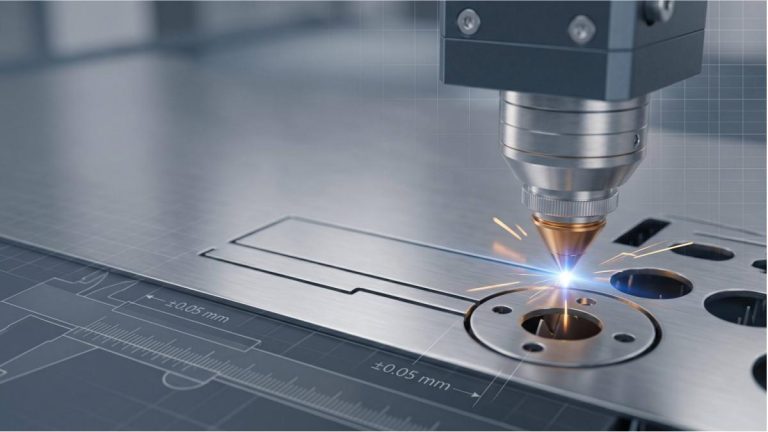
Laser cutting is one of the most precise fabrication methods in modern manufacturing, with standard laser cutting tolerances typically held within ±0.005 in (±0.13 mm) — and as tight as ±0.001 in (±0.025 mm) on high-end fiber systems. But "how accurate is laser cutting" is never a single number: real-world laser cutting accuracy depends on the laser type, material, thickness, machine condition, and operator skill.
In this guide, drawn from hands-on shop-floor experience with fiber and CO2 platforms, we break down the exact tolerances you can expect, how each laser cutter precision factor behaves, and how to design parts that hold spec the first time.
2. Laser Cutting Tolerances at a Glance
Before the detail, here is the reference table professionals bookmark. This quick summary targets the "laser cutting tolerances" featured snippet.
| Tolerance Type | Typical Range (inch) | Typical Range (mm) | Notes |
|---|---|---|---|
| Dimensional tolerance | ±0.005 in | ±0.13 mm | Standard for most sheet metal |
| Positioning tolerance | ±0.002 in | ±0.05 mm | Where the cut is placed |
| Kerf width | 0.004–0.012 in | 0.1–0.3 mm | Depends on power & thickness |
| Tightest achievable (fiber) | ±0.001–0.003 in | ±0.025–0.08 mm | Thin, high-quality material |
3. What Is Laser Cutting and How Does It Work?
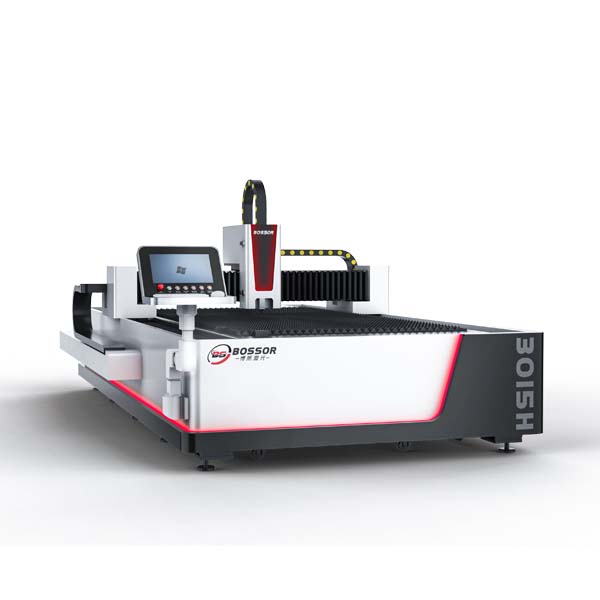
Laser cutting uses a focused beam of light to melt, burn, or vaporize material along a programmed path. A CO2 или волокно laser generates the beam, which is guided by mirrors or fiber-optic cable and focused through a lens onto the workpiece. The focal spot can be as small as 10–20 microns — finer than a human hair — which is what gives laser cutting its signature cutting precision.
Because the heat-affected zone is small and there is no mechanical tool contact, laser cutting produces clean edges with minimal distortion, making it ideal for intricate, high-tolerance parts.
4. How Accurate Is Laser Cutting?
The dimensional accuracy of laser cutting is typically within ±0.005 in (±0.13 mm), with a laser cut tolerance on premium fiber machines reaching ±0.001 in (±0.025 mm) for thin sheet. The kerf — the width of material removed — can be as narrow as 0.004 in (0.1 mm).
This level of accurate laser cutting is critical in aerospace, medical, electronics, and automotive work, where a few thousandths of an inch determine whether a part fits. In practice, three separate tolerances stack up:
4.1 Dimensional Tolerance
How closely the finished feature size matches the drawing — generally ±0.005 in.
4.2 Positioning (Repeatability) Tolerance
How accurately the machine places each cut — usually ±0.002 in. This is where servo quality and frame rigidity matter most.
4.3 Kerf Width
The material consumed by the beam — 0.004–0.012 in. Good CAM software compensates for kerf automatically so nominal dimensions stay true.
5. How Does Laser Cutting Compare to Other Cutting Methods?
Compared with plasma and mechanical methods, laser cutting delivers markedly tighter tolerances and cleaner edges. The table below shows why precision laser cut parts are the default for demanding work.
| Cutting Method | Typical Tolerance | Edge Quality | Best For |
|---|---|---|---|
| Laser cutting | ±0.005 in (±0.13 mm) | Excellent | Intricate, high-precision parts |
| Плазменная резка | ±0.020 in (±0.5 mm) | Fair | Thick plate, fast rough cuts |
| Waterjet | ±0.005 in (±0.13 mm) | Very good | Heat-sensitive, thick material |
| Mechanical / CNC shear | ±0.010 in (±0.25 mm) | Good | Simple straight cuts |
6. Types of Laser Cutters — Which Is the Most Accurate?
Three laser families dominate metal and non-metal cutting, each with a distinct laser cutter tolerance profile.
6.1 Fiber Laser Cutters
Fiber lasers channel diode-generated light through fiber-optic cable to create an intense, tightly focused beam.
- Dimensional accuracy: as tight as ±0.003 in (±0.08 mm), sometimes ±0.001 in on thin sheet.
- Best for: stainless steel, aluminum, copper, and brass.
- Преимущества: fastest cutting speed, lowest running cost, and unmatched laser cutting precision on thin metal.
6.2 CO2 Laser Cutters
CO2 lasers use a gas mixture and mirror/lens delivery.
- Dimensional accuracy: around ±0.005 in (±0.13 mm).
- Best for: plastics, wood, acrylic, and thicker metals.
- Преимущества: versatile across materials, clean edges on non-metals.
6.3 Crystal Laser Cutters (Nd:YAG / Nd:YVO4)
Crystal lasers produce very high-intensity beams from doped crystals.
- Dimensional accuracy: within ±0.004 in (±0.1 mm).
- Best for: medical devices and electronics.
- Преимущества: cuts metals, ceramics, and some plastics at high precision.
| Laser Type | Typical Tolerance | Ideal Materials |
|---|---|---|
| Fiber | ±0.003 in (±0.08 mm) | Stainless, aluminum, copper |
| CO2 | ±0.005 in (±0.13 mm) | Plastics, wood, thick metal |
| Crystal (Nd:YAG) | ±0.004 in (±0.1 mm) | Ceramics, medical, electronics |
7. What Factors Determine the Precision of Laser Cutting?
Laser cutter precision is a composite of interlinked variables. Controlling them is how shops move from ±0.005 in to ±0.002 in.
- Laser type: Fiber offers the tightest focus for thin material.
- Laser power: Higher power cuts thicker stock but can widen the kerf; balance is key.
- Material thickness: Thicker plate lets the beam spread, loosening tolerance.
- Material type: Reflective or heat-sensitive metals need tuned settings.
- Cutting speed: Too fast sacrifices accuracy; too slow adds heat.
- Machine quality & maintenance: Rigid frames, clean optics, and calibration keep cuts true.
- Environment: Temperature and humidity subtly shift both machine and material.
- Operator skill: Experienced operators tune parameters to hold spec.
8. How Thick Can a Laser Cut Steel?
A common question — and directly tied to tolerance. Modern high-power fiber lasers cut mild steel up to 1 in (25 mm) and beyond, but the thicker the plate, the looser the achievable tolerance.
| Steel Thickness | Recommended Laser Power | Realistic Tolerance |
|---|---|---|
| Up to 0.12 in (3 mm) | 1–2 kW | ±0.002 in (±0.05 mm) |
| 0.25 in (6 mm) | 3–4 kW | ±0.004 in (±0.1 mm) |
| 0.5 in (12 mm) | 6–8 kW | ±0.006 in (±0.15 mm) |
| 1 in (25 mm)+ | 12 kW+ | ±0.010 in (±0.25 mm) |
9. How Does Material Choice Impact Laser Cutting Accuracy?
Every material interacts with the beam differently. The table consolidates typical laser cut tolerances by material.
| Материал | Typical Accuracy | Key Consideration |
|---|---|---|
| Нержавеющая сталь | ±0.002–0.005 in | Holds fine detail well |
| Алюминий | ±0.003–0.006 in | Reflectivity needs care |
| Acrylic | ±0.004 in | Flame-polished edge |
| Polycarbonate | ±0.005–0.010 in | Can discolor / burr |
| Hardwood | ±0.005 in | Consistent grain preferred |
| Softwood | ±0.005–0.010 in | Moisture affects result |
| Glass | ±0.007 in | Low power, crack risk |
| Ceramics | ±0.006 in | Careful control needed |
10. Common Misconceptions About Laser Cutting Accuracy
- "All laser cutters have the same accuracy." False — type, power, and design all change laser cutting tolerance.
- "Laser cutting is always the most precise method." Not always; for very thick or heat-sensitive parts, CNC machining or waterjet can win.
- "Thick material cuts as precisely as thin." Beam spread and heat loosen tolerance as thickness grows.
- "Laser cutting is only for metal." It also cuts plastics, wood, and glass with the right settings.
11. Design Tips for Optimal Laser Cutting Accuracy
- Choose the right material for how it reacts to the beam.
- Design around laser limits — respect minimum feature sizes.
- Minimize heat impact to avoid warping.
- Control cut order to prevent part shift.
- Add guides for intricate, repeatable cuts.
- Respect feature rules: hole diameter and slot width should be ≥ material thickness.
12. Preparations That Enhance Laser Cutting Precision
- Flat, high-quality material so focus stays true.
- Proper support/feeding to stop movement mid-cut.
- Optimal power, speed, and frequency for the stock.
- Regular maintenance of head, mirrors, and lens.
- Accurate CAD/CAM with correct kerf compensation.
13. The Role of Maintenance in Laser Cutting Precision
Consistent accurate laser cutting relies on disciplined maintenance:
- Beam alignment checks — small misalignment causes big deviation.
- Lens and mirror cleaning — dirty optics distort the beam.
- Regular calibration — keeps cuts true to the CAD file.
- Power monitoring — inconsistent power means uneven cuts.
- Wear monitoring — belts, bearings, and the head degrade over time.
14. What to Look for in a High-Precision Metal Laser Cutter
When ranking machines for laser cutting precision, evaluate:
- Cutting speed & acceleration (advanced machines reach 180 m/min positioning and ~3G acceleration).
- Laser power range (up to 30 kW on high-end models for thick plate).
- System stability during long runs.
- Control software that translates complex CAD into accurate cuts.
- User reviews & industry reputation.
15. FAQ
Standard laser cutting tolerance is ±0.005 in (±0.13 mm) for most sheet metal, tightening to ±0.001–0.003 in on premium fiber machines cutting thin material.
Yes. Laser holds about ±0.005 in versus plasma's ±0.020 in, making laser far better for precision parts.
High-power fiber lasers (12 kW+) cut mild steel over 1 in (25 mm), though tolerance loosens to about ±0.010 in at that thickness.
Kerf is the width of material removed by the beam, typically 0.004–0.012 in (0.1–0.3 mm). CAM software compensates for it to keep dimensions accurate.
16. Conclusion
Laser cutting delivers precision few methods can match — a standard laser cut tolerance of ±0.005 in, tightening toward ±0.001 in with the right fiber machine, material, and setup. Hitting those numbers consistently is the product of good design, disciplined maintenance, skilled operation, and the right equipment. As laser power, speed, and software keep advancing, expect laser cutting accuracy to get even tighter for the demanding designs of modern manufacturing.
Stay Updated on Industrial Innovations
Subscribe to our newsletter for the latest insights on manufacturing technology, sustainability, and industry trends.