О нас
Durmapress specializes in designing, manufacturing, and selling various metal processing equipment, including bending machines, shears, punches, and laser cutting machines. The company was founded in 2014, with years of experience and technology accumulation. DurmaPress has become one of the well-known brands in China's metal processing machinery industry.
Свяжитесь с нами
Последние сообщения
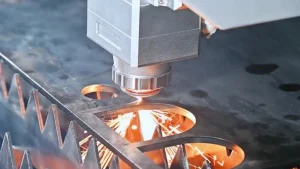
Категории
Следуйте за нами
Еженедельное новое видео
Оглавление
1. What is Metal Laser Cutting?
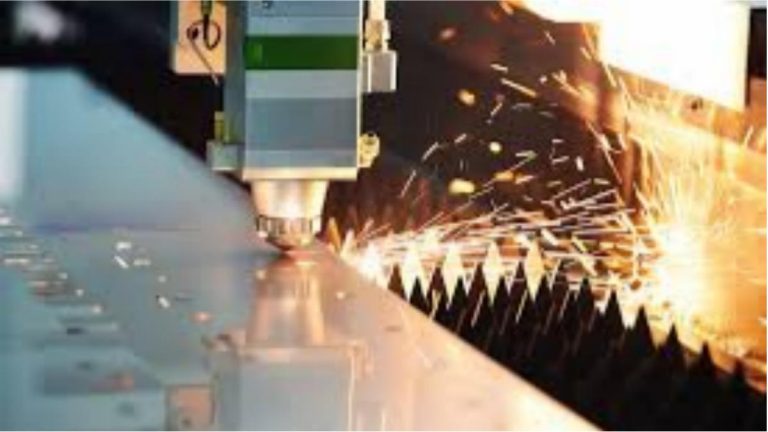
Metal laser cutting is a thermal process that uses a focused, high-power laser beam to melt or vaporize metal along a programmed path, producing precise cuts with minimal material waste. Unlike mechanical cutting, it requires no physical contact with the workpiece, which means no tool wear and no deformation from clamping pressure.
Compared to traditional methods like sawing or plasma cutting, laser cutting offers three clear advantages: higher dimensional accuracy, faster processing speed, и full CNC automation — making it the default choice for modern sheet metal fabrication.
2. Can All Metals Be Cut with a Laser?
Most metals can be cut with a laser, but performance varies significantly by material. The table below gives a quick reference:
| Metal | Laser Cuttability | Notes |
|---|---|---|
| Углеродистая сталь | ✅ Excellent | Oxygen assist gas recommended |
| Нержавеющая сталь | ✅ Excellent | Nitrogen for oxide-free edge |
| Aluminum | ✅ Good | High reflectivity requires higher power |
| Brass | ⚠ Moderate | Reflective; fiber laser preferred |
| Copper | ⚠ Difficult | Very high reflectivity; needs high-power fiber laser |
| Titanium | ✅ Good | Inert gas required |
Highly reflective metals like copper and brass are the most challenging — they can reflect the laser beam back into the cutting head, causing equipment damage. Modern high-power fiber lasers (4kW+) have largely solved this issue, but it still requires careful parameter control.
3. How Metal Laser Cutting Works
3.1 Laser Generation
The laser source (fiber or CO₂) generates a concentrated beam of light energy. In fiber lasers, this is achieved through diode-pumped gain fiber, producing a wavelength of around 1,070 nm — well absorbed by most metals.
3.2 Beam Focusing
The beam is directed through mirrors or fiber cables to the cutting head, where a focusing lens concentrates it to a spot size as small as 0.1 mm. This extreme concentration of energy is what allows the laser to melt metal almost instantly.
3.3 Melting / Vaporizing Process
At the focal point, temperatures can exceed 3,000°C, causing the metal to melt or vaporize depending on power settings and material type. The result is a narrow, clean kerf.
3.4 Assist Gas Function
Assist gas — typically oxygen, nitrogen, or compressed air — is blown coaxially through the nozzle. Oxygen accelerates the cut on mild steel via exothermic reaction. Nitrogen produces a clean, oxide-free edge on stainless steel and aluminum. Air is used for cost-sensitive applications.
3.5 CNC Control System
The entire motion path is controlled by a CNC system, following the toolpath generated from CAD/CAM software. This ensures repeatable accuracy across large production runs with no operator intervention required between parts.
4. Types of Metal Laser Cutting Machines
4.1 Fiber Laser Cutting Machine
Fiber lasers are now the industry standard for metal cutting. They generate a beam with approximately 4× the effective power density of CO₂ lasers at the same rated output, making them significantly faster on thin-to-medium sheet metal.
Key advantages :
- Lower operating cost — electrical efficiency ~30% vs ~10% for CO₂
- Solid-state design — no laser gas, no mirrors to align
- Better beam quality for thin sheet
- Suitable for most metals including reflective materials (with adequate power)
4.2 CO₂ Laser Cutting Machine
CO₂ lasers deliver a wider beam and remain capable of higher raw device power. They're better suited to thick mild steel cuts where surface finish is less critical, and they perform well on non-metals (acrylic, wood) — though this is rarely a consideration in pure metal fabrication shops.
The trend is clear: CO₂ installations are declining as fiber laser power levels increase. For new investments, CO₂ is rarely the first choice.
4.3 High-Power Fiber Laser (6kW+)
Modern high-power fiber lasers — 6kW, 10kW, even 20kW — have extended the capability of fiber technology into thick plate territory previously dominated by CO₂. At 12kW, a fiber laser can cut 30mm+ mild steel cleanly.
5. Key Components of a Laser Cutting Machine
- Источник лазерного излучения:Generates the beam. Fiber laser sources are rated by output power (1kW–30kW).
- Режущая головка:Houses the focusing lens and nozzle; controls focus position and gas delivery.
- CNC System:Translates CAD files into motion commands.
- Чиллер:Maintains stable operating temperature for the laser source and cutting head.
- Gas System:Supplies and regulates assist gas pressure and flow.
- Machine Bed:The worktable and motion system (typically gantry-style) that moves the cutting head over the sheet.
6. Metal Types Suitable for Laser Cutting
6.1 Carbon Steel
The most common laser-cut material. With oxygen assist gas, cutting speeds are high and edges are clean. Melting point: 2,600–2,800°F. Tensile strength: 370–500 MPa.
6.2 Stainless Steel
Ideal for applications requiring corrosion resistance. Nitrogen assist produces bright, oxide-free edges. Melting point: 2,550–2,750°F. Tensile strength: 515 MPa.
6.3 Aluminum
Lightweight with excellent corrosion resistance. High reflectivity requires higher beam power. Melting point: 1,220°F. Tensile strength: 90–140 MPa.
6.4 Brass
Good machinability; reflective surface requires fiber laser. Melting point: 1,650–1,720°F. Tensile strength: 345–470 MPa.
6.5 Copper
Excellent electrical conductivity; challenging to cut due to very high reflectivity. Requires high-power fiber laser (4kW+). Melting point: 1,984°F. Tensile strength: 210–360 MPa.
6.6 Titanium
High strength-to-weight ratio; requires inert gas shielding to prevent oxidation during cutting. Melting point: 3,034°F. Tensile strength: 240–370 MPa.
7. Laser Cutting Process Parameters
7.1 Laser Power
Measured in watts (W) or kilowatts (kW). Higher power enables faster speeds or thicker material cutting. The right power level depends on material type and thickness.
7.2 Cutting Speed
Directly affects both productivity and edge quality. Too fast causes incomplete cuts; too slow causes excess heat buildup and dross.
7.3 Focus Position
The focal point must be set at the correct depth relative to the material surface. Incorrect focus results in wider kerf and rougher edges.
7.4 Gas Pressure
Higher pressure clears molten material more aggressively. Must be balanced — too high can cause turbulence and rough cuts.
7.5 Nozzle Type
Single-layer nozzles are used for oxygen cutting of mild steel; double-layer nozzles are used for high-pressure nitrogen cutting of stainless and aluminum.
8. Cutting Accuracy and Tolerances
Laser cutting precision varies with material thickness:
| Толщина | Typical Tolerance |
|---|---|
| Up to 1mm | ±0.1 – ±0.2 mm |
| 1mm – 5mm | ±0.2 – ±0.5 mm |
| Over 5mm | ±0.5 – ±1.0 mm |
Key factors affecting precision:
- Beam quality and focus accuracy
- Material flatness on the cutting bed
- Machine rigidity and thermal stability
- Correct parameter calibration
9. Advantages of Metal Laser Cutting
Высокая точность:Tolerances as tight as ±0.1mm for thin sheet.
No Tooling Required:Unlike stamping or punching, laser cutting requires no custom dies — just upload a new CAD file.
Clean Edge:Laser-cut edges typically require no secondary deburring on sheet metal.
Full Automation:Modern machines run lights-out with automatic sheet loading and part unloading.
Design Flexibility:Complex geometries, fine slots, and intricate patterns are all achievable without additional cost.
10. Industrial Applications
Automotive:Body panels, brackets, chassis components, and exhaust system parts.
Аэрокосмическая промышленность:Lightweight structural parts requiring high precision and traceability.
Machinery Manufacturing:Frames, guards, mounting plates, and custom fabricated components.
Construction:Structural steel profiles, facade panels, and HVAC duct components.
Electronics:Thin metal enclosures, heat sinks, and precision contact parts.
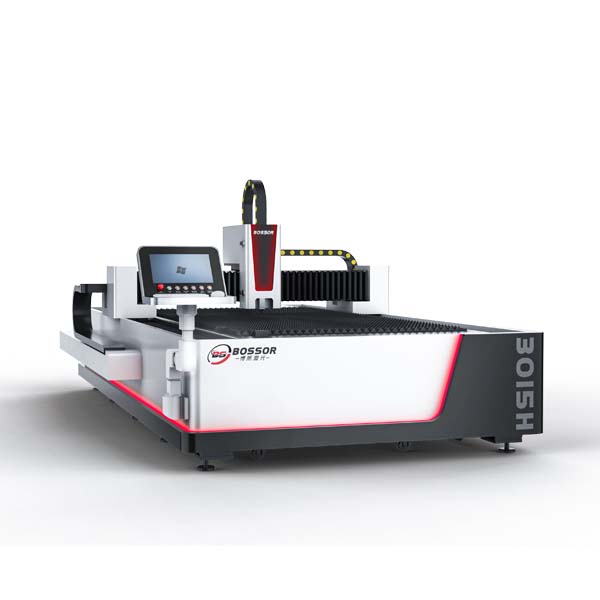
Durmapress fiber laser cutting machines are deployed in fabrication shops across these sectors — view our machine range.
11. How to Choose a Metal Laser Cutting Machine
11.1 Power Selection
Match power to your thickest common material:
| Typical Max Thickness | Recommended Power |
|---|---|
| Up to 6mm carbon steel | 1–2 kW |
| Up to 12mm carbon steel | 3–4 kW |
| Up to 20mm carbon steel | 6–8 kW |
| 25mm+ carbon steel | 10–15 kW+ |
11.2 Material Type
If you regularly cut aluminum, copper, or brass, prioritize fiber laser over CO₂.
11.3 Thickness Range
Don't over-specify. A 12kW machine cuts 3mm faster than a 3kW, but the cost difference may not justify the ROI for thin-sheet shops.
11.4 Budget
Entry fiber laser systems start around $30,000. Industrial-grade machines with full automation run $150,000–$600,000+.
11.5 Fiber vs CO₂ Decision
For new investments in metal-only shops, fiber laser is the right choice in almost all cases.
12. Cost of Metal Laser Cutting
Service Cost:Laser cutting services typically range from $1 to $1.50 per minute of cutting time for 1–2mm material. Complex or thick cuts can run significantly higher.
Machine Price:
- Entry fiber laser systems: $30,000 – $80,000
- Mid-range industrial fiber laser: $80,000 – $200,000
- High-power / automated fiber laser: $200,000 – $600,000+
- CO₂ machines (steel-capable): $10,000 – $200,000
Running Cost:Fiber lasers have ~30% wall-plug efficiency vs ~10% for CO₂, meaning significantly lower electricity costs per part. Gas consumption (especially nitrogen) is the largest ongoing variable.
13. Alternatives to Laser Cutting
13.1 Plasma Cutting
Faster on thick material but produces a wider heat-affected zone (HAZ) and rougher edges. Lower equipment cost; less precision.。
13.2 Waterjet Cutting
No heat input — ideal for materials sensitive to thermal distortion. Slower than laser; operating cost is high due to abrasive consumption.
13.3 Mechanical Cutting(Sawing/Shearing):
Low equipment cost; suitable for straight cuts on standard profiles. Poor for complex geometries; requires tooling changes.
Laser cutting offers the best balance of speed, precision, and design flexibility for most sheet metal applications.
14.FAQ
Q1:Can a fiber laser cut all metals?
Fiber lasers can cut virtually all metals, including reflective ones like copper and brass, provided the power level is adequate (typically 4kW+ for high-reflectivity materials).
Q2:What thickness can a laser cut metal?
It depends on the laser type and power. A 3kW fiber laser can typically cut carbon steel up to 12mm; a 12kW machine can cut 30mm+. Steel up to 1 inch (25.4mm), stainless up to 0.75 inches (19mm), and aluminum up to 0.5 inches (12.7mm) are general benchmarks.
Q3:Is laser cutting expensive?
Service costs range from $1–$1.50/minute for thin sheet. For in-house cutting, the machine investment starts at ~$30,000 but delivers precision and speed that traditional methods cannot match at scale.
Q4:Which gas is used in laser cutting?
Oxygen is used for mild steel (faster cut, oxidized edge). Nitrogen is used for stainless steel and aluminum (clean, bright edge). Compressed air is used for cost-sensitive, non-critical applications.
Stay Updated on Industrial Innovations
Subscribe to our newsletter for the latest insights on manufacturing technology, sustainability, and industry trends.