Why Choose an All‑Electric Press Brake? 7 Key Advantages
О нас
All-electric press brakes save energy, cut noise, reduce maintenance, and boost precision vs. hydraulic models. Discover 7 key advantages for sheet metal shops.
Свяжитесь с нами
Последние сообщения
Категории
Следуйте за нами
Еженедельное новое видео
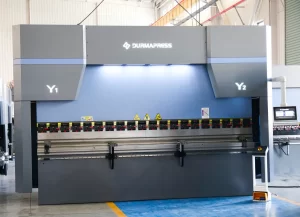
All-electric press brakes represent a significant evolution in sheet metal fabrication, offering fabricators a path to higher efficiency and precision without the ongoing costs and complexities of hydraulic systems. This article explores 7 key advantages that make them a compelling upgrade for modern shops.

Introduction: From Hydraulic to All-Electric
Traditional hydraulic press brakes have powered sheet metal shops for decades, relying on constant oil pump operation to maintain system pressure. However, rising energy costs, stricter environmental regulations, and demands for tighter tolerances are pushing fabricators toward all-electric (servo-electric) alternatives. These machines use servo motors and ball screws for on-demand power delivery, eliminating hydraulic components entirely. The following sections detail 7 practical advantages that deliver measurable value in real-world production.
Advantage 1 – Lower Overall Energy Consumption
All-electric press brakes only draw power during actual bending cycles, unlike hydraulic systems where the pump runs continuously to sustain pressure—even during idle time. This fundamental design difference results in substantially lower electricity usage across full workdays or multi-shift operations. Shops with high utilization rates see the biggest gains, as reduced power draw translates directly to lower utility bills and a smaller carbon footprint, making compliance with energy efficiency standards simpler.
Advantage 2 – Higher Bending Precision and Repeatability
Servo-driven rams in all-electric machines provide closed-loop control for exact positioning, achieving consistent bend angles across hundreds or thousands of parts without drift. Hydraulic systems, by contrast, can experience minor variations from oil temperature, viscosity changes, or seal wear over time. This superior repeatability shines in applications like electrical enclosures or server racks, where uniform results minimize scrap, reduce operator adjustments, and ensure parts fit perfectly in assemblies.
Advantage 3 – Much Lower Noise and Better Workplace Comfort
With no continuously running hydraulic pumps, all-electric press brakes operate far more quietly, especially in standby mode, creating a less fatiguing environment for operators. Peak noise during cycles remains well below hydraulic levels, which often exceed comfortable thresholds due to pump and valve chatter. Facilities in urban areas, those with noise ordinances, or shops prioritizing worker well-being find this a major operational upgrade, alongside reduced need for extensive soundproofing.
Advantage 4 – Minimal Idle and Standby Losses
Hydraulic press brakes waste energy keeping the system pressurized when the ram isn't moving, leading to heat buildup and inefficiency during tool changes or short runs. All-electric models power down axes instantly when not in use, slashing standby consumption to near zero. This efficiency is particularly beneficial for job shops handling varied orders, frequent setups, or automation-integrated lines where downtime between cycles is common.
Advantage 5 – Lower Maintenance and No Hydraulic Oil
Eliminating pumps, valves, hoses, filters, and oil removes the most common failure points in hydraulic systems, from leaks to contamination. Maintenance on all-electric brakes focuses on straightforward tasks like lubrication and electrical inspections, with longer intervals between services. Operators spend less time on fluid checks or cleanups, boosting uptime and cutting consumable costs—essential for shops aiming to minimize unplanned downtime.
Advantage 6 – Cleaner, More Sustainable Production
The oil-free design and lower energy profile of all-electric press brakes support greener operations, aligning with ESG initiatives and export requirements in regions with strict environmental rules. Without hydraulic fluid risks, shops maintain cleaner floors and machinery, simplifying housekeeping and reducing spill-related hazards. As sustainability audits become standard, these machines position fabricators ahead of regulatory curves while appealing to eco-conscious customers.
Advantage 7 – Stronger Lifecycle Cost and ROI
Upfront costs for all-electric press brakes typically exceed basic hydraulics, but savings in energy, maintenance, scrap reduction, and operator efficiency often yield a favorable total cost of ownership over 3-5 years. High-volume producers recover the premium fastest through compounded daily gains, while the lack of hydraulic degradation ensures consistent performance without mid-life overhauls. Fabricators should model ROI using their specific shift patterns, material thicknesses, and local power rates for accurate projections.

Typical Applications for All-Electric Press Brakes
-
Electrical cabinets and switchgear: Tight tolerances and high repeatability for flawless panel fits.
-
Server racks and IT enclosures: Low noise and consistent bends for data center builds.
-
Doors, frames, and profiles: Reduced scrap in architectural and structural parts.
-
HVAC components: Cleaner operation suits ducting and ventilation production.
-
Medium-gauge sheet metal: Ideal for multi-shift runs demanding uptime and energy savings.
Conclusion & Call-to-Action
All-electric press brakes aren't for every scenario but transform high-precision, energy-intensive, or noise-sensitive operations into leaner, more profitable ones. Evaluate based on your shop's unique needs—tonnage, hours, and applications—to unlock their full potential. Contact DURMAPRESS for a tailored all-electric press brake feasibility study and ROI analysis.
ЧАСТО ЗАДАВАЕМЫЕ ВОПРОСЫ
- Can all-electric brakes handle thick plates?
Best for light-to-medium gauge sheets (up to 12-16 gauge). For heavy plates over 1", hydraulic models provide needed tonnage. - What's the typical ROI timeline?
Energy/maintenance savings often offset costs in 2-4 years, faster for high-volume shops. Get a custom calculation for your setup. - Compatible with automation/long parts?
Yes—precise control suits robots and extended lengths for cabinets/HVAC. Rigid frames prevent deflection. - Noise comparison?
Much quieter (near-silent standby, low cycle noise) vs. constant hydraulic pump sound. Ideal for regulated areas. - Maintenance needs?
Simple lubrication/motor checks—no oil or leaks. Longer intervals, lower costs than hydraulics.