About Us
Durmapress specializes in designing, manufacturing, and selling various metal processing equipment, including bending machines, shears, punches, and laser cutting machines. The company was founded in 2014, with years of experience and technology accumulation. DurmaPress has become one of the well-known brands in China's metal processing machinery industry.

Contact Us
Recent Posts

Categories
Follow Us
Weekly New Video
Table of Contents
1. What Is Laser Cutting Textiles?
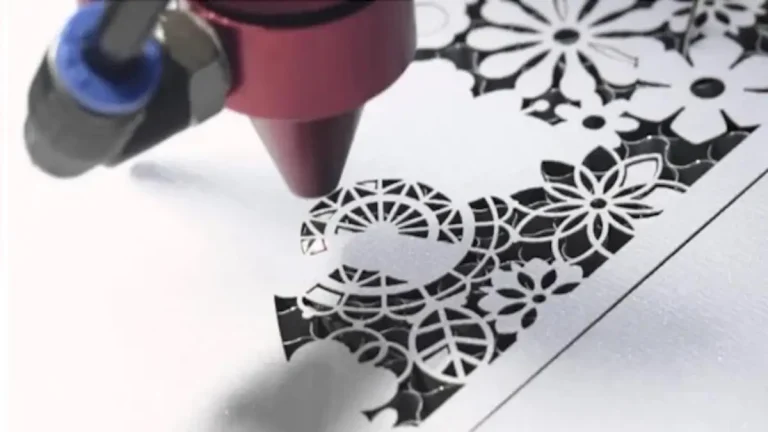
Laser cutting textiles refers to using a focused, computer-controlled laser beam to cut or engrave fabric materials with high precision. Unlike mechanical cutting tools, the laser never physically contacts the fabric — instead, it delivers concentrated heat that vaporizes or melts the material along a programmed path.
The result is a clean, sealed edge that requires no additional finishing. Because the system is CNC-controlled, every cut is repeatable, making it well suited for both short-run custom production and large-scale manufacturing.
2. How Does Laser Cutting Fabric Work?
2.1 Laser Generation and Beam Focusing
The machine generates a laser beam — typically CO2, fiber, or UV — and focuses it through an optical lens system onto a precise point on the fabric surface. The spot size and focal length determine cut quality and edge definition.
2.2 Motion Control System
A CNC motion controller translates the design file into X/Y axis movement, guiding the laser head across the fabric surface. The cutting path follows the pre-programmed pattern exactly, with no deviation between passes.
2.3 Cutting Process Stages
The full cycle runs as follows: fabric positioning → laser activation → material vaporization along cut path → edge sealing (simultaneous with cutting) → finished part removal. Because sealing happens in the same pass as cutting, fraying is eliminated without any post-processing step.
3. Types of Laser Cutting Technologies for Textiles
Different laser types suit different fabric categories. Choosing the right technology directly affects edge quality, cutting speed, and material compatibility.
3.1 CO2 Laser Cutting
CO2 lasers are the most widely used technology in textile cutting. They work effectively on cotton, silk, polyester, linen, and most natural or blended fabrics. The beam vaporizes material cleanly, producing smooth sealed edges with minimal heat spread. For most garment and home textile applications, CO2 is the default choice.
3.2 Fiber Laser Cutting
Fiber lasers deliver a higher-energy, more tightly focused beam through fiber optic cable. This makes them well suited for synthetic technical fabrics — polyester, nylon ripstop, fleece — where fast, accurate cuts are needed at production scale. Cutting speed is higher than CO2, and precision is excellent for detailed pattern work.
3.3 UV Laser Cutting
UV lasers operate at shorter wavelengths, which means less heat transfer to surrounding material. This makes them the preferred option for delicate fabrics such as silk, lace, and thin synthetics where conventional laser heat would cause distortion or burn marks. The tradeoff is slower throughput.
3.4 Nd / Nd:YAG Laser Cutting
Neodymium and Nd:YAG lasers generate high-energy output suited to thicker or more resistant textiles used in industrial and technical applications — including certain aerospace and automotive fabrics. They are less common in standard garment production but valuable where material density demands higher cutting force.
4. What Materials Can Be Cut with a Laser?
Laser cutting is compatible with a wide range of textile materials:
Natural fabrics: Cotton, linen, silk — these burn cleanly and produce sharp, stable edges without excessive heat damage.
Synthetic fabrics: Polyester, nylon, fleece, ripstop nylon — the laser's heat causes controlled edge melting, which seals the cut and prevents fraying. These materials are among the easiest to process consistently.
Technical textiles: Kevlar, CORDURA, Sunbrella, sailcloth — these denser materials require higher power settings and are often processed with fiber lasers for clean results.
Other materials: Felt, leather, denim — felt handles laser cutting well due to its density; leather requires careful power calibration to avoid charring; denim performs well at medium-to-high power settings.
⚠️ Materials to avoid: Any fabric containing PVC or certain synthetic plastics that release toxic fumes when heated. Fabrics with heavy glue content can also stain from melt residue during cutting.
5. Which Fabrics Are Best — and Hardest — to Laser Cut?
5.1 Easiest Fabrics
Polyester is widely considered the easiest fabric to laser cut. Its synthetic composition causes controlled edge melting that self-seals the cut line. Cotton and felt are also straightforward: cotton burns cleanly, and felt's dense structure produces stable, accurate edges even on complex shapes.
5.2 Hardest Fabrics
Leather is the most difficult. Its thickness and density require higher power settings, and the risk of edge charring increases if parameters are not carefully calibrated. PVC-containing textiles present a different problem — not edge quality, but the toxic fumes they emit when cut, which makes them unsuitable for laser processing regardless of machine capability.
5.3 Heat-Sensitive Fabrics
Silk, lace, and thin synthetics require careful parameter adjustment. Low power, slower speeds, and UV laser technology where available are the right approach. Running test cuts before full production is essential with these materials.
6. Advantages of Laser Cutting Textiles
6.1 Precision Cutting
The CNC-controlled laser can execute complex curves, fine perforations, and intricate pattern details that mechanical cutting cannot reliably replicate. Tolerances remain consistent across an entire production run.
6.2 Sealed Edges — No Fraying
Cutting and edge sealing happen in a single pass. For synthetic fabrics especially, this eliminates the need for serging, hemming, or any post-cut edge treatment, reducing downstream labor significantly.
6.3 No Physical Contact
Because no blade or die touches the fabric, there is no pulling, stretching, or distortion during cutting. This is particularly important for lightweight or loosely woven materials that deform under mechanical pressure.
6.4 High Efficiency and Automation
Laser cutting systems run largely unattended once the design file is loaded. Operators can manage other tasks during cutting cycles, and changeovers between designs require only a file swap — no tooling changes.
6.5 Reduced Material Waste
Design nesting software positions cut pieces efficiently on the fabric layout, minimizing offcuts. Compared to manual cutting or die cutting, laser systems consistently deliver better material utilization across production runs.
7. Applications of Laser Cutting in the Textile Industry
Laser cutting is now used across a broad range of end markets:
Fashion and apparel: Complex pattern cutting, decorative perforations, and detailed garment components that would be impractical with manual methods.
Sportswear and activewear: Technical fabric panels cut with precision to performance specifications, where dimensional consistency matters for fit and function.
Automotive interiors: Seat covers, headliner fabric, door panel textiles — all cut to tight tolerances for consistent assembly fit.
Medical textiles: Wound dressings, disposable gowns, and protective fabric components where clean edges and contamination control are required.
Home décor: Curtains, upholstery panels, and decorative fabric elements where engraving and cutting can be combined in a single operation.
Industrial and technical fabrics: Military gear, law enforcement equipment, outdoor shelter materials, and safety apparel — applications where Kevlar, CORDURA, and ripstop nylon are standard.
Art and craft: Custom engraving and cut patterns on fabric for personalized or limited-edition products.
8. Laser Cutting vs Traditional Fabric Cutting
| Factor | Laser Cutting | Traditional Cutting |
|---|---|---|
| Precision | CNC-controlled, highly repeatable | Variable, operator-dependent |
| Edge quality | Sealed, no fraying | Requires finishing |
| Physical contact | None | Direct blade/die contact |
| Setup changeover | Design file only | Tooling replacement required |
| Material waste | Minimized via nesting | Higher offcut rates |
| Labor requirement | Low (automated) | Higher |
| Initial investment | Higher | Lower |
The tradeoff is clear: laser cutting has a higher upfront cost but delivers better consistency, lower waste, and reduced labor over the production lifecycle. For manufacturers running complex designs or high volumes, the long-term economics favor laser systems.
9. How to Optimize Laser Cutting Textiles
Getting consistent, high-quality results from a textile laser cutter depends on process setup as much as the machine itself.
Match power and speed to fabric type. Delicate fabrics like silk need low power and reduced speed to avoid heat damage. Denim or technical fabrics require higher power. Always establish settings through test cuts before committing to production material.
Keep fabric flat and stable. Wrinkles or movement during cutting cause inaccurate cuts. Depending on the fabric, use air pressure (60–70 psi is commonly recommended), adhesive backing, or weight systems to keep the material flat on the cutting bed.
Maintain the lens and cutting head. Lint and residue buildup on the laser lens reduces cut quality and can create burn spots on fabric. Regular cleaning is especially important when processing fleece or other lint-heavy materials.
Use a proper ventilation system. Fabrics release fumes during laser cutting — synthetic materials more so. An exhaust extraction system is necessary both for operator safety and to protect the laser optics from contamination.
Optimize layout with nesting software. Efficient part nesting reduces fabric waste and increases throughput. For production runs, this directly affects cost per piece.
Run test cuts before production. Every new fabric type and every new design should be validated with a test cut on scrap material before running on production fabric.
10. Safety Considerations for Laser Cutting Textiles
Laser cutting is safe when the correct precautions are followed consistently.
Ventilation and fume extraction is the most critical requirement. Synthetic fabrics in particular release fumes during cutting that must be captured at the source before they reach the operator's breathing zone or contaminate the machine optics.
Fire prevention: Keep a fire extinguisher accessible. Some fabrics are more flammable than others, and the machine should never be left completely unattended during operation.
Eye protection: Laser safety goggles rated for the specific wavelength of the machine being used are mandatory. This applies to anyone in the immediate operating area, not just the primary machine operator.
Avoid incompatible materials: PVC-containing fabrics and heavily glued textiles should not be processed. The fumes produced are toxic and cannot be adequately controlled by standard extraction systems.
Machine grounding and emergency stop: Ensure the machine is properly grounded to prevent electrical hazards. Operators should be familiar with the location and operation of the emergency stop before beginning any cutting session.
11. Cost and Efficiency of Laser Cutting Textiles
The cost structure of textile laser cutting breaks into three categories: initial investment, operational costs, and maintenance.
Initial investment varies significantly by laser type. CO2 machines for standard textile work are generally more accessible in price than fiber laser systems, which offer higher speed and precision for technical fabrics.
Operational costs include electricity consumption (dependent on machine wattage and usage hours), consumables, and labor. Because the process is largely automated, labor costs per piece are substantially lower than manual cutting operations.
Maintenance is an ongoing cost that should not be overlooked. Laser tubes, optical components, and cutting belts require periodic replacement. Consistent maintenance prevents unplanned downtime, which is where the real cost impact is felt.
Long-term ROI: The combination of reduced labor, lower material waste, and faster throughput means that for most medium-to-high volume operations, laser cutting systems recover their initial cost within a manageable timeframe relative to the savings generated.
12. Future of Laser Cutting in the Textile Industry
Several developments are shaping the next phase of textile laser cutting.
Higher automation is the clearest direction — smart factory integration, where laser cutters communicate directly with production management systems, is already in progress at larger manufacturers. AI-driven nesting optimization is improving material utilization beyond what manual layout planning achieves.
Multi-layer cutting at higher speeds is an active area of development, particularly for technical textile manufacturers who need to process stacked material without sacrificing edge quality.
The expansion into sustainability-focused production is also notable. Reduced material waste, lower energy consumption compared to some traditional processes, and the elimination of chemical edge treatments all align with tightening environmental standards across the apparel and industrial textile sectors.
13. FAQ
For most standard fabrics, 25–50 watts is sufficient for delicate materials like silk and polyester. Thicker materials such as denim or technical fabrics may require 70–100 watts. The key is matching power and speed settings to the specific fabric through test cuts.
When settings are correctly calibrated, laser cutting does not damage fabric. It produces clean, sealed edges. Incorrect power settings — too high for the material — can cause burns or melted distortion at the cut edge.
CO2 lasers are the most widely used for general textile cutting due to their compatibility with a broad range of natural and synthetic fabrics.
Yes. By reducing laser power, the beam engraves rather than cuts through the fabric, leaving surface designs or texture patterns. This is commonly used in fashion and home décor applications.
Stay Updated on Industrial Innovations
Subscribe to our newsletter for the latest insights on manufacturing technology, sustainability, and industry trends.