About Us
Discover the key differences between hydraulic shearing machine vs mechanical shearing machine and find out which is best for your application needs.
Contact Us
Recent Posts
Categories
Follow Us
Weekly New Video
I. Introduction
Shearing machines are industrial equipment designed to cut sheet metal or plates by applying a powerful shearing force, enabling precise separation along a straight line.Hydraulic shearing machines use hydraulic cylinders to generate cutting force, offering smooth and controlled operation. Mechanical shearing machines rely on flywheels and mechanical linkages to deliver rapid, high-energy cuts.This article aims to help manufacturers, engineers, and decision-makers understand how to select the most suitable type of shearing machine based on their unique application needs, focusing on material type, thickness, production scenarios, and future business goals.
II. Hydraulic Shearing Machines
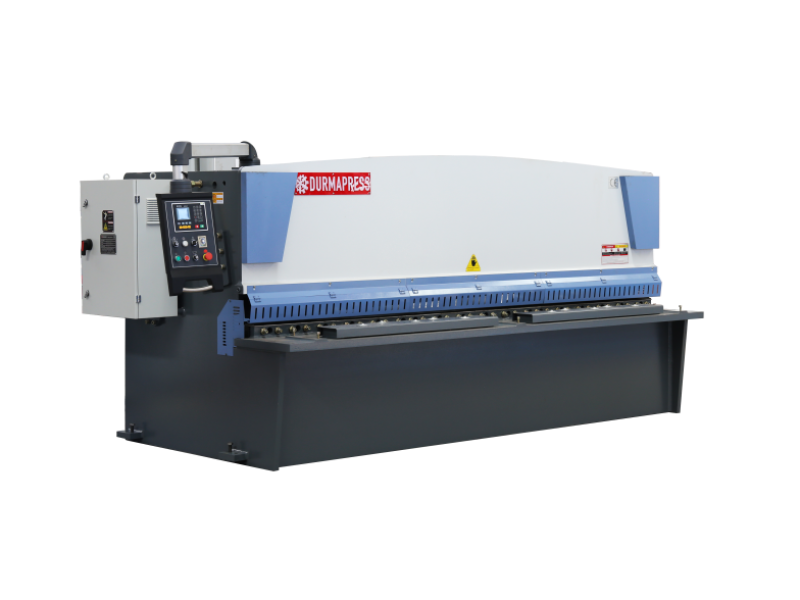
Hydraulic shearing machines operate by using hydraulic fluid pressure to move a ram, which drives the upper blade downward to shear the material.
Key features:
- Power source and operation: Powered by hydraulic pumps and cylinders, offering consistent force throughout the cutting stroke.
- Precision and control: Adjustable blade gap, shear angle, and stroke length allow for fine-tuning based on material properties.
- Safety mechanisms: Equipped with overload protection, emergency stops, and often advanced safety features like light curtains.
Advantages:
- Efficiency in cutting thicker materials: Capable of handling high-strength and thick plates with ease.
- Reduced operator fatigue: Smooth, automated operation and user-friendly controls.
- Versatility in applications: Suitable for a wide range of materials, including composites and surface-sensitive metals.
Disadvantages:
- Higher initial cost: More expensive upfront due to complex hydraulic systems.
- Maintenance requirements: Regular checks for hydraulic fluid, seals, and system components are necessary.
III. Mechanical Shearing Machines
Mechanical shearing machines use a motor-driven flywheel to store kinetic energy, which is then released rapidly through a crank mechanism to power the blade.
Key features:
Power source and operation: Mechanical energy delivered in quick, powerful bursts.
Speed and productivity: High cutting speed, especially suitable for repetitive, high-volume tasks.
Simplicity of design: Fewer components, making them easier to understand and operate.
Advantages:
Lower initial cost: Generally more affordable for small and medium-sized operations.
Faster operation for thinner materials: Ideal for high-speed cutting of thin, soft metals.
Easier maintenance: Simple mechanical systems require less specialized upkeep.
Disadvantages:
Limited cutting capacity: Less effective for thick or very hard materials.
Greater operator fatigue: Manual adjustments and higher vibration can be demanding over long shifts.

IV. Comparison of Hydraulic and Mechanical Shearing Machines
Performance and Efficiency
When evaluating the performance and efficiency of hydraulic and mechanical shearing machines, it is essential to consider not just speed or power, but also factors such as cutting quality, operational stability, adaptability to different materials, and energy usage.
1. Cutting Speed and Throughput
Mechanical shearing machines are renowned for their high cutting speed, often achieving 60–100 strokes per minute. This makes them highly effective for mass production of thin sheets where rapid, repetitive cuts are required. Their flywheel-driven mechanism delivers instantaneous energy, enabling fast cycle times and high throughput, which is especially valuable in industries such as automotive or appliance manufacturing.
Hydraulic shearing machines, on the other hand, typically operate at a lower stroke rate due to the nature of hydraulic actuation. However, modern servo-hydraulic models have narrowed this gap, offering improved cycle times while maintaining smooth operation. The trade-off is that hydraulic shears prioritize consistent force and controlled motion over sheer speed, making them more suitable for applications where cut quality and material integrity are critical.
2. Cutting Quality and Precision
Hydraulic shearing machines excel in delivering precise, clean cuts with minimal burrs or distortion. Adjustable blade gap, shear angle, and pressure allow operators to fine-tune the process for different material types and thicknesses, ensuring high-quality results even with challenging or surface-sensitive materials. This level of control is especially important when working with high-strength alloys, composites, or coated sheets.
Mechanical shears, while capable of producing accurate cuts in thin and soft metals, may experience a decline in cut quality when handling thicker or harder materials. The rapid, impact-driven action can lead to more pronounced edge deformation, especially if the blade gap is not properly adjusted. Additionally, mechanical shears typically require a full stroke for each cut, limiting their ability to optimize for short or narrow workpieces.
3. Adaptability and Versatility
Hydraulic shearing machines offer superior versatility thanks to their adjustable parameters and ability to handle a wide range of materials and thicknesses. Operators can easily switch between different jobs, making hydraulic shears ideal for workshops with diverse or frequently changing production requirements.
Mechanical shears are best suited to high-volume, standardized production where material type and thickness remain consistent. Their fixed cycle and manual adjustments make them less adaptable to frequent production changes.
4. Energy Efficiency and Operational Stability
Mechanical shearing machines tend to be more energy-efficient during continuous high-speed operation, as the flywheel stores and releases energy with minimal ongoing power draw. However, the need to keep the flywheel spinning and the potential for energy loss during idle periods should be considered.
Hydraulic shearing machines, particularly older models, may consume more energy due to continuous operation of hydraulic pumps. However, advanced servo-hydraulic systems have significantly improved energy efficiency by powering the pump only during cutting, reducing standby consumption and heat generation. Additionally, hydraulic systems run more quietly and with less vibration, contributing to a safer and more comfortable working environment.
5. Consistency and Repeatability
Hydraulic shears provide consistent force throughout the cutting stroke, resulting in repeatable, high-precision cuts across a wide variety of materials. Mechanical shears, while fast, may experience more variation in force delivery—especially as components wear—impacting long-term accuracy and product quality.
Cost analysis
Mechanical shears typically have lower upfront costs and simpler maintenance, while hydraulic shears require more investment but offer greater versatility and potential long-term savings in complex or variable production environments.
Application suitability
When selecting between hydraulic and mechanical shearing machines, consider the following factors:
Material Type & Thickness:
Mechanical shears are best for thin (≤4mm), soft metals in high-volume, standardized production.
Hydraulic shears are ideal for thick (≥6mm), hard, or specialty materials, especially where surface quality is important.Production Volume & Flexibility:
Choose mechanical shears for fast, repetitive cutting of uniform parts.
Opt for hydraulic shears if you need frequent adjustments for different materials or batch sizes.Automation & Operator Skill:
Hydraulic shears integrate easily with CNC/automation and feature user-friendly controls—suitable for varied skill levels and future smart manufacturing.
Mechanical shears are suited to manual operation by experienced technicians.Environmental & Business Considerations:
Mechanical shears are energy-efficient and simple, fitting for startups or small businesses.
Hydraulic shears support environmental compliance and offer flexibility for growing or diversifying companies, especially when handling advanced or sensitive materials.
Operator considerations
Operator experience, training requirements, and safety priorities may influence the optimal machine choice. Hydraulic shears are generally easier for new or rotating staff, while mechanical shears reward skilled, consistent operators.
Long-term investment and maintenance
Hydraulic shears require more regular, specialized maintenance but offer greater flexibility for evolving production needs. Mechanical shears are low-maintenance but may limit future adaptability as product lines change.
V. Conclusion
Both hydraulic and mechanical shearing machines have distinct advantages and limitations. The optimal choice depends on material type, thickness, production volume, automation needs, operator skills, and long-term business goals.
Factors to consider when choosing between hydraulic and mechanical shearing machines
- Main materials and thickness range
- Batch size and production flexibility
- Automation and digital integration plans
- Operator expertise and safety requirements
- Environmental and regulatory compliance
- Business growth stage and future expansion
For high-speed, thin-sheet mass production with stable product lines, mechanical shears are often the best value. For thick, hard, or advanced materials, multi-variety production, or businesses planning for automation and growth, hydraulic shears provide unmatched flexibility and future-proofing.
Frequently Asked Questions (FAQ)
Q1: Which shearing machine is best for handling a wide range of materials and thicknesses?
A1: Hydraulic shearing machines are more versatile and can efficiently cut both thin and thick materials, including high-strength alloys and surface-sensitive panels.
Q2: If my production involves frequent material or size changes, which type should I choose?
A2: Hydraulic shears are ideal for operations requiring frequent adjustments, as they allow quick changes to blade gap and cutting settings for different jobs.
Q3: What is the best choice for high-speed, large-volume production of thin sheets?
A3: Mechanical shearing machines are better suited for fast, repetitive cutting of thin and soft metals in mass production environments.
Q4: Which machine is more suitable for future automation or smart manufacturing upgrades?
A4: Hydraulic shearing machines are generally easier to integrate with CNC controls and automated systems, making them the preferred option for businesses planning digital transformation.