About Us
Durmapress specializes in designing, manufacturing, and selling various metal processing equipment, including bending machines, shears, punches, and laser cutting machines. The company was founded in 2014, with years of experience and technology accumulation. DurmaPress has become one of the well-known brands in China's metal processing machinery industry.
Contact Us
Recent Posts

Categories
Follow Us
Weekly New Video
Choosing the right bending machine is one of the most important decisions in sheet metal fabrication. Many buyers search for a "press brake" without realizing it covers several different drive technologies — and the differences matter when it comes to performance, cost, and long-term value.
This article breaks down the key differences between press brake machines in general and hydraulic press brakes specifically, helping you decide which is the right fit for your production needs.
1.What Is a Press Brake Machine?
A press brake is a machine designed specifically for bending sheet metal into precise angles and shapes using a punch and die. It is a broad category that includes several drive types:
- Mechanical press brake – driven by a flywheel and clutch mechanism; high speed but limited stroke flexibility
- Hydraulic press brake – powered by hydraulic cylinders; consistent force, wide material range
- Electric (servo) press brake – driven by servo motors; energy-efficient and highly precise
- Hybrid press brake – combines electric and hydraulic systems for balanced performance
Understanding which type suits your operation starts with knowing what a hydraulic press brake can and cannot do compared to the others.
2.What Is a Hydraulic Press Brake?

A hydraulic press brake uses hydraulic cylinders to drive the ram downward, delivering consistent and uniform force throughout the entire stroke. Unlike mechanical systems where force drops at the top and bottom of the stroke, hydraulic systems maintain full tonnage at any point — making them especially effective for bending thick materials and forming complex profiles.
Hydraulic press brakes are widely used in heavy industries including automotive manufacturing, construction steel fabrication, shipbuilding, and general metalworking. They are available in tonnages ranging from 40 tons for light-duty work to over 2,000 tons for heavy plate bending.
3.Key Differences: Press Brake vs Hydraulic Press Brake
3.1 Drive System & Force Output
Hydraulic press brakes deliver full tonnage throughout the stroke, which is critical when bending thick or high-tensile materials. Mechanical press brakes are faster but cannot maintain consistent force across different stroke positions, limiting their use to thinner, uniform materials.
3.2 Precision & Control
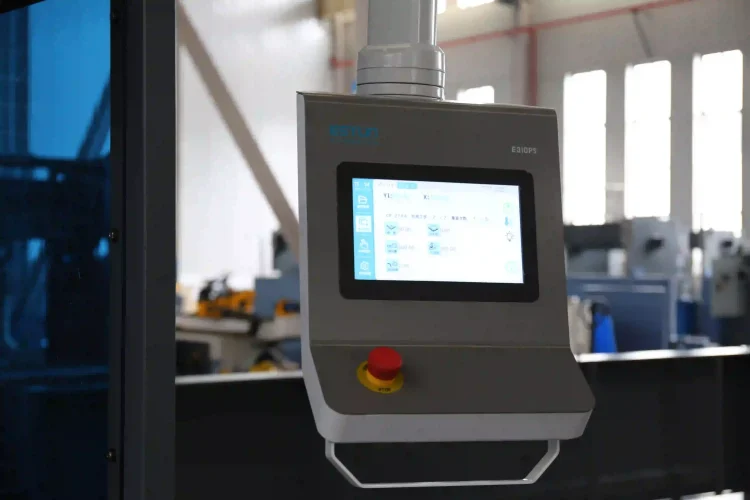
Modern CNC hydraulic press brakes achieve positioning accuracy of ±0.01mm and angle repeatability of ±0.5°. CNC controllers allow operators to store bending programs, automate backgauge positioning, and run complex multi-bend sequences with minimal setup time — making them highly efficient for both short-run and batch production.
3.3 Energy Consumption
Hydraulic press brakes consume more energy than electric models because the hydraulic pump runs continuously during operation. However, modern hydraulic systems equipped with variable-frequency drives (VFD) have significantly reduced idle energy waste. For operations requiring high tonnage, the energy trade-off is generally acceptable given the force capabilities involved.
3.4 Maintenance & Operating Cost
Hydraulic press brakes require scheduled maintenance including hydraulic oil checks, filter replacements, and seal inspections. While this adds to ongoing costs, modern hydraulic systems are reliable and can operate for decades with proper servicing. Initial purchase cost is generally lower than comparable electric models, making hydraulic press brakes a practical choice for manufacturers balancing capability and budget.
4.Which One Should You Choose?
The right machine depends on your specific production requirements. Use the table below as a quick reference:
| Production Requirement | Recommended Machine |
|---|---|
| Thick plate, heavy-duty bending | Hydraulic press brake |
| High precision, thin sheet, high volume | Electric press brake |
| Mixed materials, varied thickness | Hydraulic press brake |
| Budget-conscious entry-level purchase | Hydraulic press brake |
| Maximum energy efficiency | Electric / Hybrid press brake |
For most general fabrication shops handling a range of materials and thicknesses, a hydraulic press brake offers the best balance of power, flexibility, and cost. If your work is highly specialized toward thin-sheet, high-volume production, an electric press brake may be worth the higher upfront investment.
5.Why Choose a Hydraulic Press Brake from DurmaPress?
DurmaPress hydraulic press brakes are engineered for precision, durability, and ease of operation. Our range covers 40 to 2,000+ tons with standard and custom bed lengths, all equipped with advanced CNC control systems for reliable, repeatable bending performance.
Whether you need a standard workshop machine or a heavy-duty solution for structural steel, we offer fast lead times, comprehensive technical support, and competitive pricing.
6.FAQ
Q1: What is the difference between a press brake and a hydraulic press brake?
A press brake is a broad category of metal bending machines. A hydraulic press brake is one specific type within that category, distinguished by its hydraulic cylinder drive system that delivers consistent force throughout the full bending stroke.
Q2: What material thickness can a hydraulic press brake handle?
Hydraulic press brakes can handle a wide range of material thicknesses depending on tonnage and tooling. Entry-level machines typically work with mild steel up to 6mm, while high-tonnage models can bend steel plate exceeding 40mm.
Q3: How much does a hydraulic press brake cost?
Hydraulic press brake prices vary significantly based on tonnage, bed length, and CNC configuration. Entry-level models typically start from USD $15,000–$30,000, while large-tonnage or custom configurations can exceed $200,000. Contact us for a specific quote based on your requirements.
7.Conculsion
In summary, a press brake is a general machine category, while a hydraulic press brake is one specific type widely used in metal fabrication.
Hydraulic press brakes stand out for their strong and stable force, wide material adaptability, and suitability for heavy-duty bending. They are ideal for thick plates, mixed materials, and general industrial applications. In contrast, electric or hybrid press brakes are better suited for high-speed, thin-sheet, and high-precision production.
The right choice ultimately depends on your material type, production needs, and budget.
👉 For the most suitable solution, it is recommended to consult a professional manufacturer for detailed configuration advice.
Stay Updated on Industrial Innovations
Subscribe to our newsletter for the latest insights on manufacturing technology, sustainability, and industry trends.