About Us
Durmapress specializes in designing, manufacturing, and selling various metal processing equipment, including bending machines, shears, punches, and laser cutting machines. The company was founded in 2014, with years of experience and technology accumulation. DurmaPress has become one of the well-known brands in China's metal processing machinery industry.

Contact Us
Recent Posts
Categories
Follow Us
Weekly New Video
Table of Contents
1. Introduction
Ask ten operators why a laser cut looks clean on one job and drags burr on the next, and you will often get ten different answers—each blaming a single setting. In reality, laser cutting quality is never controlled by one parameter. It is the combined result of how laser energy is generated, focused, absorbed by the material, and cleared by assist gas, while the machine moves the beam precisely along a programmed path.
Before troubleshooting, it helps to separate three outcomes that are often confused:
- Cut quality — burr/dross, edge roughness, striation pattern, oxidation, squareness, heat-affected zone (HAZ).
- Cut accuracy — dimensional error, contour deviation, hole roundness, repeatability.
- Cut efficiency — cutting speed, piercing time, gas consumption, rework rate.
This guide focuses on cut quality as the main thread, and shows how each factor also feeds into accuracy and efficiency—so you can move from "listing factors" to actually diagnosing and fixing a cut.
2. How Laser Cut Quality Is Actually Formed
Every clean cut follows the same physical chain:
Laser energy → Beam focusing → Material absorption → Melting / vaporization → Assist-gas ejection → Machine motion → Programming control → Environmental stability
When a cut fails, the problem sits somewhere along this chain. The nine factors below map directly onto it, which is why diagnosing in this order is far more effective than randomly changing power and speed.
3. The 9 Factors Affecting Laser Cutting Quality
1. Laser Type and Beam Quality
The laser's wavelength, beam mode, spot quality, and output stability determine how well the material absorbs energy and how tight the kerf can be. A stable, high-quality beam produces a narrow, uniform kerf; a poor or fluctuating beam causes kerf-width variation and inconsistent edges across the sheet.
Crucially, CO₂ and fiber lasers suit different materials. CO₂ (10.6 µm wavelength) is absorbed well by non-metals like acrylic, wood, and plastics, while fiber lasers excel on metals such as steel and aluminum thanks to a smaller focused spot and higher metal absorption. So any discussion of reflectivity or absorption must state which laser type it refers to—a common flaw in generic articles.
What to check: kerf width consistency along the path; edge consistency at different sheet positions; output stability; whether the laser type matches the target material.
Learn more:CO₂ vs Fiber Laser Cutting Machine
2. Laser Power, Cutting Speed, and Material Thickness (Matched Together)
Power and speed together set the energy delivered per unit length—they cannot be judged separately.
- Too little power / too fast: the material may not fully melt and eject → incomplete cuts, bottom dross, oblique striations.
- Too much power / too slow: excess heat input → wider kerf, edge burning, melted (rounded) sharp corners, enlarged HAZ.
Thicker material generally needs more effective energy, but raising power is not the only lever—speed, focus, gas, and nozzle must be adjusted together. For pulsed processes, frequency and duty cycle add another layer; for continuous cutting, they should not be presented as universal core factors.
The real goal isn't maximum power or fastest speed—it's finding the stable window between power, speed, and thickness.
3. Focus Position and the Optical System
The focus determines how laser energy is distributed through the material thickness. A focus set too high, too low, or drifting mid-job changes kerf width, taper, and dross behavior.
- Short focal length: smaller spot, higher power density—but shallow focal depth and small tolerance; best for thin, high-speed cutting.
- Long focal length: wider focal depth—better for thicker workpieces, given sufficient power density.
Watch for focus drift from lens heating, plus contamination or misalignment of mirrors, protective windows, and the optical path. When parameters look correct but quality keeps degrading, inspect the optics—don't just push more power.
Symptoms: inconsistent top/bottom kerf; visible taper; quality dropping over one sheet; needing ever-higher power to cut through.
4. Assist Gas — Type, Pressure, Flow, and Purity
Assist gas ejects molten material, cools the kerf, protects the optics, and either drives or suppresses chemical reactions.
- Oxygen (O₂): adds heat via an exothermic reaction—faster on carbon steel, but leaves an oxide layer. Note: O₂ purity strongly affects results.
- Nitrogen (N₂): clean, low-oxidation edges (ideal for stainless steel), but demands higher pressure, flow, and supply capacity.
- Compressed air: lowest cost, but edge quality depends on material, thickness, and air cleanliness.
Too low pressure leaves bottom dross; too high pressure can disturb the melt pool, over-cool the kerf, or destabilize the edge—more pressure is not always better. Never analyze gas by "type" alone; also weigh pressure, actual flow, purity, plumbing/valve condition, nozzle diameter, and speed.
5. Material Properties and Surface Condition
Material type, thickness, thermal conductivity, absorption, composition consistency, and flatness all change how the beam interacts with the workpiece.
- Thickness: thicker → more power, more thermal distortion risk.
- Reflectivity: highly reflective metals (aluminum, copper) reflect the beam, causing energy loss and inconsistent cuts—handling depends on wavelength and machine protection design, not just "it's reflective, so it's hard."
- Thermal conductivity: high-conductivity materials pull heat away fast, affecting speed and edge quality.
Pre-cut checklist: grade & type; actual thickness and tolerance; surface cleanliness; flatness; rust, oil, oxide, coating, or protective film; batch consistency.
6. Nozzle Diameter, Concentricity, and Standoff Height
The nozzle shapes the assist-gas flow into the kerf. Its diameter, roundness, cleanliness, concentricity with the beam, and standoff distance directly govern flow pattern and dross removal.
A damaged, clogged, or off-center nozzle skews the gas to one side, producing:
- one-sided dross; left/right edge-quality difference;
- kerf offset and inconsistent width; localized burning; abnormal gas consumption.
Standoff height can't be set in isolation—it changes the effective pressure reaching the kerf and must be tuned with nozzle diameter, thickness, and gas.
7. Machine Motion, Calibration, and Maintenance
Even with perfect laser parameters, motion errors cause dimensional and contour deviations. Rails, rack-and-pinion, drives, servo response, vibration, gantry condition, and the height-following system all shape the real cutting path. Backlash or weak dynamic response may be invisible on straight cuts but show up on small holes, sharp corners, arcs, and fast direction changes.
Maintenance isn't only about lifespan—it directly drives consistency. Regularly check: beam-to-nozzle concentricity; height sensor; drive/motion accuracy; lenses and protective windows; nozzle and ceramic ring; cooling system; gas path and filters.
8. Drawing, Programming, and Cut-Path Strategy
Some "inaccurate" cuts aren't the machine mis-cutting—they're kerf compensation errors or heat-concentrating path strategies. Programming factors include:
- kerf compensation direction and value;
- lead-in / lead-out placement; pierce-point distance from the contour;
- speed control on small holes and sharp corners;
- part cutting sequence and common-line cutting;
- inner-vs-outer contour order; heat distribution; nesting and clamping.
For example, cutting adjacent areas back-to-back can build up local heat and warp the sheet; blasting through a corner causes overshoot, while over-slowing burns it. This factor is largely missing from A, B, E, and F—yet it's decisive for accuracy.
9. Environmental Conditions and Thermal Stability
Ambient temperature, humidity, dust, power stability, and cooling all affect long-term consistency. High temperatures burden the chiller; temperature swings shift the machine's thermal state; high humidity risks condensation on mirrors and lenses; dust and fumes contaminate optics and moving parts.
Environment is rarely the first cause of a single defect—but when quality changes predictably with runtime, weather, or shift, check: chiller status; ambient temp/humidity; internal condensation; optical contamination; power and gas-supply stability.
4. Defect-First Troubleshooting: What to Check First
Instead of changing everything at once, work backward from the symptom:
| Cutting Problem | Check First | Check Next |
|---|---|---|
| Won't cut through | Power, speed, focus | Gas pressure, lens, material thickness |
| Bottom dross/burr | Speed, focus, gas pressure | Nozzle, gas flow |
| Kerf too wide | Power too high, speed too slow | Focus, standoff height |
| One-sided dross | Nozzle concentricity | Beam centering, sheet flatness |
| Burned sharp corners | Corner speed, power control | Path & lead-in strategy |
| Dimensional error | Kerf compensation, mechanical accuracy | Thermal distortion, programming path |
| Quality drops over time | Protective window, cooling | Optical contamination, ambient temp |
5. How to Systematically Optimize Laser Cutting Parameters
- Change one main variable at a time. Adjusting power, speed, focus, and gas simultaneously makes it impossible to know what worked.
- Run test cuts and record results. Log power, speed, focus, gas pressure, and the resulting defect for each material and thickness.
- Build a parameter library. Once you find a stable window, document it so results are repeatable across operators and shifts.
- Re-verify after maintenance. Lens or nozzle changes can shift the optimal focus and pressure.
6. Conclusion
Laser cutting quality is not decided by any single setting. It emerges from the interaction of laser energy, focus, material absorption, assist gas, nozzle, machine motion, and programming strategy—stabilized by good maintenance and a controlled environment.
The most reliable operators don't chase the highest power or fastest speed. They understand the full chain, diagnose defects backward from the symptom, and lock in a stable process window through disciplined testing.
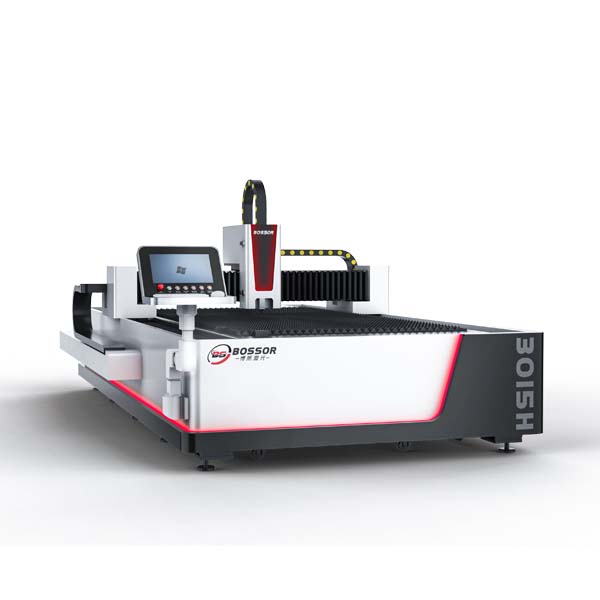
Explore our fiber laser cutting machines or talk to our application engineers for a material-specific parameter recommendation.
Stay Updated on Industrial Innovations
Subscribe to our newsletter for the latest insights on manufacturing technology, sustainability, and industry trends.