About Us
Discover how a 6-axis CNC press brake with automatic tool change improves bending accuracy, reduces setup time, and supports modern high-mix sheet metal production.

Contact Us
Recent Posts
Categories
Follow Us
Weekly New Video
In today’s sheet metal fabrication industry, efficiency and flexibility are no longer optional—they are decisive competitive advantages. Manufacturers are under constant pressure to deliver higher precision, shorter lead times, and greater product variety, often with fewer skilled operators. Against this backdrop, the 6-axis CNC press brake with automatic tool change has emerged as a powerful solution for modern bending operations.
Unlike traditional press brakes that rely heavily on manual setup and operator experience, this advanced bending system combines multi-axis CNC control with automated tooling management. The result is a bending process that is faster, more consistent, and far better suited to high-mix, low-volume production environments.
This article explores what makes a 6-axis CNC press brake with automatic tool change different, how it works, and why it is becoming a strategic investment for forward-looking fabrication shops.

What Is a 6-Axis CNC Press Brake with Automatic Tool Change?
A 6-axis CNC press brake with automatic tool change integrates precise axis control with an automated system that selects and installs the required tooling without manual intervention. This combination addresses two of the biggest bottlenecks in bending: setup time and repeatability.
Understanding the 6-Axis Configuration in CNC Press Brakes
In a standard CNC press brake, the most common axes include Y1 and Y2 (ram movement) and X (backgauge depth). A 6-axis configuration typically expands this control to include:
Y1 / Y2 – Independent control of the left and right ram cylinders for accurate parallelism
X – Backgauge front-to-back positioning
R – Vertical movement of the backgauge fingers
Z1 / Z2 – Lateral positioning of the backgauge fingers
This extended axis control allows the machine to handle complex parts with multiple bends, varying flange lengths, and asymmetrical geometries. For manufacturers producing precision sheet metal components, a 6-axis CNC press brake represents a clear step up from entry-level configurations.

What Does Automatic Tool Change Mean in Press Brake Bending?
Automatic tool change (ATC) refers to a system that stores, identifies, and installs press brake tooling automatically based on the bending program. Instead of stopping production to manually remove and mount punches and dies, the machine performs this process on its own.
In practice, this means the CNC controller selects the correct tools, positions them accurately along the bending length, and clamps them securely—all without operator handling. For shops running frequent job changes, this capability can dramatically reduce non-productive time.
Why Modern Sheet Metal Bending Demands More Than Manual Tool Changes
The traditional press brake workflow was built around long production runs and experienced operators. However, the realities of modern manufacturing have changed.
The Challenge of High-Mix, Low-Volume Production
Many fabrication shops now process dozens or even hundreds of different part numbers each week. Small batch sizes, customized designs, and just-in-time delivery models are increasingly common. In such environments, manual tool change becomes a serious limitation.
Each setup requires time, careful alignment, and skilled labor. When multiplied across frequent changeovers, these delays significantly reduce machine utilization. A CNC press brake with automatic tool change directly addresses this challenge by enabling rapid, repeatable setups.
Hidden Costs of Manual Tool Change in Traditional Press Brakes
Manual tooling changes introduce costs that are often underestimated. These include:
- Machine downtime during setup
- Increased reliance on highly skilled operators
- Higher risk of setup errors and scrap
- Inconsistent bending results between shifts
Over time, these factors can erode profitability. Automation in bending is not just about speed—it is about stability and predictability in production.
Key Advantages of a 6-Axis CNC Press Brake with Automatic Tool Change
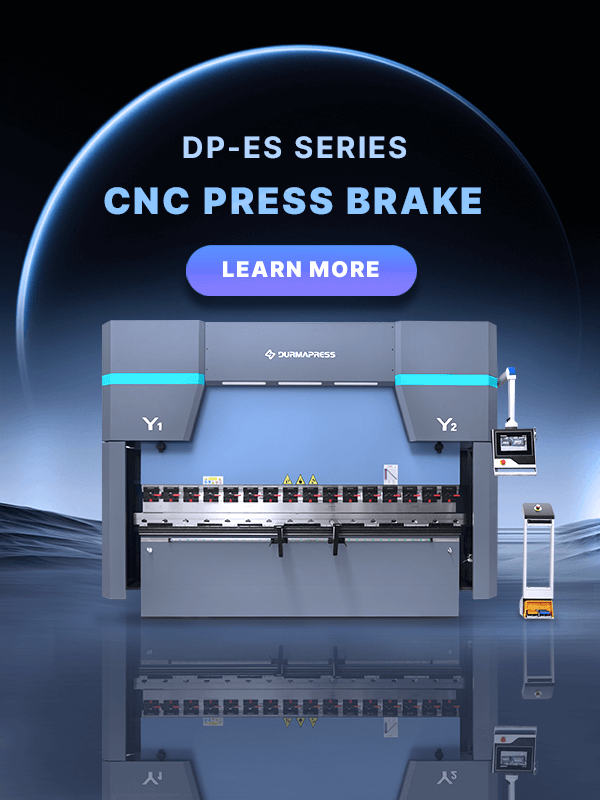
The combination of multi-axis control and automatic tool change delivers tangible benefits across productivity, quality, and workforce efficiency. Manufacturers upgrading their bending capabilities often turn to advanced CNC press brake solutions to improve accuracy, productivity, and automation.
Significantly Reduced Setup Time and Faster Changeovers
One of the most immediate advantages is the reduction in setup time. Tool changes that once took several minutes—or longer for complex setups—can now be completed in seconds. This makes short production runs economically viable and allows manufacturers to respond quickly to changing order priorities.
Consistent Bending Accuracy Across Complex Parts
Precision in bending depends on accurate positioning, repeatable tooling, and stable machine geometry. A 6-axis CNC press brake excels in this area by maintaining precise ram and backgauge control throughout the bending process.
When combined with automatic tool change, the system ensures that the correct tools are always used and positioned exactly as programmed. This consistency is particularly valuable for complex parts and tight-tolerance applications.
Lower Operator Dependency and Skill Requirements
As experienced press brake operators become harder to find, reducing reliance on individual skill levels is increasingly important. Automated tool handling and intuitive CNC controls allow less-experienced operators to run sophisticated bending jobs with confidence.
This not only improves workforce flexibility but also supports standardized production processes across multiple shifts or locations.

How Automatic Tool Change Works on a CNC Press Brake
Understanding the technical principles behind automatic tool change helps clarify why it is such a powerful productivity enhancer.
Tool Storage, Identification, and Clamping Systems
Automatic tool change systems typically include a dedicated tool magazine or storage rack. Each punch and die is identified—often through coded data or tooling libraries within the CNC system.
When a bending program is activated, the machine selects the required tools, moves them into position, and clamps them securely using hydraulic or mechanical clamping systems. This process ensures accurate alignment and repeatable results.
Integration with CNC Control and Bending Programs
The real strength of ATC lies in its integration with the CNC control system. Bending programs not only define angles and dimensions but also specify the exact tooling required.
Advanced controllers can simulate the bending sequence offline, detect potential collisions, and optimize tool layouts before production begins. This level of automation further reduces setup errors and shortens the learning curve for new jobs.
6-Axis CNC Press Brake vs Panel Bender: Which One Fits Your Production?
Both press brakes and panel benders play important roles in modern sheet metal fabrication, but they are optimized for different scenarios.

When a 6-Axis CNC Press Brake Is the Better Choice
A 6-axis CNC press brake with automatic tool change is particularly well suited for:
- Medium to large-sized parts
- Complex geometries with varied bend angles
- Frequent job changes and customized products
- Applications requiring flexible tooling configurations
Its versatility makes it a cornerstone machine for many job shops and contract manufacturers.
When a Panel Bender Might Be More Suitable
Panel benders excel in high-volume production of standardized box-shaped parts. For manufacturers producing large quantities of similar components, a panel bender may offer higher throughput. However, it typically lacks the flexibility of a press brake for diverse product mixes.
Who Should Invest in a 6-Axis CNC Press Brake with Automatic Tool Change?
Not every operation requires this level of automation, but for many manufacturers, it represents a strategic upgrade.
Ideal Applications and Industries
Industries that benefit most include:
- HVAC duct and fitting manufacturing
- Electrical enclosures and cabinets
- Industrial equipment panels
- Precision sheet metal fabrication
These sectors often demand both accuracy and flexibility, making automated bending solutions especially attractive.

Is Automatic Tool Change Worth the Investment?
While a 6-axis CNC press brake with automatic tool change involves a higher initial investment, the return often comes through increased machine utilization, reduced labor costs, and improved product quality.
For companies facing rising labor challenges and growing product complexity, the long-term benefits can outweigh the upfront cost.
Conclusion: Future-Proof Your Bending Process with Smart Automation
As sheet metal fabrication continues to evolve, manufacturers must adapt their equipment and processes to stay competitive. A 6-axis CNC press brake with automatic tool change offers a practical path toward higher efficiency, greater flexibility, and more consistent quality.
By reducing setup time, minimizing operator dependency, and enabling precise control over complex bending operations, this technology aligns closely with the demands of modern production. For manufacturers looking to future-proof their bending capabilities, it is an investment well worth considering.
FAQ: 6-Axis CNC Press Brake with Automatic Tool Change
What is the main advantage of a 6-axis CNC press brake with automatic tool change?
The main advantage lies in combining high bending precision with fast, automated setups. A 6-axis CNC press brake enables accurate control of complex bends, while automatic tool change eliminates manual tooling adjustments. This results in shorter setup times, improved repeatability, and higher overall production efficiency.
How much setup time can automatic tool change save on a CNC press brake?
In many applications, automatic tool change can reduce setup time from several minutes per job to just a few seconds. For manufacturers running frequent job changes or small batch orders, this can recover hours of productive machine time per shift and significantly increase output capacity.
Is a 6-axis CNC press brake suitable for high-mix, low-volume production?
Yes. A 6-axis CNC press brake with automatic tool change is especially well suited for high-mix, low-volume production. The machine can automatically switch tools and reposition the backgauge between programs, allowing manufacturers to handle diverse part geometries without sacrificing efficiency or accuracy.
How does a press brake with automatic tool change compare to a panel bender?
A panel bender is typically optimized for high-volume production of standardized parts, such as boxes and panels. In contrast, a 6-axis CNC press brake with automatic tool change offers greater flexibility. It is better suited for complex parts, varying flange lengths, and customized bending tasks where versatility is critical.
Does automatic tool change reduce the need for skilled press brake operators?
Automatic tool change reduces dependency on highly experienced operators by standardizing tooling setup and minimizing manual intervention. While skilled operators are still important for process optimization, automated systems make it easier for less-experienced personnel to operate the machine consistently and safely.
Is investing in a CNC press brake with automatic tool change worth the cost?
For manufacturers facing frequent changeovers, rising labor costs, or higher quality requirements, the investment is often justified. Increased machine utilization, reduced downtime, lower scrap rates, and improved production consistency typically deliver a strong return on investment over the equipment’s service life.